

























































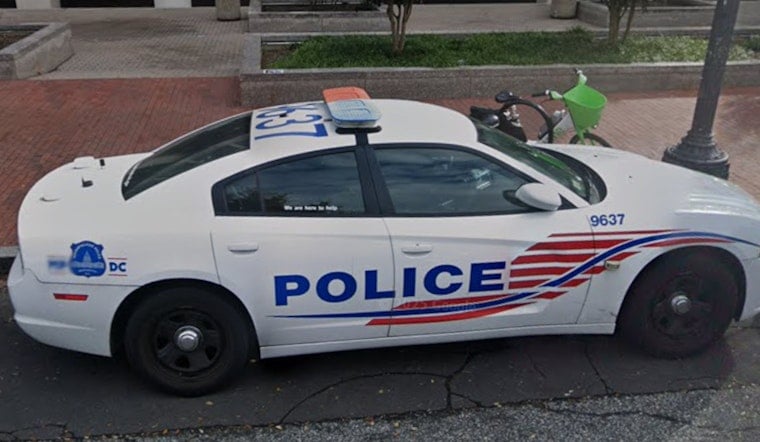
An 81-year-old man was found dead inside a residence on the 200 block of K Street NE this week, and police have arrested a 63-year-old woman in connection with his killing. Metropolitan Police Department officers responded to the NoMa-area address on Sunday, August 16, after a report of an unconscious person, and discovered the victim, identified as John Wesley Knight, with visible injuries and not breathing inside the home.
D.C. Fire and EMS also responded to the scene and found no signs consistent with life, according to WJLA. Knight was pronounced dead at the scene and later taken to the Office of the Chief Medical Examiner for an autopsy, per the station's reporting. Police determined there was probable cause to arrest 63-year-old Sherry Lou Sanders, a Northeast D.C. resident, and she is now facing a second-degree murder charge in Knight's death.
Police Describe the Killing as Domestic
The Metropolitan Police Department has said the case is domestic in nature, though authorities have not detailed the specific relationship between Sanders and Knight or disclosed a motive, the station's account notes. It also remains unclear whether officers had responded to the K Street NE residence for any prior domestic disturbances before Sunday's discovery.
The 200 block of K Street NE sits in NoMa, a Ward 6 neighborhood near Union Station and the NoMa-Gallaudet University Metro station that has transformed over the past two decades from an industrial rail corridor into a dense residential and commercial hub, according to the NoMa BID.
Domestic Killings Bucking D.C.'s Homicide Decline
Knight's death lands amid a broader and troubling pattern for the District. Metropolitan Police Department crime data through August 17 shows homicides citywide dropped 32% year-to-date compared to the same period in 2025, falling from 100 to 68 recorded killings. Yet domestic-related homicides have moved in the opposite direction: data from D.C.'s Criminal Justice Coordinating Council found 28 domestic-related homicides occurred in Washington in 2025, representing 22% of all District homicides and marking a 12-year high, according to The 51st.
District law enforcement and advocacy officials reported in April that domestic-related killings accounted for roughly a quarter of all homicides recorded in the city during the early months of 2026, the outlet reported, with domestic incidents also contributing to a 35% surge in assaults with a dangerous weapon citywide during that period. A Council on Criminal Justice study published this month similarly found that while D.C. homicides fell 41% during the first half of 2026 compared to 2025, aggravated assaults in the District rose 45%, per the Council on Criminal Justice, which evaluated crime data across 35 major American cities.
City Officials Push Domestic Violence Legislation
In April, D.C. Mayor Muriel Bowser and U.S. Attorney Jeanine Pirro announced the proposed Protecting Victims Act of 2026, aimed at increasing penalties for repeat stay-away order violations and allowing D.C. courts to detain domestic violence suspects with prior records before trial, according to a report from WUSA9. The legislative package was introduced alongside city efforts to close legal gaps around domestic offenses witnessed by minors, the station noted.
The District also maintains a Domestic Violence Fatality Review Board, which analyzes both intimate partner homicides and non-intimate family or cohabitant domestic homicides using police, medical, and court records to identify systemic intervention gaps, according to the D.C. Office of Victim Services and Justice Grants. Separately, D.C. SAFE operates the city's only 24/7 emergency shelter and crisis response service specifically for domestic violence survivors and their families, per The 51st's reporting, as advocacy organizations have reported elevated demand for emergency housing tied to post-pandemic domestic stress.
What Sanders Faces in Court
Under D.C. Code § 22-2103, second-degree murder is defined as intentionally killing another person with malice aforethought but without premeditation, and it carries a maximum penalty of up to life imprisonment, according to FindLaw. D.C. law distinguishes the charge from first-degree murder based on the absence of premeditation before the fatal act. A second-degree murder conviction in the District also carries a statutory mandatory minimum prison sentence of 20 years, per a 2025 U.S. House report on D.C. law.
It remains unclear what led to the confrontation between Sanders and Knight, and police have not released further details about the circumstances inside the K Street NE residence. The case remains under investigation.



