

























































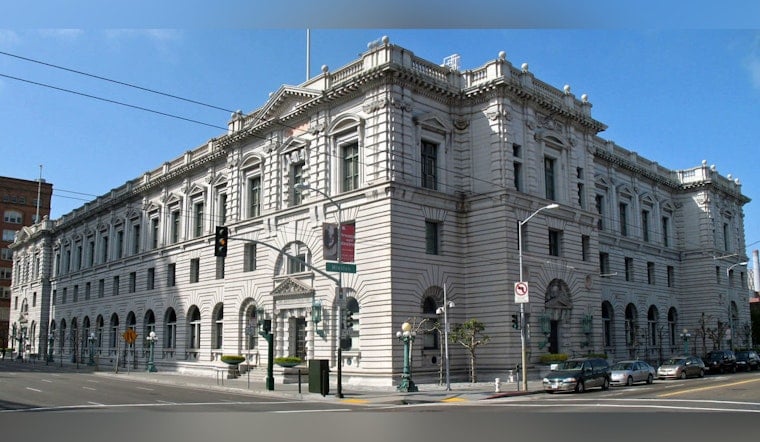
A federal appeals court has ruled that Sigal Chattah, the Trump administration's pick to run the U.S. Attorney's Office in Nevada, has no legal authority to serve in that role. The unanimous decision, handed down Monday, marks the latest blow in a yearlong fight over whether Chattah was ever validly installed as the state's top federal prosecutor.
The three-judge panel for the 9th U.S. Circuit Court of Appeals found in United States v. Jackson that automatic succession under the Federal Vacancies Reform Act applies only to a first assistant who served under a validly appointed official at the time a vacancy arose — a standard Chattah's appointment did not meet, according to Reason Magazine. The 36-page ruling effectively invalidated the title Chattah has held since resigning as U.S. attorney last July, when she was reclassified as First Assistant U.S. Attorney by then-Attorney General Pam Bondi in a maneuver designed to keep her running the office without Senate confirmation, as reported by the Associated Press.
Chattah was originally appointed interim U.S. attorney for Nevada in 2025, but federal law caps such handpicked appointments at 120 days. Bondi maintained at the time that Chattah had authority to keep serving as acting U.S. attorney, and the Trump administration has continued to insist she was validly in the role even as the legal challenges mounted. Chattah never received Senate approval for the permanent post.
How Four Nevada Defendants Forced the Issue
The case reached the 9th Circuit after four people in Nevada, all facing felony counts brought by Chattah's office, argued she was illegally serving as U.S. attorney and sought either dismissal of their cases or removal of Chattah and subordinate prosecutors from the proceedings. U.S. District Judge David Campbell had already found in Nevada that Chattah stayed in the temporary job longer than the law allows and disqualified her from those criminal cases, though he later stayed that disqualification ruling while the Department of Justice appealed, per the AP account.
The 9th Circuit's decision Monday marks another setback for the Trump administration's broader strategy of extending handpicked U.S. attorneys past the 120-day statutory limit, according to the AP. Under 28 U.S.C. § 546, once that window closes without Senate confirmation, authority to name a temporary replacement shifts to the judges of the local federal district court.
A Pattern Playing Out Nationwide
Nevada is not an isolated case. In New Jersey, the 3rd U.S. Circuit Court of Appeals affirmed in December that former Trump personal attorney Alina Habba's continued service as acting U.S. attorney beyond 120 days was unlawful; Habba resigned after that appeals court decision went against her. In California, U.S. District Judge J. Michael Seabright ruled in October that Bill Essayli unlawfully served as acting U.S. attorney for the Central District after his own 120-day term expired, though Essayli was permitted to remain in the office, effectively acting as the state's top prosecutor under the title of first assistant U.S. attorney. Courts have now ruled against the maneuvers involving both Essayli and Habba, and a separate federal judge in New Jersey found last August that indictments approved by an unlawfully serving acting U.S. attorney could potentially be declared void — a warning sign for the felony cases still pending in Nevada.
The Justice Department has said it plans to appeal Monday's ruling to the U.S. Supreme Court, according to the Las Vegas Review-Journal. Nevada Democratic Senators Catherine Cortez Masto and Jacky Rosen, who opposed Chattah's appointment from the start and have called her an extremist and an election denier, renewed their calls for her immediate resignation. According to court filings cited by AP reporter Tyler Lee, the DOJ has argued Chattah could still serve for up to 210 days after the nomination process concludes if a permanent nominee's confirmation is rejected, withdrawn, or returned — leaving her long-term status uncertain even as the administration presses its appeal.
Chattah's Political Baggage
Before her appointment, Chattah ran a Las Vegas criminal defense practice, served as the 2022 Republican nominee for Nevada Attorney General — losing to incumbent Democrat Aaron Ford with 44.4% of the vote — and was a former member of the Republican National Committee. She also represented one of six Nevada Republicans who submitted certificates to Congress declaring Trump the winner of Nevada's presidential vote, and she has echoed Trump's baseless claims that the 2020 election was stolen. Nevada Judge Mary Kay Holthus later dismissed Ford's case against those six Republicans, finding insufficient evidence that the electors intended to deceive government officials.
Despite the cloud over her legal standing, Chattah pressed ahead with high-profile initiatives, including a public corruption strike force she launched in January targeting local government misconduct, misused campaign funds, and state tax incentives, as Hoodline previously reported. Her office has also continued announcing prosecutions in gun trafficking cases even as the appellate fight over her authority played out.
Who Could Replace Her
The White House selected George Kelesis, a Las Vegas native, as its replacement nominee for Nevada U.S. Attorney back in February. Kelesis has practiced civil and criminal tax litigation in Nevada since 1981, serves as president of the Nevada Tax Commission, and has been an adjunct professor at the University of Nevada Las Vegas law school. He must still undergo Senate confirmation, and both Cortez Masto and Rosen have met with Kelesis as they review his nomination, though their opposition to Chattah suggests his path may not be smooth. It remains unresolved whether Nevada defense attorneys will now succeed in getting indictments dismissed or prosecutors disqualified in cases Chattah supervised during her disputed tenure — a question echoing similar motion practice already underway in New Jersey and California.





.jpg)