

























































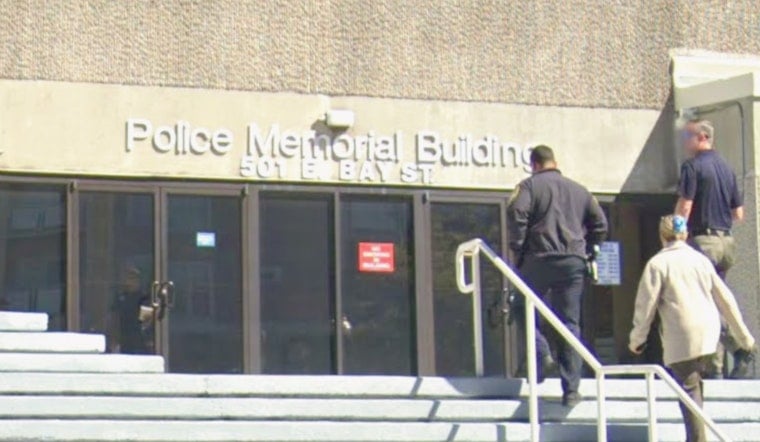
A three-judge panel in Duval County has ruled that Jacksonville police broke state rules when they replaced a tiny rubber part inside a breathalyzer machine, a decision that could jeopardize thousands of DUI cases across Florida. The part in question, an O-ring that costs about $1, sits inside the Intoxilyzer 8000, the breath-testing device used by law enforcement agencies throughout Florida and the country.
The ruling came in the case of Sergio Rosario Cruz Lopez, who was arrested for DUI after failing a breathalyzer test following a 2025 traffic stop on Beach Boulevard in Jacksonville, according to Action News Jax. The panel heard arguments from defense attorney David Robbins, who argued that the Jacksonville Sheriff's Office replaced O-rings in its Intoxilyzer 8000 without keeping proper replacement records, and that neither JSO nor the Florida Department of Law Enforcement was an authorized repair facility for the machine. The panel agreed, ruling that the O-ring replacements amounted to an unauthorized fix under state guidelines rather than routine maintenance.
How a Cheap Part Became a Legal Flashpoint
State guidelines require that repairs to the Intoxilyzer 8000 be performed only by authorized third-party facilities. Under Florida Administrative Code Rule 11D-8.007(1), only FDLE or authorized repair facilities are permitted to remove the top cover of the device, according to Cornell Law School's regulatory database. The Intoxilyzer 8000 is manufactured by CMI, Inc., based in Owensboro, Kentucky, which serves as the primary third-party facility designated to service the devices, per the Sammis Law Firm.
During annual maintenance, FDLE replaces one O-ring inside and four O-rings outside the machine, according to Action News Jax's reporting. JSO disclosed that O-ring replacement could impact the machine's accuracy, the outlet reported, a concession that fed directly into the panel's finding that the local swaps were not harmless housekeeping.
Defense Attorney Calls Machine Outdated
Robbins, a Jacksonville practitioner with Epstein & Robbins who co-chairs The Florida Bar's Masters of DUI program, has specialized in DUI defense for more than 45 years, according to The Florida Bar. He represents Cruz Lopez and told Action News Jax that the Intoxilyzer 8000's technology is outdated. He said inaccurate breath-machine results can affect people's jobs, families, and lives.
Robbins was careful to frame the ruling narrowly. “This is not a blank check for people to drink too much and drive,” he said, according to the same report. His argument centered on a technical distinction that Florida courts have drawn before: that swapping an internal component is a repair, not maintenance, and that repairs performed outside authorized channels can undermine the evidentiary reliability the law demands.
A Legal Fight With Deep Roots
This is not the first time O-rings on the Intoxilyzer 8000 have drawn scrutiny in Florida courtrooms. Legal challenges date back over a decade, including 2008 and 2010 defense challenges in Hillsborough County where inspectors were accused of citing O-ring failures to clear failed monthly inspections without sending units out for authorized repair, according to the Sammis Law Firm. More recently, Florida's Second District Court of Appeal ruled in August 2025 in State v. Kilburn that state inspectors replacing an Intoxilyzer 8000 breath tube constituted an unauthorized repair rather than routine maintenance, affirming the suppression of breath test results, per FindLaw.
Florida Administrative Code Rules 11D-8.004 and 11D-8.006 require evidentiary breath test instruments to undergo monthly agency inspections by local law enforcement and annual department inspections by FDLE, plus mandatory inspections after any return from a repair facility, according to the Criminal Defense Lawyer Miami Dade website. Under Florida Statutes § 316.1934(5), breath test affidavits only serve as presumptive proof of impairment if the state can show substantial compliance with those inspection and maintenance rules, per Mydock Law. Proving otherwise strips prosecutors of that automatic presumption.
Why a Suppressed Test Doesn't End a Case
Even with the breath test result in jeopardy, the case against Cruz Lopez is not necessarily over. Under Florida law, suppressing a breathalyzer result does not automatically end a DUI prosecution, because prosecutors can still establish impairment through other means. Robbins himself acknowledged as much, noting that prosecutors can use field sobriety tests, officer observations, physical evidence, and body camera video to make their case.
The state attorney's office responsible for prosecuting Duval County DUI cases is led by elected State Attorney Melissa Nelson, whose office handles cases across Duval, Clay, and Nassau counties, according to the State Attorney's Office for the Fourth Judicial Circuit. As of publication, Action News Jax reported that no response had been received from the State Attorney's Office, FDLE, or the Jacksonville Sheriff's Office regarding the ruling and its potential impact.
A Ruling With Statewide Stakes
Florida averages nearly 45,000 DUI arrests per year, according to figures cited by Action News Jax, and the state records more than 400 alcohol-related deaths annually. Against that backdrop, the legal challenge out of Duval County could affect thousands of DUI cases across Florida and hundreds in Jacksonville alone, since the same Intoxilyzer 8000 machines and the same local O-ring practices are used by agencies statewide.
Whether the Duval County ruling triggers a wave of suppression motions in other jurisdictions remains an open question, one that will likely hinge on how widely other departments have handled O-ring replacements without authorized repair documentation. For now, the ruling stands as a reminder that a part costing about as much as a cup of coffee can carry outsized consequences in a courtroom.





