

























































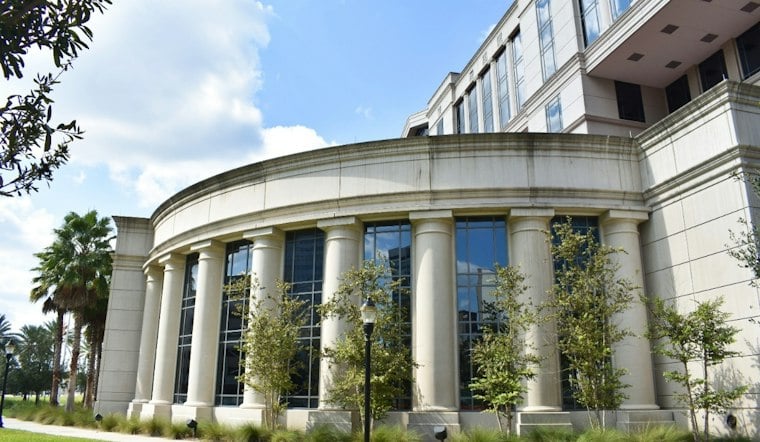
A woman working inside the Duval County Courthouse opened what appeared to be a routine character witness letter on October 2 and soon began reporting eye irritation, dizziness, a headache, red palms and a rash. The symptoms were enough to trigger a full hazmat response from Jacksonville Fire Rescue and the Jacksonville Sheriff's Office at the downtown courthouse, though the scare ultimately ended with negative field test results.
Letter Sealed in a Bag as Crews Rushed In
According to an incident report described by News4JAX, the woman placed the letter into a plastic bag after noticing the symptoms, a step consistent with the U.S. Postal Inspection Service's standard protocol for suspicious mail, which calls for immediate isolation of a questionable item, washing any exposed skin, and avoiding further contact while authorities conduct a threat assessment. The Jacksonville Sheriff's Office hazmat team was called out after she reported the side effects, and Jacksonville Fire Rescue arrived alongside JSO to perform a field test on the letter at the courthouse.
That test came back negative, according to the same incident report. The courthouse, located at 501 West Adams Street in Downtown Jacksonville, opened in 2012 and serves as the central hub for both Duval County Court and Florida's Fourth Judicial Circuit Court, per the Duval County Clerk of Courts.
Not the First Mail Scare at a Jacksonville Courthouse
This is not the first time a Jacksonville judicial building has faced this kind of scare. In May 2022, local and federal responders evacuated the Duval County Courthouse and the adjacent Fourth Judicial Circuit State Attorney's Office on back-to-back days after suspicious letters containing an unknown substance were delivered to both facilities, as reported at the time by Action News Jax. Years earlier, in August 2017, a letter containing an unknown white powder delivered to the Bryan Simpson U.S. Courthouse downtown prompted a multi-agency hazmat response involving JFRD, the JSO Bomb Squad and Homeland Security, with field tests later determining the powder was harmless, according to News4JAX's earlier reporting.
A Wider Pattern Targeting Government Buildings
Jacksonville's courthouse scares echo a broader, nationwide pattern. In September 2024, the FBI and U.S. Postal Inspection Service launched a joint investigation after suspicious packages containing powdery substances — in several cases identified by local hazmat crews as harmless flour — were mailed to election and government offices across at least 17 states, as reported by AP News. A year earlier, Scripps News reported that a separate wave of suspicious mail sent to state election and government offices triggered federal hazmat investigations, with lab testing detecting trace amounts of fentanyl in at least four recovered envelopes — a finding that helps explain why responders treat unknown letter exposures with such caution.
What Charges Could Look Like if a Sender Is Found
Florida law treats false reports involving hazardous chemical threats against public buildings as serious crimes. Under Florida Statute § 790.163 and § 790.164, making a false report concerning a weapon of mass destruction, explosive, or hazardous chemical threat against state property is a second-degree felony punishable by up to 15 years in prison, a $10,000 fine, and mandatory restitution for emergency response costs. If federal authorities were to take up the case, 18 U.S.C. § 1038 makes intentionally conveying false or misleading hazardous material threats a federal crime carrying up to five years in prison, rising to as much as 20 years if serious bodily injury results.
It remains unclear whether the substance in the Duval County letter — or any substance at all — caused the woman's symptoms, and whether the U.S. Postal Inspection Service has identified who sent it. The Duval County Clerk of Courts maintains public advisories reminding residents that official court filings and notices move through verified court channels, distinguishing routine correspondence like character witness letters from unverified or suspicious mail. The Jacksonville Sheriff's Office tracks completed hazmat and bomb squad dispatches through its public service-call system, offering a degree of transparency into how often Duval County responders answer these kinds of calls.



