

























































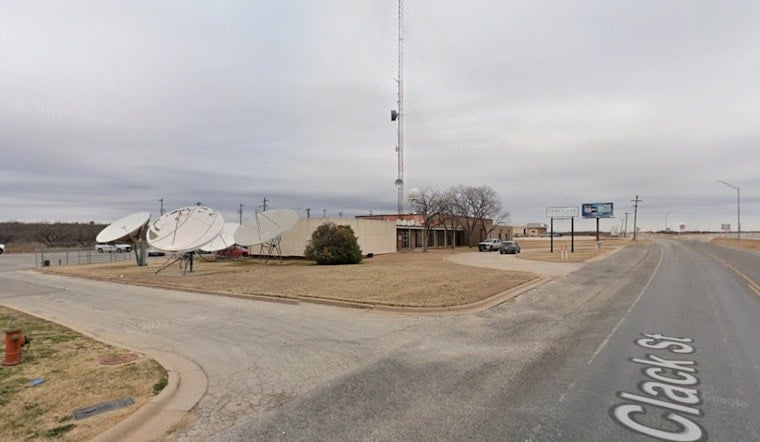
The longtime home of KTXS-TV in Abilene, Texas, is gone. Crews have demolished the storm-battered station building on North Clack Street, more than a year after a violent microburst ripped off its roof, collapsed its brick walls, and toppled its broadcast tower in June 2025.
The station itself called the demolition the end of an era for KTXS employees and viewers, according to a gallery published by WOAI News 4 San Antonio. The building had served viewers across the Big Country region for decades before the storm forced KTXS to change how it operated almost overnight. Photos in the nine-image gallery, credited to KTXS photojournalist Jesse Smith, document the structure's final days standing.
A Storm Mistaken for a Tornado
The damage traces back to June 8, 2025, when a fast-moving microburst tore through northern Abilene. A National Weather Service damage survey, cited by Wireless Estimator, found the storm generated peak wind gusts of 90 mph along a path stretching 4.05 miles long and 1.75 miles wide. Those straight-line winds toppled the station's 199-foot broadcast tower, which had been erected in 1967 under an older structural standard that predated decades of advances in wind-load engineering, per the outlet's reporting.
The National Severe Storms Laboratory defines a microburst as a concentrated column of sinking air within a thunderstorm that spreads outward on impact with the ground, producing straight-line winds that can exceed 100 mph, according to Hoodline. Despite not being a tornado, the phenomenon can inflict comparable destruction, damaging buildings, trees and utility infrastructure across a tight but intense footprint.
Roof Caved In Above the Weather Center
An NWS storm assessment shared on Facebook detailed the mechanical chain of failure inside the station: a heavy roof-mounted air conditioning unit was blown over during the microburst, causing the roof to cave in and exterior brick walls to partially collapse. The damage struck directly above the station's weather center.
Cloud Systems Kept KTXS on Air
Even with its physical building in ruins, KTXS continued serving viewers while dealing with the storm's effects. Abilene Christian University stepped in to provide temporary broadcast facilities on its campus so KTXS news staff could keep producing newscasts immediately after the disaster, according to TV Technology.
Behind the scenes, parent company Sinclair Broadcast Group leaned on cloud-based master control systems hosted in AWS, routing signals through sister stations in Chattanooga and Amarillo to restore KTXS's cable broadcast within 24 hours of the storm, the trade publication reported. The approach let the station continue broadcasting operations throughout West Texas without a functioning physical studio.
Nearly Six Decades on Clack Street
The North Clack Street facility had anchored KTXS's identity since the station changed its call sign there in 1966, after launching in January 1956 as KPAR-TV in Sweetwater, according to Wikipedia's station history. KTXS started as a CBS affiliate before becoming a full ABC affiliate in 1979. Sinclair Broadcast Group acquired the station in 2017 as part of a $240 million purchase of Bonten Media Group, per the same historical record.
An FCC filing published by Public Knowledge noted that KTXS operates as the primary Sinclair-owned competitor against Nexstar Media Group's multi-station presence in the Abilene-Sweetwater media market, underscoring why the station's rapid recovery mattered in a market where two owners control most local news operations.
No Plans to Rebuild on the Old Site
By December 2025, six months after the storm, KTXS meteorologist Caiden Dinkins said in a video update that staff was operating out of leased office space at The Enterprise building in Abilene, with no plans to rebuild on the damaged Clack Street property. That arrangement set the stage for the site's eventual clearance, which culminated in the demolition captured in the newly published gallery.
KTXS continues to provide local news, weather, and community coverage from its new home, even as the building that housed it for nearly 60 years has been reduced to rubble.



