

























































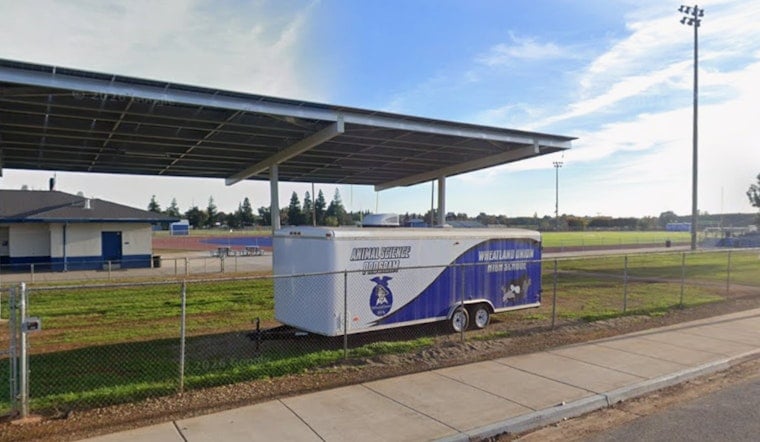
An anonymous phone call using an artificial intelligence-generated voice threatened Wheatland High School right before 6 a.m. Tuesday, triggering a police sweep of the rural Yuba County campus and pushing back the start of classes to 11 a.m. Students already on campus were relocated to a nearby church parking lot and gym while officers and K-9 units cleared the buildings before the threat was determined not credible.
The Wheatland Police Department investigated the threat after Wheatland Union High School officials say they became aware of the call right before 6 a.m., according to KCRA. The district initially pushed its delayed start to 8:50 a.m. before extending it further to 11 a.m. as law enforcement continued checking the campus. Students who had already arrived were moved to the parking lot and gym at The Church of Jesus Christ of Latter-day Saints nearby, per the same report.
Superintendent Nicole Newman said in a release that the threat's method fits a pattern seen at other schools across the country, the station reports. Additional staff and law enforcement were expected to be present at the school for the rest of the day, and K9 units were set to conduct a full sweep of the campus before students returned, according to the district's statement.
A Small Department Facing a New Kind of Call
Wheatland Union High School District enrolls 1,237 students in grades 7 through 12 on its single rural campus, according to California Department of Education data for the current school year. The district sits roughly eight miles southwest of Beale Air Force Base and draws federal Impact Aid funding tied to its military-connected student population, according to the City of Wheatland and Wheatland Union High School District.
Wheatland Police Department operates with nine authorized sworn officer positions, and earlier this year the Yuba County Board of Supervisors approved a multi-year agreement for the Yuba County Sheriff's Office to provide supplemental patrol coverage to the small municipal force, according to CalOpps job posting data. That kind of regional backup is increasingly common as small departments confront facility sweeps triggered by hoaxes that take mere seconds to generate but weeks to trace back to their source.
Part of a Widening Regional and National Pattern
Wheatland's scare came just a day after an automated threat call triggered a lockdown at Acalanes High School in Contra Costa County, according to The Dissent, illustrating a cluster of automated school swatting scares hitting Northern California as the fall term resumed. Hoodline reported on that same incident in coverage of two Lafayette schools locked down the prior day.
Four days before Wheatland's incident, AI-generated voicemail bomb threats hit multiple schools across North Georgia, including six in Jackson County and one in Hall County, forcing building sweeps and class cancellations before investigators deemed them non-credible hoaxes likely originating overseas, according to FOX 5 Atlanta. The FBI's Internet Crime Complaint Center issued a public service announcement on August 4 warning that swatting and hoax bomb threats targeting K-12 schools nationwide increasingly rely on automated systems and synthetic media to trigger heavy emergency responses, with spoofed lines or AI voices used to mask a caller's origin.
Legal Tools and Costs for Hoax Callers
Under California Penal Code Section 148.1, knowingly making a false report of a bomb threat to law enforcement or school personnel is punishable by up to a year in county jail, with enhanced felony penalties if a fake device is placed or someone is harmed, according to FindLaw. Separately, Penal Code Section 148.3 allows courts to order those convicted of falsely reporting emergencies to pay full restitution covering municipal and law enforcement costs from the response, a tool Hoodline detailed in its report on the Lafayette-area lockdowns.
State lawmakers have also moved to make synthetic voice tools more traceable. California's Artificial Intelligence Transparency Act, known as AB 853 and enacted in late 2025, requires major AI providers and online platforms to build in detection tools and disclosures for synthetic audio and media, with key provisions taking effect this month, according to Patch. Even so, no explosive was found at Wheatland High School, but the disruption to families, staff and local police resources was real, reflecting a pattern investigators say is likely to keep recurring as districts open for the new school year.





