

























































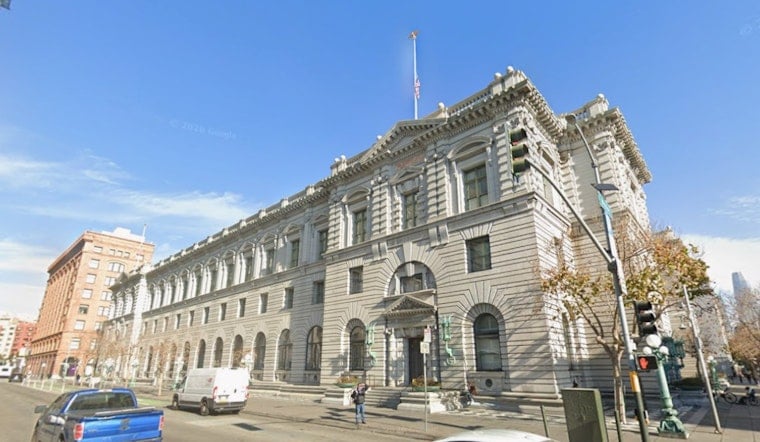
A federal appeals court has thrown out a lawsuit by California and Giffords Law Center that sought to force stricter federal rules on unfinished AR-15 receiver blanks, ruling the state and the gun-control group never proved the alleged regulatory loophole actually harmed them. The decision leaves intact an ATF provision that lets manufacturers sell certain raw metal billets without background checks or serial numbers, so long as the parts ship without tools, jigs, or instructions that would let a buyer easily finish them into a working gun.
The 3-0 ruling from the 9th U.S. Circuit Court of Appeals came Friday, with Circuit Judge Eric Tung writing that neither California nor Giffords showed the sort of direct, non-speculative injury required to bring the case, according to The Daily Record. Tung, a Trump appointee, wrote that the pair could not sue based merely on speculation that wrongdoers might exploit the alleged gap in coverage, and that most of the harm Giffords claimed to have suffered predated the rule itself. Judges Holly Thomas, a Biden appointee, and Anthony Johnstone, also a Biden appointee, joined the opinion. Separately, Courthouse News reported the panel's opinion was authored by Circuit Judge Consuelo Callahan, who found that neither party demonstrated a concrete injury from the ATF's rule — the dossier does not resolve which judge authored the opinion, so both accounts are noted here.
What the Lawsuit Actually Challenged
At issue was Example 4 of 27 C.F.R. § 478.12, a provision the ATF added in its 2022 final rule to distinguish raw, unmachined metal components from functional firearm receivers. Per the Federal Register, an unfinished AR-15 billet or blank that lacks indexed or machined interior cavities is not legally classified as a receiver if it is sold without completion tools, jigs, or instructions. California and Giffords objected to that carve-out, arguing the components could still be bought separately and assembled into untraceable weapons.
Tung wrote that California did not show the ATF's rule forced the state to spend more training law enforcement or to accelerate its own ghost gun legislation, and that Giffords similarly failed to demonstrate the agency's approach undermined its core mission or drove up its costs of combating ghost gun proliferation, the Daily Record reported. Attorney General Rob Bonta and Giffords did not respond to requests for comment on the ruling, per the same account.
A Separate Texas Ruling Loomed Over the Case
The Ninth Circuit's decision landed just four days after U.S. District Judge Reed O'Connor, ruling from Fort Worth, Texas, found the 2022 ghost gun rule violated the Second Amendment — a decision that stands in tension with the U.S. Supreme Court's March 2025 ruling in Bondi v. VanDerStok, which upheld the federal government's ghost gun regulation 5-4 and found the ATF acted within its authority under the Gun Control Act of 1968, according to The Independent. That 2025 Supreme Court decision reversed an earlier O'Connor ruling that had also struck down the rule. The Trump administration has continued to defend the ghost gun rule in court even as President Trump has generally supported more expansive gun rights than former President Biden, under whose administration the 2022 rule was adopted.
California's Own Ban Remains Untouched
Whatever happens at the federal level, California residents remain bound by a separate state law. Assembly Bill 1621, enacted in June 2022, amended Penal Code Section 29180 to prohibit the possession, sale, and manufacture of unserialized firearms and precursor components statewide, according to LegiScan. That means the federal carve-out for unfinished billets at the center of this lawsuit has no bearing on what's legal to buy, sell, or possess inside California's borders.
The state's enforcement push appears to be working, at least by one measure. California Department of Justice statistics released in July showed law enforcement recoveries of untraceable ghost guns dropped for a fourth consecutive year in 2025, a trend Hoodline detailed in its report on a Petaluma raid netting ghost guns, with state officials crediting multi-agency enforcement and strict legislation for the decline. California has also pursued enforcement outside the courtroom: in June 2024, Bonta and Giffords secured a $675,000 civil settlement with three major ghost gun manufacturers — Blackhawk Manufacturing Group, MDX Corporation, and GS Performance — permanently halting their sale of unserialized DIY kit firearms in the state.
The Fight Is Shifting to 3D-Printed Blueprints
Nationally, the scale of the problem that prompted these rules has been stark. U.S. law enforcement agencies recovered more than 92,000 privately made firearms between 2017 and 2023, with annual seizures climbing from 1,629 in 2017 to more than 19,000 in 2021 alone, per reporting cited in Hoodline's earlier coverage of ghost guns surfacing in Sonoma County. As physical kit sales face tighter restrictions, California officials have increasingly turned their attention to digital blueprints. In February, Bonta and San Francisco City Attorney David Chiu filed a joint lawsuit against Gatalog Foundation Inc. and CTRLPew LLC seeking to block the online distribution of digital CAD code used to 3D-print ghost guns and rapid-fire conversion switches.
State lawmakers have also proposed reaching further upstream. Assembly Bill 2047, introduced this year, would require consumer 3D printer manufacturers selling in California to build in technical guardrails that automatically block the printing of firearm components by December 2029 — a proposal that has drawn opposition from prop makers and civil liberties groups over privacy concerns, as Hoodline reported in its piece on Hollywood prop shops pushing back against the plan.
For now, the Ninth Circuit's ruling settles nothing about whether the ATF's treatment of unfinished receiver blanks is good policy — only that California and Giffords weren't the right parties to challenge it in federal court, and only on the standing question they raised. The rule stays in place at the federal level, California's independent ban stays in place at the state level, and the broader legal battle over ghost guns keeps moving, from Fort Worth courtrooms to Sacramento's legislature to the code repositories where 3D-printable gun files circulate.





