

























































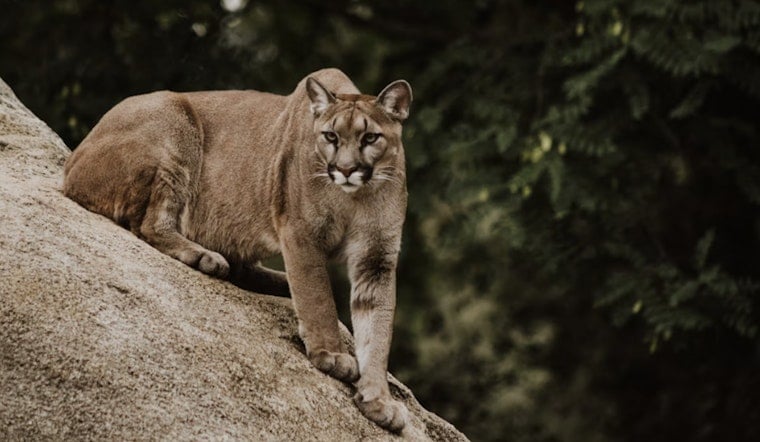
A lawsuit filed against the Arizona Game and Fish Department claims that kittens and pre-reproductive juveniles made up 54% of the mountain lions killed by sport hunters between 2018 and 2024, with the state's next hunting season set to open on August 21. The suit, brought by the Center for Biological Diversity, asks a court to halt the issuance of mountain lion hunting permits until officials can prove the state's population is sustainable.
According to the lawsuit, as reported by FOX 10 Phoenix, sport hunters killed 1,937 mountain lions in Arizona from 2018 to 2024, an average of 277 per year. Of those, 518 were kittens younger than one year old and 519 were pre-reproductive juveniles under two years old, department data cited in the suit shows. Females accounted for 41% of the total kills over that same period. The Center for Biological Diversity is represented in the case by the law firm Hofmeyr Wang, according to a Center for Biological Diversity release detailing the legal filing.
Experts Point to Population Models Warning of Decline
Wildlife demographic experts analyzed seven years of Arizona Game and Fish Department hunting data as part of the case, per the lawsuit. Three independent analyses by those experts found that Arizona's mountain lion population will sharply decline without lower hunting quotas, the suit states. That conclusion echoes broader research finding that killing more than 20% of adult females in a hunting population can sharply reduce mountain lion numbers, according to the same reporting.
Robin Silver, a spokesperson quoted in the lawsuit coverage, said mountain lions should continue to roam the wilds of Arizona. Silver went further, calling the state-sanctioned killing of kittens and juvenile mountain lions “barbaric, unsustainable and illegal.” The lawsuit itself claims that Arizona state officials are failing their legal duty to protect the state's wildlife for the public, arguing that state law requires the Game and Fish Commission and department to put science and public trust first.
State Says Population Remains Stable
Arizona Game and Fish Department has said it cannot comment on pending litigation. But the department has separately estimated that between 2,500 and 3,000 mountain lions live in Arizona, maintaining in 2026 statements that the statewide population remains robust and stable. The agency points to its Mountain Lion Survival and Cause-Specific Mortality Study, launched in 2020, which tracks more than 30 collared lions at all times to refine population models and monitor reproduction and mortality trends.
State regulations also require hunters to physically present a harvested mountain lion's skull and hide, along with proof of sex, to a designated game official within 10 days of the kill for mandatory inspection and age sampling, according to Arizona Game and Fish Department rules. Hunting regulations already prohibit taking spotted kittens or female lions accompanied by spotted kittens, per the U.S. Department of Agriculture's Animal and Plant Health Inspection Service, though environmental groups argue hunters cannot reliably distinguish females with hidden kittens in the field.
Arizona Game and Fish has set the quota for the upcoming hunting season at 340 mountain lions. The department also maintains an annual seasonal closure from June 1 through August 20, implemented in 2021 to reduce kitten orphaning during the peak summer birth pulse, according to Mountain Lion Minutes.
A Recurring Fight Over Big Cat Management
This is not the Center for Biological Diversity's first attempt to reshape Arizona's mountain lion policy. The Arizona Game and Fish Commission voted unanimously in April 2025 to reject an earlier petition from the group that sought to ban hound-assisted hunting of mountain lions and bears, a decision covered by Karmactive.
Mountain lion management has become a flashpoint across the West. Arizona's own regulatory history stretches back to 1919, when the state classified mountain lions as predatory animals subject to a $50 bounty, before reclassifying them as protected big game animals requiring hunting tags in 1970, according to the Cougar Fund. In November 2024, voters in neighboring Colorado rejected Proposition 127 by a 54.7% majority, a measure that would have banned mountain lion and bobcat hunting statewide. California remains the only Western state to fully prohibit sport hunting of mountain lions, a ban voters approved through Proposition 117 in 1990, according to Endangered Species Law and Policy.
Whether an Arizona court will act before the August 21 season opener remains an open question, as does how state officials will respond to the lawsuit's specific claims about kitten and juvenile mortality data. For now, the Arizona Game and Fish Department has limited its public comments, citing the pending litigation, while the Center for Biological Diversity presses its case that current quotas put the species' future in the state at risk.





