

























































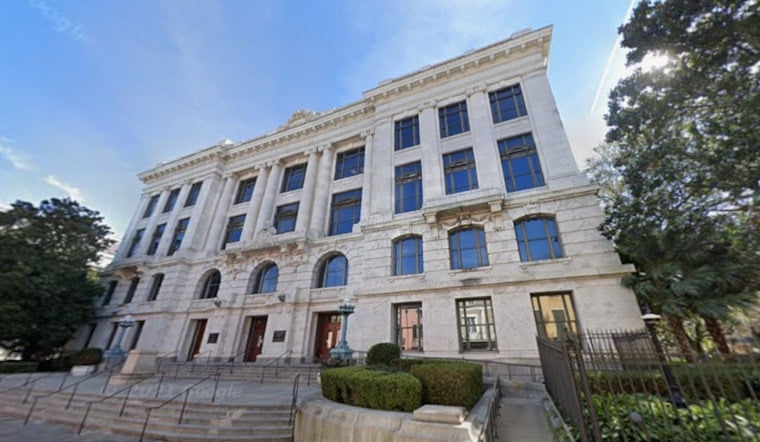
A judge fighting to keep his name on the November ballot has taken his case to the Louisiana Supreme Court, arguing an appeals court used the wrong legal standard to disqualify him over unfiled tax returns. Attorneys representing 23rd Judicial District Court Judge Steven Tureau filed the emergency appeal after the Louisiana Fifth Circuit Court of Appeal ruled he could no longer run for the Division D seat he has held since 2020.
The dispute traces back to a petition filed on August 14, 2026, by Robert J. Snyder Jr. and Ruth W. Snyder, who challenged Tureau's candidacy, according to WBRZ. Robert Snyder is Tureau's opponent for the Division D judgeship, which covers Ascension, Assumption and St. James parishes. The Snyders' petition argued that Tureau's sworn candidacy affidavit was false because he had not actually filed his 2022, 2023, 2024 and 2025 tax returns before requested extensions on those years expired.
A Trial Win Undone on Appeal
The case first went before ad hoc Judge Paul Bonin at a bench trial on August 18, 2026, in the St. James Parish Courthouse. Bonin initially sided with Tureau, finding that testimony and evidence from CPA Alton D. Thornton Jr. about IRS extension filings satisfied the state's candidacy requirements, per L'Observateur's account of the proceedings.
That victory did not last. The Fifth Circuit Court of Appeal reversed course in a divided 4-3 en banc decision issued August 24, 2026, ruling that because Tureau failed to file state returns within six months of his requested extension dates for 2022, 2023 and 2024, those lapsed extensions could no longer satisfy the qualifying requirement, according to the court's own opinion in the case. The panel's split underscores how contested the legal question remains even among the judges who decided it.
What the Tax Records Show
The challenge leaned heavily on an August 11, 2026 public-records response from the Louisiana Department of Revenue, which confirmed Tureau filed state returns for 2020 and 2021 but had no record of state filings for 2022 through 2025, the Fifth Circuit's opinion states. The department noted that an automatic extension covers tax year 2025 through November 15, 2026, leaving 2022 through 2024 as the years actually in dispute. IRS Form 1040 Account Transcripts introduced at trial showed Tureau timely requested federal extensions for those same three years but did not file returns before the extensions lapsed, triggering IRS non-filing inquiries, though the trial and appellate courts interpreted the legal weight of those notices differently.
Tureau's attorney, Baton Rouge lawyer Rob Marionneaux, argues the Fifth Circuit majority made a legal error by applying tax code penalty provisions to effectively rewrite the election code, according to WBRZ. Marionneaux's writ of certiorari also contends the Snyders failed to post their suit conspicuously at the courthouse, as state law mandates, and that the Fifth Circuit ignored precedent that favors keeping candidates on the ballot rather than removing them.
A Split Between Appeals Courts
Tureau's appeal points to a nearly identical fight playing out in New Orleans. In DeBose v. Hon. Juana Marine-Lombard, decided August 22, 2026, the Louisiana Fourth Circuit Court of Appeal reached the opposite conclusion, ruling in favor of Orleans Parish Magistrate Judge Juana Marine-Lombard and keeping her on the ballot despite a similar public-records challenge over missing 2023 state tax filings, as detailed in prior Hoodline coverage. The Fourth Circuit determined that tax filing disputes did not automatically render Marine-Lombard's certification falsely made, according to FindLaw's summary of the ruling. That conflict between circuits is now central to Tureau's request that the state's highest court step in.
Louisiana election law leaves little room for a middle ground here. Under La. R.S. 18:463 and 18:492(A)(7), candidates must swear they filed tax returns, obtained valid extensions, or were exempt for each of the previous five years, and Justia Law's summary of the statute notes there is no lesser penalty than complete ballot removal if that certification is proven false in court. Because parish clerks and the Secretary of State play only a ministerial role in accepting candidacy papers, without independently auditing tax filings, the only path to challenging a candidate is a timely lawsuit like the one the Snyders filed.
A Ticking Legal Clock
Time is not on anyone's side. Election contests in Louisiana move on a compressed statutory schedule under La. R.S. 18:1409, with appeal motions and bonds due within 24 hours of judgment, appellate hearings required within 48 hours of the record being lodged, and rulings due within 24 hours of oral argument, according to Justia Law. That timeline exists so ballots can be printed before early voting begins, which means the Louisiana Supreme Court is expected to act on Tureau's writ within days rather than weeks.
If the justices leave the Fifth Circuit's disqualification in place, Robert Snyder Jr. becomes the sole qualified candidate and judge-elect for the Division D seat, since no other candidates filed during the August qualifying period, per the Pelican Post's reporting on the case. Tureau was widely seen as the favorite heading into the race before the lawsuit was filed.
The ballot fight is not Tureau's only pending legal matter. He also faces a formal misconduct hearing scheduled for September 2026 before the Louisiana Judiciary Commission, stemming from a February 2023 late-night altercation at a Gonzales daiquiri bar, a case Hoodline has previously reported on. Whatever the Supreme Court decides about his ballot status, that separate disciplinary proceeding will move forward on its own track.





