

























































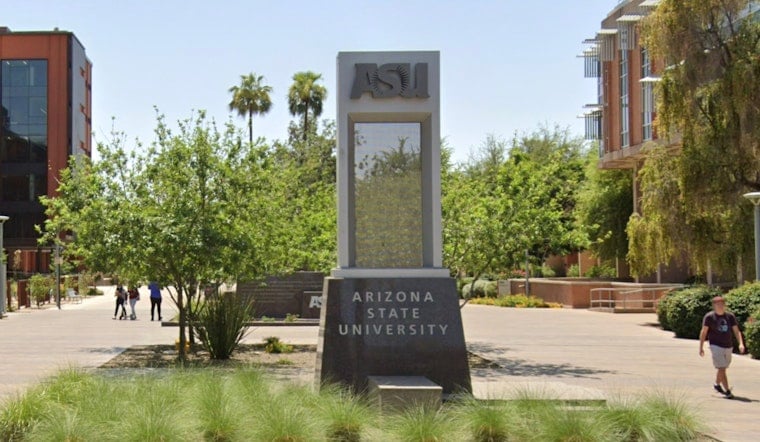
An Arizona State University men's hockey player remains hospitalized after collapsing during an outdoor workout this past Thursday, as the Phoenix area sweltered under an active Extreme Heat Warning with temperatures reaching 106 degrees. The university confirmed the hospitalization in a statement Sunday, though officials have not disclosed the athlete's identity, condition specifics, or the circumstances that led to the collapse.
According to The New York Times, the player collapsed while training outdoors at Arizona State on Thursday, at a time when the Phoenix area's average temperature for the day sat at 92.5 degrees but afternoon highs climbed to 106. Chris Fiscus, ASU's vice president of media relations, declined to name the student-athlete, citing privacy laws, and confirmed only that the player remains hospitalized as of the university's Sunday statement.
“The university offers its support for the student-athlete, their family and all of our student-athletes during this difficult time,” Fiscus said, per the same report. Beyond that statement, ASU has not detailed what time of day the workout took place, whether athletic trainers were on site, what cooling equipment was available, or whether the session followed NCAA heat acclimatization guidelines — all of which remain open questions as of publication.
An Extreme Heat Warning Was Already in Effect
The collapse happened while the National Weather Service's Phoenix office had an Extreme Heat Warning in place, one that KESQ reported was issued that Thursday and warned of afternoon temperatures between 106 and 115 degrees along with a Major Heat Risk across the metro area through this past weekend. NWS advisories tied to such warnings generally urge that strenuous outdoor activity be shifted to early morning or evening hours to avoid peak heat.
The timing lands the incident squarely inside a summer that has already strained Maricopa County's public health system. County data reported by KTAR News showed 18 confirmed heat-related deaths and another 215 under investigation as of July, a pace triple that of the same period in 2025, with officials attributing the early spike to an unusually warm spring. The county had recorded 430 total heat-related deaths in 2025, down from 608 in 2024 and a record 645 in 2023, according to the Maricopa County Department of Public Health.
Hockey Coming Off a Big Season Announcement
ASU's hockey program, led by head coach Greg Powers since its move to NCAA Division I status in 2015, is preparing to open its 2026-27 season on October 2 at Lindenwood, with a home opener set for October 9 against Holy Cross at Mullett Arena. Powers guided the program's transition into the National Collegiate Hockey Conference in 2024 after nine years as an independent Division I team, as detailed by Cronkite News. The 36-game slate, announced in May, marks ASU's third season in the NCHC.
Broader Scrutiny of Heat Safety in Sports
The collapse arrives amid mounting national attention to how athletic programs handle extreme heat. Federal lawmakers reintroduced the Jordan McNair Student Athlete Heat Fatality Prevention Act in July 2025, seeking to mandate heat illness emergency action plans and cold-water immersion equipment for high school and college programs nationwide, according to FOX 5 DC. The bill is named for the University of Maryland football player who died of exertional heatstroke following a 2018 practice.
The NCAA Sports Medicine Handbook recommends progressive heat acclimatization over 7 to 14 days along with structured hydration intervals and continuous environmental monitoring during hot-weather sessions, per guidance cited by the CDC. The Korey Stringer Institute, founded after the 2001 heatstroke death of NFL player Korey Stringer, has said exertional heat stroke fatalities in sports are 100% preventable when programs conduct gradual acclimatization and keep cold-water immersion tubs on site for immediate cooling upon collapse.
Arizona high schools already operate under stricter rules than college programs in some respects: Arizona Interscholastic Association guidelines require Wet Bulb Globe Temperature measurements every 30 minutes during outdoor activity to trigger mandatory rest or cancellation, since Arizona is designated a high-exposure region requiring strict work-to-rest ratios in summer months. Separately, research from ASU's Julie Ann Wrigley Global Futures Laboratory has found that traditional wet-bulb temperature thresholds can underestimate how much physiological stress and survivability risk desert heat actually poses.
This is not the first extreme-heat incident to draw scrutiny in the region this summer. Hoodline previously reported on a Glendale heat incident involving children in 108-degree conditions, part of a summer that has repeatedly tested public safety across Maricopa County. ASU has not indicated when it expects to release further updates on the hospitalized player's condition, and the story remains developing.





