

























































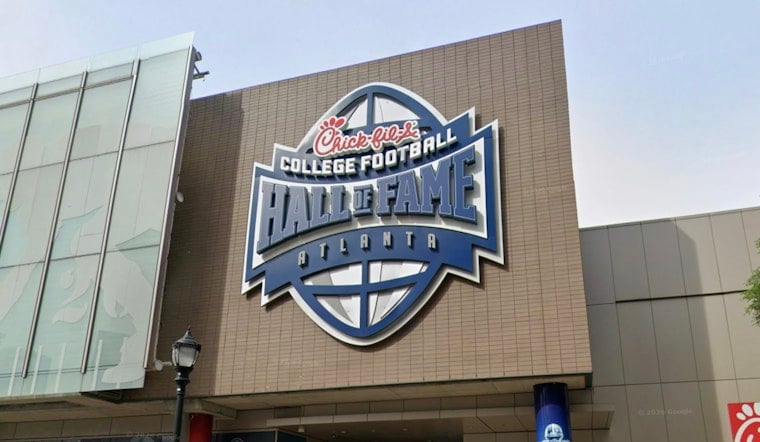
Downtown Atlanta's College Football Hall of Fame is throwing open its doors for free on Saturday, August 22, 2026, giving local families a chance to skip the usual $38 adult admission fee as the museum kicks off Football Fest & Free Day. The event runs during the Hall's normal operating hours, 10 a.m. to 5 p.m., and coincides with the approach of college football's Week 0 slate.
The free day, presented by the Peach Bowl, will fill the museum and the surrounding downtown blocks with local marching bands, mascots, the Clark Atlanta cheerleaders and the College GameDay bus, according to 11Alive. The Atlanta Braves, Atlanta Falcons and Atlanta Vibe are also slated to take part, and organizers have promised additional surprises unique to what they call the capital of college football, per the same report. For families who might otherwise pay full price, the timing lines up with a real financial break: standard adult tickets to the Hall normally run $38, while admission for children ages 3 to 12 costs $27, according to Beyond Surplus. Seniors and students typically pay $33, while kids under 3 and active or retired military members already get in free.
What's New on Display
The centerpiece of Saturday's event is a first look at a dedicated display honoring the 2026 College Football Hall of Fame class, which the Hall says gives fans a chance to celebrate the return of college football to Atlanta. That class, announced in January, includes 18 First Team All-Americans and four coaches, headlined by 2009 Heisman Trophy winner Mark Ingram along with standout defensive linemen Aaron Donald and Ndamukong Suh, according to the National Football Foundation. The 2026 class also features wide receivers Marvin Harrison, Herman Moore and Peter Warrick, plus head coaches Chris Petersen and Gary Patterson.
Getting a bronze bust in Atlanta is a genuinely rare honor. Of more than 5.1 million people who have played or coached college football, fewer than 1,350 — about 0.02 percent — have ever been inducted, per the Hall's own figures. This year's class will be formally inducted at the 68th NFF Annual Awards Dinner on December 8 in Las Vegas before their permanent displays are enshrined back in Atlanta, the National Football Foundation notes.
Getting There and Getting In
Because outdoor Football Fest activities will take over Marietta Street between Baker Street and International Boulevard/Park Avenue West, that stretch of road will be closed for the day, and drivers parking at the adjacent Green Deck will need to enter through its rear entrance off Baker Street, per the College Football Hall of Fame. Organizers are strongly encouraging attendees to take MARTA to the GWCC/CNN Center station rather than drive into downtown. The outdoor festival portion along Marietta Street is open to everyone without a ticket.
Inside the museum, general admission is free, but attendees can pay extra for two upgraded options: a $10 Supporter Experience for priority entry, or a $40 VIP Experience that includes a timed guided tour of the facility, the Hall's website states. Once inside, visitors can check in at the three-story Helmet Wall, which lights up helmets from more than 750 college football programs when a fan taps in with their chosen school, according to CBS Sports.
Why the Peach Bowl Is Footing the Bill
The Peach Bowl's sponsorship of the free day ties directly into its bigger role this season: the bowl is set to host a 12-team College Football Playoff Quarterfinal at Mercedes-Benz Stadium on January 1, 2027, per 11Alive's report. The Peach Bowl rotates as a host site for CFP quarterfinals and semifinals under the expanded playoff format, according to the College Football Playoff schedule.
The Hall of Fame itself has been a fixture of downtown Atlanta since it relocated from South Bend, Indiana, in August 2014, opening a $66.4 million, 94,256-square-foot building next to Centennial Olympic Park, according to the National Football Foundation. The move made Atlanta the museum's third home, after it was originally founded in Kings Mills, Ohio, in 1978. According to the venue's own estimates, the Hall now generates roughly $12.7 million in annual economic impact for Georgia and more than $1.7 million a year in sales taxes for local and state governments — revenue that leans heavily on the kind of high-traffic weekends that bowl games, SEC championship visits and fan festivals like Saturday's tend to bring.





