

























































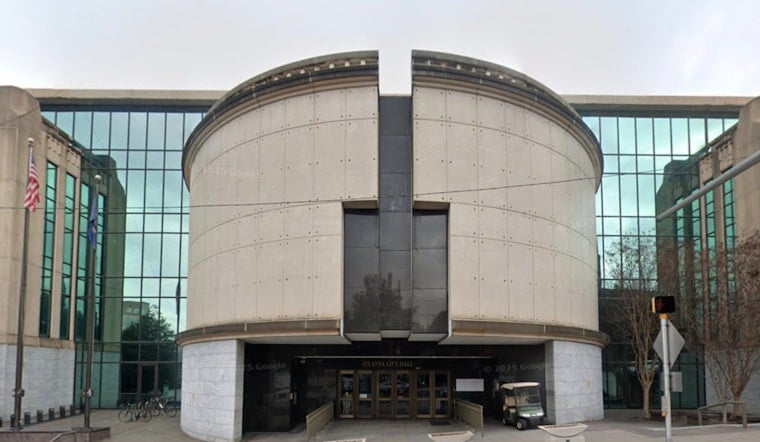
Atlanta could soon let state-licensed medical cannabis dispensaries open closer to schools, early care programs and houses of worship than current rules allow, under an ordinance headed to the city council's zoning committee. The proposal would create a special permit process for dispensary operators seeking to locate inside buffer zones that otherwise keep them away from those sensitive sites.
The ordinance, sponsored by council members Wayne Martin and Antonio Lewis, does not automatically exempt dispensaries from Georgia's state-mandated distance rules, according to Axios. Instead, it sets up a case-by-case review path that operators could use to ask for an exception. Atlanta's Zoning Review Board has already recommended that the city council approve the ordinance, with a vote expected Thursday, and the full council would still need to weigh in if the zoning committee signs off.
Under Georgia Code § 16-12-215, dispensaries are generally barred from operating within 1,000 feet of a school, early care center or place of worship — but the statute explicitly lets municipalities modify that buffer through local zoning powers to improve patient access, according to Justia Law. City planners note Atlanta has actually held that authority to relax distance requirements since 2021, per the Axios report, meaning this ordinance would formalize a process rather than create a brand-new power.
How the Permit Process Would Work
Any dispensary hoping to locate inside a buffer zone would need to clear several hurdles. Applicants must undergo a city staff review, seek recommendations from the local Neighborhood Planning Unit, and then go before the Zoning Review Board, according to ATL 311. From there, the Atlanta City Council would make the final call on whether to approve or deny each proposed location.
Proposed sites would also have to sit in zoning districts where retail establishments, hospitals and clinics are already permitted principal uses, per the Axios report authored by Thomas Wheatley. That requirement would rule out purely residential parcels even if a council-approved exception to the buffer rule were granted.
Why Atlanta Is Short on Dispensaries
Atlanta currently has just three licensed medical cannabis dispensaries within city limits, compared with nearly 20 spread across suburban municipalities like Marietta, Chamblee, Smyrna, Decatur and Stockbridge, according to Georgia Cannabis. That scarcity inside the city proper has left many Atlanta patients driving to the suburbs for products that pharmacies aren't allowed to sell.
As Hoodline reported in March, more than 400 independent pharmacies statewide are eligible to dispense low-THC cannabis oil, but they're barred from offering higher-potency vapes or flower and face federal pushback after the DEA warned the pharmacy program violates federal law. That leaves standalone dispensaries as the only legal option for patients seeking the vape cartridges and dry herb flower that Georgia recently legalized.
A Law Change Driving New Demand
The push for more Atlanta locations comes as Georgia's medical cannabis program has created a surge of new people seeking to join the state's patient registry, per the Axios report. That surge traces directly to Senate Bill 220, the Putting Georgia's Patients First Act, which took effect July 1 and eliminated the state's old 5% THC potency cap in favor of a possession limit of up to 12,000 milligrams of total THC per patient, according to PrestoDoctor. The law also authorized dry herb flower and vape cartridges for patients 21 and older and added qualifying conditions such as lupus and irritable bowel syndrome.
The numbers show just how fast that shift has moved the market. Georgia's active patient registry grew from 36,595 people in late June to 44,854 by early August — a jump of more than 22% in roughly a month, according to the Georgia Recorder. That growth also matters for supply: state law allows the Georgia Access to Medical Cannabis Commission to issue one additional retail dispensary license for every 10,000 new patients added beyond the original statewide cap of 15, as reported by MJBizDaily.
Industry executives quoted by the Georgia Recorder estimate the state's patient registry could eventually swell to between 300,000 and 400,000 people, matching the 3% to 4% population participation rates seen in more established medical cannabis states. If that forecast holds, pressure on Atlanta's limited dispensary footprint is likely to keep building regardless of how this particular ordinance turns out.
A Longer History of Local Cannabis Reform
Atlanta's willingness to revisit its own cannabis rules isn't new. Back in October 2017, the city council voted unanimously, 15-0, to decriminalize possession of one ounce or less of marijuana within city limits, reducing penalties from up to six months in jail to a $75 fine, according to the US Hemp Museum. Georgia's broader path to legal retail cannabis has moved far more slowly: lawmakers legalized low-THC oil possession under Haleigh's Hope Act back in 2015, but administrative delays and legal disputes stalled the opening of the state's first brick-and-mortar dispensaries until April 2023.
For now, the immediate question is procedural — whether the zoning committee advances the Martin-Lewis ordinance and whether the full council ultimately approves it. Any dispensary that later seeks to use the new permit process would still face the multi-step review, neighborhood input and council vote built into the ordinance, meaning no buffer-zone exception would be automatic even if the measure passes.





