

























































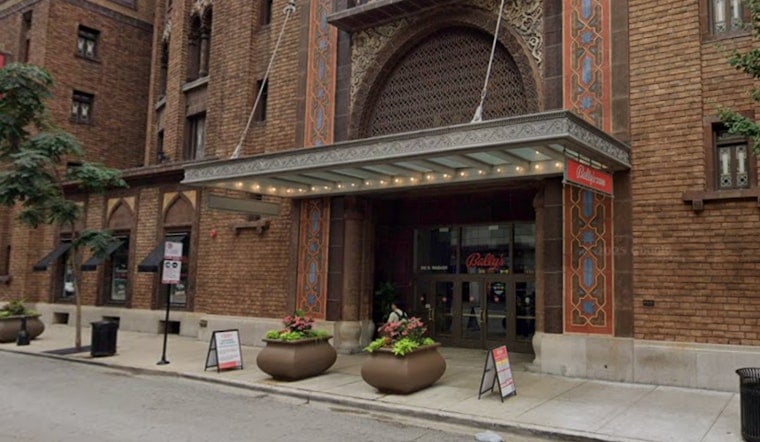
Bally's Corporation has told federal regulators there is substantial doubt about its ability to continue as a going concern, a stark warning that lands just as construction stays frozen on nearly all the non-gaming amenities at its $1.7 billion casino complex in Chicago's River West neighborhood. The disclosure, filed with the Securities and Exchange Commission, arrives amid a bitter dispute between the company and City Hall over Chicago's rollout of video gambling terminals — a fight that has already idled roughly 1,500 construction workers at the site.
According to the Chicago Tribune, Bally's stated in its filing that “the conditions and events raise substantial doubt about its ability to continue as a going concern.” Auditors generally issue that kind of warning when they believe a company might default on its debt within 12 months, and per the same report, Bally's is now seeking cash through some combination of asset sales, an equity offering, or debt financing. The company filed its second-quarter earnings with the SEC on August 14, and separate financial data published by Investing.com shows Bally's carrying roughly $4.5 billion in total long-term debt after posting a $146.1 million net loss for the quarter, even as revenue grew 21% to $792.2 million.
Bally's insists the two issues are not connected. The company has said the construction slowdown in Chicago is about video gambling terminals and unrelated to the liquidity issues disclosed in its SEC filing, according to the Tribune's reporting, and maintains that its Chicago development remains fully financed. The company has also said its broader financing issues are tied to future developments elsewhere rather than to the River West project specifically.
A $1.7 Billion Complex Frozen Mid-Build
Chicago selected Bally's in May 2022 to build the $1.7 billion entertainment complex at the former Chicago Tribune Freedom Center printing plant site, a project meant to eventually include a 500-room hotel, a 3,000-seat theater, 10 restaurants, and 4,000 gaming positions. Mayor Brandon Johnson attended a topping-off ceremony for the 34-story hotel tower in April, a milestone Hoodline covered before the current slowdown began.
Now that hotel tower, along with the events center and planned restaurants, has been put on hold. Bally's Chicago issued a reset notice to the Chicago Community Builders Collective, which oversees construction at the site, on August 8, per the Tribune. The casino floor itself remains on target to open in early 2027, and Bally's has said it remains well situated to continue delivering on its obligations, even as it plans to withhold an annual $4 million payment to the city that is due in September pending resolution of the VGT dispute.
The Video Gambling Fight at the Center of It
The dispute traces back to Chicago's approval of citywide video gambling terminals last fall. Bally's contends the move violates its 2022 host agreement with the city, which the company argues granted it exclusivity over slot machines and table games within Chicago. The Illinois Gaming Board has licensed 42 Chicago VGT locations and received 311 applications, but per the Tribune, the terminals have not yet begun operating pending final approval from the city.
The stakes are real for both sides. Chicago had counted on VGT revenue to plug a $6.8 million funding gap in its budget, and aldermen included that revenue in the 2026 budget plan. Statewide, the numbers show why VGTs matter so much to city and state coffers: Illinois video gambling terminals generated $1.1 billion in combined state and local tax revenue in 2025, according to iGaming Business, compared to roughly $430 million from all 16 of the state's physical casinos combined. Illinois has operated VGTs since 2012 and now counts nearly 50,000 machines across more than 8,700 locations statewide.
As an alternative to the citywide terminals, Bally's floated a plan in June to build five airport gaming lounges at O'Hare and Midway, estimating each could generate $5 million annually — enough, the company argued, to cover the city's funding gap while preserving its exclusivity, according to CBS News. The company has also retained the law firm Fahner Rosenberg PLLC in preparation for potential legal action against the city, notable because former Mayor Lori Lightfoot — who originally awarded Bally's the casino license in 2022 — is a partner there, per reporting from iGaming Business.
Aldermen Push Back, Question Bally's Capacity
Twenty-eight aldermen sent Bally's a demand letter on August 12 calling for a public hearing and a resumption of the full development as planned, questioning the company's financial capacity to complete the $1.7 billion project. Those aldermen have said video gambling terminals must actually be operating before Bally's can claim a host-agreement violation and seek good-faith renegotiation. No date for a public hearing has been announced.
The skepticism has roots in the temporary casino's track record. Bally's has operated a smaller temporary casino at Medinah Temple in River North since 2023, and as Hoodline previously reported, that facility generated $16 million in Chicago tax revenue in 2024 — missing the city's $35 million budget projection despite ranking as the third highest-grossing casino in Illinois. A spokesperson for Mayor Johnson did not respond to a request for comment on the going-concern warning as of August 16, per the Tribune's reporting.
Corporate Debt Load Predates the Chicago Standoff
The pressure on Bally's balance sheet stretches well beyond River West. The company completed a $4.6 billion buyout in February 2025, led by its largest shareholder, hedge fund Standard General, combining Bally's with Queen Casino & Entertainment and giving Standard General chairman Soo Kim roughly 74% majority control, according to Yogonet International. Real estate investment trust Gaming and Leisure Properties committed $940 million in construction financing for the Chicago project's hard costs and separately bought the underlying River West land for $250 million in 2024.
Bally's is also chasing capital for projects far from Chicago. Per reporting from Mint, the company executed a non-binding term sheet in July for a loan meant to raise more than $500 million to fund its proposed Bronx, New York casino resort, where it has already spent over $800 million. And according to SEC filing disclosures reported by TipRanks, Bally's secured a temporary waiver of its consolidated net leverage covenant on its revolving credit facility this year, but management has warned that internal forecasts show the company risks failing liquidity maintenance rules within 12 months without fresh capital. Bally's has said it plans to pursue financing alternatives by early 2027 to shore up liquidity and stay compliant with its lenders.
What remains unresolved is whether Chicago aldermen will secure the public hearing they are demanding, whether Bally's follows through on potential litigation against the city, and whether the casino floor can actually open independently by early 2027 without the hotel, theater, and restaurants that surround it on paper. For now, the company says nothing has changed in the status of construction based on its most recent quarterly filing — even as the tower crane at 777 W. Chicago Avenue sits idle above a project the city once bet would define its riverfront.





