

























































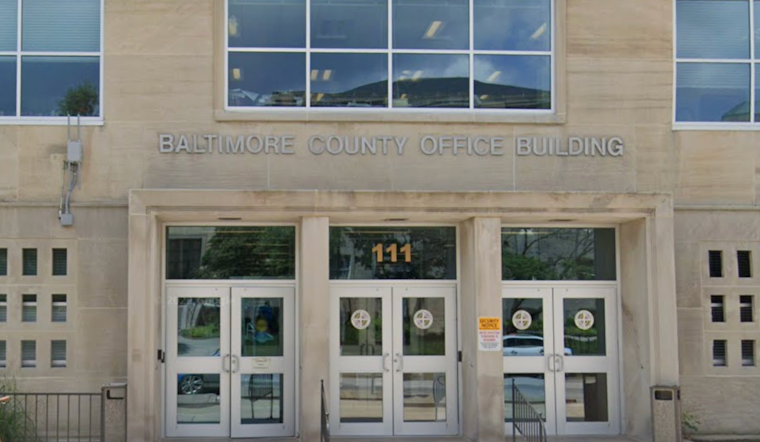
A Baltimore County Department of Permits, Approvals and Inspections employee failed to work more than 239 hours while still collecting a paycheck, racking up a total loss to the county of $16,823.25, according to a newly released Inspector General report. Investigators found the employee was inactive or left work early for 183 hours and 24 minutes over 49 days between October 2025 and January 2026, on top of missing 55 hours and 54 minutes of work in June and July 2025.
The findings, first detailed by WBFF, show the county paid $14,581 in lost labor for hours the employee simply did not work, plus an additional $2,242.10 in overpaid vacation pay. All told, the lost labor time exceeded 239 hours, more than six weeks by any standard work schedule. During the same period reviewed by investigators, a lead inspector completed 70 percent more inspections than the employee under scrutiny, a gap the report treats as a stark measure of the shortfall.
Confronted with the GPS and timekeeping data laid out by investigators, the employee offered little pushback. “If that's what it shows, that's what I did I guess,” the inspector said, according to the report, adding that they stayed in their area when they had nothing to do instead of driving around. The report notes the inspector was believed to have engaged in the conduct for years, though the documented violations covered in the investigation span the October 2025 to January 2026 and June-July 2025 windows.
Supervisors Missed the Warning Signs
Investigators concluded that Baltimore County supervisors failed to adequately oversee the employee's use of county time and vehicle privileges, allowing the problem to continue unchecked. The county vehicle assigned to the employee was found idle at work-unrelated locations, or the employee left early, during 16 days in June and July 2025. Investigators also noted that older GPS data from before that window was unavailable, limiting how far back the full scope of the misconduct could be traced.
The gap in supervision is not an isolated failure. A separate OIG investigation published in January 2025 found that Baltimore County had spent $338,000 on its NexTraq fleet GPS tracking system since 2022, yet supervisors across multiple agencies consistently failed to actively monitor tracking data or act on vehicle misuse alerts. That same blind spot surfaced again in May 2025, when investigators revealed that a Department of Public Works crew chief — later identified as the uncle of former County Executive Johnny Olszewski Jr. — spent up to six hours a day during work shifts at political campaign offices and parked a county vehicle overnight at home for 272 of 601 days reviewed, according to Baltimore Brew.
A Department With a History of Scrutiny
DPAI, which handles zoning enforcement, building permits, and livability codes for the county, has faced repeated OIG attention. Just weeks before this report, in August 2026, the watchdog found that another DPAI employee was preselected for a promotion, with paperwork falsely documenting a job interview that never actually took place. The department's troubles date back further still: a 109-page 2022 report detailed how former DPAI Director Arnold Jablon improperly waived at least $3 million in developer security deposits and permit fees between 2011 and 2018 while receiving personal favors from the developer, according to Construction Dive.
Pete Gutwald now leads DPAI as its director, per Baltimore County government records. Under Rule 15.04 of the Baltimore County Personnel Rules, willfully making a false official statement, falsifying a timesheet or report, or defrauding the county are all grounds for disciplinary action up to immediate termination. The county has not clarified whether the employee at the center of this report remains employed.
Recommendations and an Unresolved Watchdog
County Executive Katherine Klausmeier, who took over the role in late 2024 after Olszewski's election to the U.S. House of Representatives, provided recommendations in response to the investigation's findings. Among them: DPAI should train supervisors to generate reports and interpret NexTraq data, develop clear policies governing supervisors' use of the tracking system, oversee offsite parking privileges to prevent misuse, and update its driver responsibility policy. The department was also told to require annual acknowledgment of driver responsibility rules during performance evaluations and to communicate the report's findings to all department employees.
Supervisors, meanwhile, were directed to manage and review employee workloads to promote a more equitable division of assignments and to identify additional tasks during slower periods to keep employees engaged. The recommendations arrive as the county's Office of the Inspector General itself faces instability. Founding IG Kelly Madigan left the post in early 2026 to become Howard County's first watchdog leader, and by August 2026 the office was left without executive leadership following subsequent resignations of top deputies, according to Baltimore Brew.
The pattern extends well beyond DPAI. A November 2024 OIG report found the county had mismanaged more than $17,000 in toll expenses due to decentralized vehicle account oversight, and an October 2025 investigation revealed the county's Traffic Calming Unit misspent over $125,000 on improperly placed devices, leading to an employee's dismissal after ethics violations and ADA non-compliance issues were identified. Taken together, the cases point to a recurring theme in county government: expensive tracking systems and internal controls that repeatedly go unused by the supervisors responsible for enforcing them.





