

























































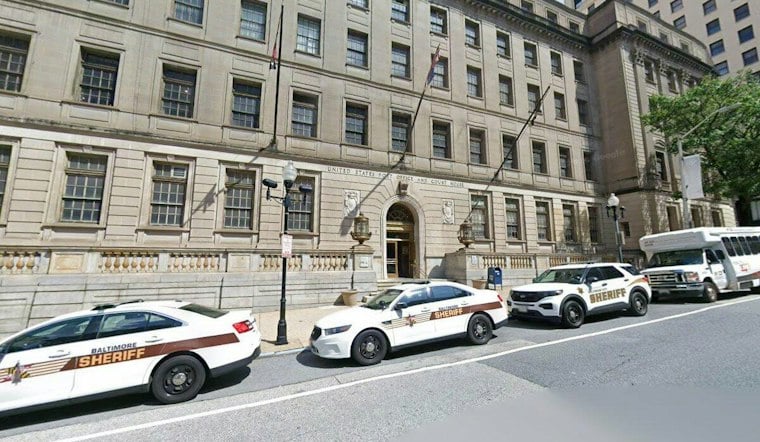
A Baltimore City Circuit Court jury began deliberating Tuesday in the trial of James Hammond, the final defendant charged in the fatal shooting of Deon Beasley at a barbershop on the 1800 block of Washington Boulevard. The case turns on how jurors assess forensic and circumstantial evidence, including DNA, surveillance footage and a group chat prosecutors say was connected to the killing.
Baltimore Witness reported that the jury is deliberating after closing arguments in a trial presided over by Judge Cynthia H. Jones. The outlet reported that Hammond faces two counts of first-degree murder, reckless endangerment, carrying a loaded handgun, and firearm use in a felony or violent crime. Beasley was 39, according to Baltimore Witness; that differs from earlier police and news accounts describing him as 36, including the Baltimore Police Department announcement.
Beasley was shot at the barbershop and later died at the University of Maryland Shock Trauma Center, according to Baltimore Witness’s earlier reporting on the case. In its account of closing arguments, the outlet said surveillance footage shown to jurors depicted two masked people getting out of a Honda Odyssey minivan and walking toward the barbershop before the shooting.
DNA Evidence and a Group Chat Named ‘Jizel’
The prosecution’s case, as described by Baltimore Witness, included DNA evidence and communications prosecutors said connected Hammond to the attack. Prosecutors argued that clothing recovered from a trash bin resembled what a person in surveillance footage wore, and that Hammond was the majority contributor to DNA samples from the clothing, with the results linking him to the sample pool with high probability. They also said Hammond was within a minute’s walking distance of the shooting after the shot was fired and acknowledged being part of a group chat called “jizel,” where plotters planned the attack.
Defense attorney Gabrielle Michel challenged the prosecution’s interpretation of the evidence, Baltimore Witness reported. She argued that no phone messages from co-defendant Lakeem Whitaker tied Hammond to a crime, that the clothing contained DNA from several people besides Whitaker, and that no witness at the scene identified Hammond as a potential suspect.
Co-Defendants Already Convicted in Related Trial
Hammond’s trial is the last of several stemming from the January 2024 shooting. A July 15, 2026, Baltimore Sun headline reported that a trial began in the fatal Pigtown shooting.
A separate, lower-confidence Baltimore Sun search snippet indicated that a Baltimore jury found Barfield and Joyner guilty of first-degree murder for their involvement in the homicide, though that outcome was not detailed in a full report reviewed for this story. Court scheduling coverage from Baltimore Witness had earlier noted that the four original defendants were split for trial, with Hammond and Whitaker joined for one proceeding and Barfield and Joyner for another.
Conflicting Charges and Ages in the Record
Accounts also differ on ages and charges. Baltimore Witness described Hammond as 43, while the BPD announcement published Nov. 26, 2025, about the January 2024 homicide identified him as 40 and said Joyner was charged with conspiracy to commit murder and multiple handgun violations. Earlier Baltimore Witness scheduling coverage, meanwhile, stated that Joyner faced first-degree murder charges.
Baltimore Homicides in Context
The jury’s decision concerns this case; citywide figures do not explain the individual killing. The Baltimore Police Department’s 2025 year-end report said homicides decreased by 31% in 2025 compared with 2024, from 194 to 133. The department cautioned that the prior-year figures reflect updates to historical homicide counting under the FBI’s National Incident-Based Reporting System (NIBRS).
With closing arguments complete, the jury's deliberations in Hammond's case continue, and no verdict had been reported as of Tuesday's trial coverage.





