

























































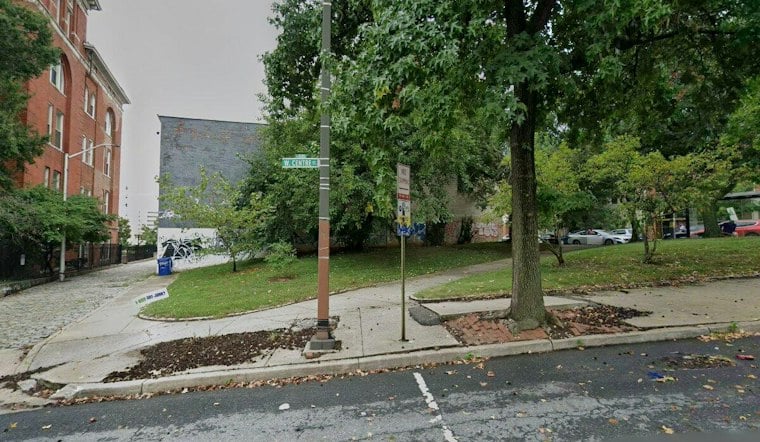
State officials pulled back the curtain Tuesday on preliminary plans to tear down Baltimore's long-dilapidated State Center complex and replace it with a mixed-use neighborhood that could include up to 1,600 residential rental units. The 28-acre office complex, which sits at the intersection of Bolton Hill, Mount Vernon, Upton and Seton Hill, has sat in various states of limbo for two decades, and the concepts presented Tuesday mark the furthest the project has moved toward actual construction in that time.
A Vision Years In The Making
The preliminary concepts were unveiled at a community meeting on Tuesday, as reported by The Baltimore Banner. Beyond the housing units, the proposal could include 64 residential units for sale, 85,000 square feet of retail space, a 125-room hotel and 165,000 square feet of office space, according to the same report. Some of the rental units would need to be set aside as affordable housing under Baltimore City regulations, per the Banner's reporting. No developer has been selected and no construction timeline has been set, the outlet notes.
The State Center complex itself consists of four primary government office buildings totaling more than 1.75 million square feet that once housed roughly 3,300 to 4,300 state employees across a dozen state agencies, according to the Downtown Partnership of Baltimore. Built starting in the mid-1950s, per the Banner's reporting, the buildings had gone decades without major capital investment before the state moved to abandon them altogether.
Two Decades, Four Governors, One Lawsuit
Maryland has struggled with what to do with State Center for 20 years and across four governors, the Banner reports. Then-Gov. Bob Ehrlich's administration first floated redeveloping the site back in 2006, and the state spending board decided to proceed with a redevelopment contract in 2009 — but construction never began. In 2016, then-Gov. Larry Hogan sought to cancel the roughly $1.5 billion redevelopment deal, a move that spurred a lawsuit from the original developer.
That litigation wasn't resolved until November 2024, when Maryland's Board of Public Works approved a $58.5 million legal settlement with the original developer, Ekistics, operating as State Center LLC, paying $40 million in late 2024 and $18.5 million in mid-2025 to close out eight years of litigation, according to CBS News Baltimore. Gov. Wes Moore said at the time the settlement allowed the state to move forward with developing State Center into an economic project benefiting Baltimoreans and Marylanders, per the Banner, adding that the complex had become a continuing hazard without a long-term solution.
Health Hazards Forced An Early Exit
That hazard took a literal form in late 2024, when environmental testing detected persistent Legionella bacteria in the water systems across State Center buildings, according to the Maryland Daily Record — prompting the state center to be temporarily closed, per the Banner's reporting. Hoodline previously covered the Legionella contamination that accelerated worker relocation timelines. To clear the site, state officials relocated or finalized plans to move more than 5,000 state workers into leased commercial office space throughout downtown Baltimore, according to the Downtown Partnership of Baltimore.
That relocation effort has already produced concrete commercial deals. In June, the Maryland Department of General Services requested state approval for a 15-year, $65.8 million lease covering 144,130 square feet at One South Street in downtown Baltimore to rehouse agency staff leaving State Center, the Baltimore Business Journal reported.
Transit Access Drives The Master Plan
The site's appeal rests heavily on its transit connections. State Center sits adjacent to both the State Center Metro Subway station and the Cultural Center Light Rail station, and it's less than a half-mile walk from Baltimore Penn Station, according to the Office of Governor Wes Moore. Amber Wendland said the site has exceptional transit access, per the Banner's reporting, and the Moore administration has prioritized transit-oriented development as a way to spur the state economy and address Maryland's housing shortage.
Moore hired consultants to assess the best use of State Center in 2025, and the governor later created a joint State-City workgroup representing 15 agencies alongside consulting firm Redgate Real Estate Advisors, which spent months conducting market studies to shape the vision plan presented this month, per MDOT's TOD Program News. State Sen. Antonio Hayes, who represents Baltimore's west side, has long advocated for the State Center project moving forward, the Banner notes.
Part Of A Broader Housing Push
The project intersects directly with Moore's broader push to close Maryland's housing gap. The Maryland Department of Housing and Community Development estimates the state faces a supply deficit of roughly 96,000 to 100,000 housing units, requiring housing production to double over five years. In May, Moore signed the Maryland Transit and Housing Opportunity Act, which designates state-owned land near rail stations as enterprise zones and waives minimum parking requirements within a quarter-mile of transit, according to Smart Cities Dive.
Earlier this month, Moore signed two additional executive orders — the Housing Innovation Order and the Permitting Acceleration Order — aimed at setting local housing production benchmarks and speeding up state environmental and building approvals, as Maryland Matters reported. Hoodline previously reported on Moore's orders targeting vacants statewide.
State Center would stand as a significant Baltimore development beyond the Inner Harbor's Harborplace, where city officials are poised to approve tax breaks in the coming weeks, according to the Banner. Baltimore also has underway a plan to revitalize a long-dormant industrial campus on the east side, and officials are separately discussing reviving the Howard Street corridor, the outlet reports. For now, though, State Center's future comes down to the open questions that remain: no developer has been chosen, no financing structure finalized, and no firm timeline set for demolition or construction.





