

























































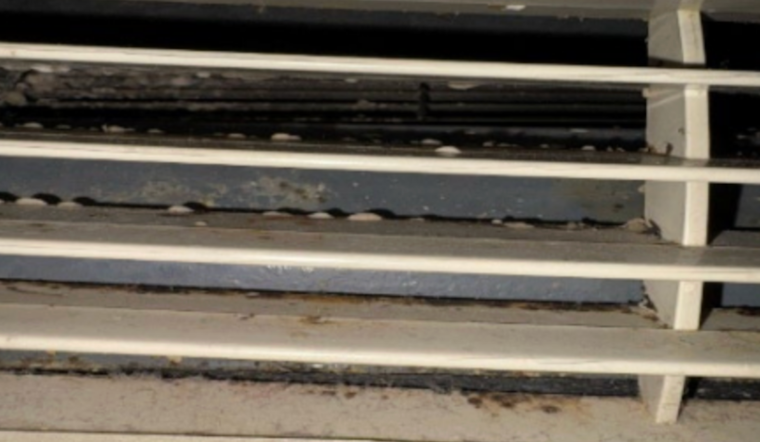
Mushrooms sprouted inside rooms at Baltimore's former Sleep Inn shelter, mold-spore tests came back elevated in half the rooms sampled, and bathroom ventilation fans sat broken for months, according to a city inspector general investigation released Wednesday into conditions at three hotels-turned-homeless-shelters. The report found what investigators described as significant maintenance and living-condition problems across the former Sleep Inn, former Holiday Inn Express and former Fairfield Inn — all operated as emergency shelter sites by Baltimore's Mayor's Office of Homeless Services.
The Office of the Inspector General examined complaints tied to the three properties through site visits, resident complaint reviews, city-record reviews and interviews with MOHS employees and contractors, according to WBFF. At the Sleep Inn, testing conducted in July 2025 found elevated levels of mold spores in three of six rooms sampled, and by September what appeared to be the main HVAC system had been switched off while nonoperating bathroom ventilation fans went unaddressed. Investigators also documented humidity and condensation building on a laundry-room window at the same property that same month.
Mushrooms, Water Damage and Black Spotting Across Three Sites
The problems were not confined to one building. Mushrooms were found growing in rooms at the Sleep Inn, and the city had logged a work request concerning the mushroom growth, per the report. At the former Holiday Inn Express, investigators noted what appeared to be water damage in a vacant room along with humidity and bowed ceiling tiles in the laundry area. The former Fairfield Inn's air-conditioning unit showed what appeared to be black spotting, and investigators found bugs in a vacant room there as well.
Former MOHS employees described the shelter conditions as critical and horrific, reporting bedbugs, mold, nonfunctioning elevators and a lack of hot water, the report states. One former MOHS employee alleged, as characterized in the report, that residents were getting sick because of mold at the Sleep Inn. A July 2025 complaint reviewed by investigators alleged problems spanning building conditions, food, laundry facilities, bedding, basic supplies, mold, pests and inadequate ventilation.
Contractors and City Agencies Disputed Who Was Responsible
Shelter maintenance responsibility was divided among multiple contractors and city agencies, and the report found that those parties disputed responsibility for certain maintenance issues. MOHS had only two employees regularly visiting the city's 10 funded homeless shelters, according to the inspector general's findings. A contractor representative told investigators that a dedicated city liaison could address health and safety issues more quickly than the current arrangement allowed.
The inspector general's office said its public synopsis is a condensed version of a more comprehensive report submitted to city management. Investigators noted they completed their correspondence review before direct access to records, files and communications was removed in early February. The office recommended increased on-site MOHS support, a comprehensive shelter oversight program, clarified maintenance responsibilities, improved ventilation and moisture controls, and stronger management of city contractors and properties.
A Pattern of Shelter Oversight Problems
This is not the first time Baltimore's homeless shelter contracting has drawn scrutiny. A separate inspector general report in September 2024 found that MOHS paid nearly $500,000 in duplicate meal billings to a hotel owner for food that was never provided at a different Holiday Inn shelter location between 2022 and 2023, according to Baltimore Brew. That earlier finding, paired with the new report, points to a recurring struggle over contractor oversight in the city's shelter system.
Independent surveys have echoed the complaints documented by investigators. A September 2025 survey of 74 current and former Baltimore shelter residents conducted by Housing Our Neighbors gave local shelters an average rating of 5.1 out of 10, with respondents citing bedbug infestations, brown tap water, moldy linens and spoiled food, as reported by Baltimore Beat. Advocates cited in that reporting have since called on the Maryland General Assembly to enact state-level licensing and health standards for shelters, since emergency shelters in the state currently lack uniform state oversight.
City Council Members Have Pressed for Answers
The complaints reached Baltimore's City Council last November, when lawmakers pressed homeless services officials over severe shelter maintenance issues and controversial draft proposals to cap shelter stay durations, according to Mobtown Redux. Council members at that hearing highlighted constituent reports of mold and staff mistreatment inside the shelter system.
The hotels at the center of the new report were purchased with pandemic relief money. Baltimore's Board of Estimates approved $15.2 million in American Rescue Plan Act funds in February 2024 to acquire the Sleep Inn and Holiday Inn Express properties, along with $3.2 million for initial facility management, according to a report from CBS News Baltimore at the time. Those same buildings are slated for a long-term transformation: the city awarded a $40.9 million contract in October 2024 for Sojourner Place at the Falls, a project led by Episcopal Housing Corporation and Health Care for the Homeless to convert the former Sleep Inn and Holiday Inn Express into 155 permanent supportive housing units and a 50-unit medical respite center, as Hoodline previously reported.
MOHS Says It Is Already Making Changes
In its response to the inspector general, MOHS acknowledged the seriousness of the conditions investigators found. The agency said it sought a new facilities-management vendor for the three city-funded shelters housed in former hotels and conducted a secondary inspection with consultants on August 7. MOHS also said it removed carpeting throughout the facility as part of its response.
The agency's new facilities-management agreement includes a comprehensive preventive-maintenance program covering HVAC, plumbing, electrical systems, roofing, elevators, fire systems, laundry, housekeeping, waste management and pest control. Under the new agreement, contractors must dispatch an emergency technician within two hours, respond on-site to emergency conditions within four hours, and address urgent problems on-site within 24 hours. A new tracking system requires maintenance requests to be submitted and logged through MaintainX, with work records that include technician sign-offs, photographs, and inspection records when applicable.
MOHS's plan also lays out specific fixes for the complaints residents and former staff raised. It calls for weekly linen exchanges, monthly pest-control services, enhanced bedbug monitoring, regular laundry maintenance, and regular HVAC and environmental inspections, along with procedures for addressing mold, moisture and pest problems going forward. The agency had already moved in November 2025 to issue a request for proposals seeking a dedicated property management contractor to handle facility maintenance across its three hotel shelters, according to the Mayor's Office of Homeless Services, steps taken before the inspector general's findings became public.
Demand for Shelter Beds Remains High
The maintenance failures come as Baltimore's shelter system continues to serve a significant population even as overall homelessness has declined. The city's January 2026 Point-in-Time count recorded 1,595 individuals living in emergency shelters and transitional housing, a 12% overall drop in homelessness from 2025, though chronic homelessness rose 7%, according to Community Housing Associates. MOHS operated with a $73.7 million budget for Fiscal Year 2026, a 19% funding increase intended to expand emergency shelter and housing capacity, funded through city and federal sources.
Whether that expanded budget and the new maintenance contracts can keep pace with deteriorating buildings remains an open question, particularly as the hotel sites await their eventual conversion into permanent housing. For now, residents at the former Sleep Inn, Holiday Inn Express and Fairfield Inn are living in the gap between a temporary emergency shelter system and a redevelopment plan still years from completion.





