

























































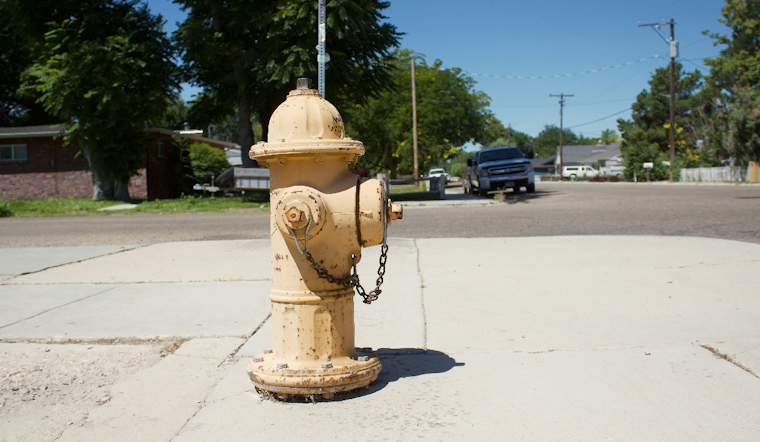
A fire hydrant on Fulton Avenue in Baltimore's Sandtown-Winchester neighborhood sits open and overgrown with grass, and the two women who live across the street from it say they are done waiting for the city to fix it. Sandra Borden and Francine Whittington have called the hydrant's condition a safety concern, and Borden says residents simply want hydrant problems handled in a timely way.
Their frustration reflects a citywide backlog. As reported by WBAL-TV 11, the Baltimore City Department of Public Works currently has about 121 open hydrant-related work orders, and the agency has attributed the delays primarily to supply issues. DPW maintains fire hydrants across the region, including roughly 9,000 in Baltimore City and about 13,000 in Baltimore County, part of a broader network of nearly 22,000 hydrants overall, according to the outlet's reporting.
A Yearlong Wait in Hampden
The most striking example DPW's critics point to sits in Hampden, where a nonworking hydrant across the street from a school was involved in a house fire that firefighters had to battle without it. Baltimore City Councilwoman Odette Ramos, who represents District 14, says that hydrant had been broken for a full year before it was finally repaired, and the fix came only several days after she sent an email pressing the department on the issue.
Ramos checked the city's 311 call data herself and says she wants all hydrants repaired and ready, not left to languish for months at a time. She has also asked DPW to repair identified hydrants by the end of summer. Ramos separately noted that Baltimore tends to see more fires in winter, as residents turn to alternative heat sources to stay warm, a seasonal pattern that adds urgency to the repair timeline.
How DPW Says Crews Prioritize the Work
Nathaniel Copeland, who works in DPW's fire hydrant division, says his crews work every day to keep hydrants functioning, and that repairs often involve changing the moving parts inside a hydrant rather than replacing the whole unit. In one case cited by the station, a DPW crew replaced a hydrant at Edmondson and Warwick avenues after it was damaged in a car accident; a separate hydrant across the street, also damaged in an unrelated accident, was replaced as well.
DPW and the Baltimore City Fire Department say they prioritize repairs that impact public safety, and the two agencies issued a joint statement saying almost 99% of hydrants are fully operational. Still, Baltimore has fire hydrant repairs that have remained outstanding for months, according to the station's reporting, a gap between that near-total operational figure and the individual cases residents describe.
Backup Hydrants and the Bigger Grid
When a hydrant is not functioning, firefighters can connect to another hydrant across the street, and the fire department maintains a backup system for exactly that scenario. A backup hydrant is usually located about 250 feet away, though tapping it requires adding more hoses to reach the fire, according to the same account. The Baltimore City Fire Department, which holds an ISO Class 1 rating — the nation's highest public protection classification — operates 37 firehouses across 92 square miles and responds to more than 235,000 emergency calls annually with a workforce of over 1,600 personnel.
The regional stakes extend beyond any single hydrant. The Baltimore City Department of Public Works operates a water system supplying drinking water and fire protection to 1.8 million residents across 3,800 miles of water mains, 67,500 valves, and 23,000 fire hydrants regionwide. Hoodline previously reported on a related strain on that grid in a Sparrows Point piece where neighbors feared a gaping water main crater could drain pressure from nearby hydrants during an emergency.
Why Aging Hydrants and Insurance Ratings Matter
National guidelines from the Fire Protection Association's NFPA 291 standard call for public hydrants to undergo flow testing every five years to confirm they can maintain at least 20 psi of residual pressure during operations, according to industry publication QRFS. Industry research from Mueller Water Products found that about 18% of hydrants over 50 years old fail during emergencies, compared with a 12% failure rate for hydrants aged 30 to 40 years, underscoring how age compounds risk as backlogs grow.
Hydrant reliability also carries a direct financial dimension for property owners. Under the Insurance Services Office's Public Protection Classification system, a community's water supply — including hydrant distribution, flow capacity, and maintenance — accounts for 40% of the overall score insurers use to set property insurance rates, according to ISO Mitigation. The state has previously stepped in to help address the underlying infrastructure: in June 2022, the Maryland Board of Public Works approved more than $20 million in loans and grants for Baltimore City water system upgrades targeting deteriorated mains, valves, and hydrants in designated neighborhoods.
For now, Baltimore City and Baltimore County residents who spot an open, leaking, or broken fire hydrant can report it by calling 311. Hoodline also previously covered a Parkville house fire in Baltimore County where a vehicle blocked firefighters' access to a nearby hydrant, forcing crews to break the car's windows to run their hoses — a reminder that hydrant access, not just hydrant repair, can shape how quickly crews respond in an emergency.





