

























































LaQuayia Goldring spent 11 years hooked to a dialysis machine, coded once in a hospital bed, and told the people she loved that she loved them in case she did not survive. The 37-year-old from Bardstown, Kentucky endured dialysis-related surgeries as her treatment continued and underwent four-hour dialysis sessions several times a week for over a decade before a kidney finally came through from a living donor.
Goldring received her second lifesaving kidney transplant on June 27, 2025, after a living donor offered to donate a kidney through National Kidney Registry programs on Goldring's behalf, according to The Courier-Journal. The registry's voucher program lets a donor give to a patient in need in exchange for a voucher for the donor's own friend or family member, the paper reports.
Goldring's medical odyssey began long before adulthood. Doctors found a golf-ball-size kidney tumor in her when she was 3 years old, and during emergency surgery they removed a kidney, according to the same Courier-Journal account. She started dialysis during her junior year of high school, and doctors performed her first kidney transplant in 2007. That donated kidney began failing in 2014 and ultimately lasted eight years, with her transplanted kidney's function dropping to just 20% by the time she was 24.
A Body Working Against Her
What made Goldring's case especially difficult was her immune system. Antibodies built up from previous transfusions and her prior transplant left her compatible with only a small fraction of potential donors, the report notes. Candidates with that level of sensitization — a Panel Reactive Antibody range of 98% to 99% — will reject organs from nearly all possible donors, according to UChicago Medicine, leaving patients like Goldring compatible with as little as 1% to 2% of the donor pool.
According to the Health Resources and Services Administration, the Histocompatibility Committee proposed on Jan 29, 2026, to remove the CPRA 99-100% form to reduce the time it takes for a highly sensitized patient to gain allocation priority.
More than 70 people were tested to see whether they could donate a kidney to Goldring, per the Courier-Journal's reporting, and none matched. Suzanne McGuire, a transplant-coordination nurse sent to handle Goldring's complex case, worked as the search dragged on. Kidney failure complications along the way caused muscle shutdown, systolic blood pressure above 200, multiple seizures and heart failure, the paper reports — and at one point Goldring coded in the hospital and woke up in intensive care with a ventilator tube.
Turning Pain Into Testimony
Rather than wait quietly, Goldring took her story to Washington. She testified during a U.S. House hearing on organ transplant reform in 2021, and returned in July 2023 to testify before the Senate Finance Subcommittee on Health Care, detailing her nine years waiting for a second transplant and her reliance on home dialysis, according to the U.S. Senate Committee on Finance. That September, President Joe Biden signed the Securing the U.S. Organ Procurement and Transplantation Network Act into law, breaking up the 36-year single-contractor monopoly held by the United Network for Organ Sharing and opening the door to competitive, multi-vendor management of the organ donation network, per the PKD Foundation. According to the Health Resources and Services Administration, 2023 legislation reformed the decades-old statute and enabled the agency to make multiple different contract awards for the organ-transplant network. According to the Congressional Research Service, the Health Resources and Services Administration awarded a multi-vendor operations transition contract for critical OPTN functions on February 14, 2025.
Goldring's wait unfolded against broader concerns about how kidney candidates are evaluated.
How A Stranger's Voucher Sealed The Match
The mechanism that ultimately helped Goldring reflects a fast-growing trend in transplant medicine. Annual voucher-based nondirected living kidney donations nationwide grew from just 2 in 2015 to 314 in 2024, accounting for 72% of all Good Samaritan living kidney donations that year, according to a 2025 multicenter study published on PubMed Central. A separate cohort study examined family-voucher kidney donations across 103 transplant centers.
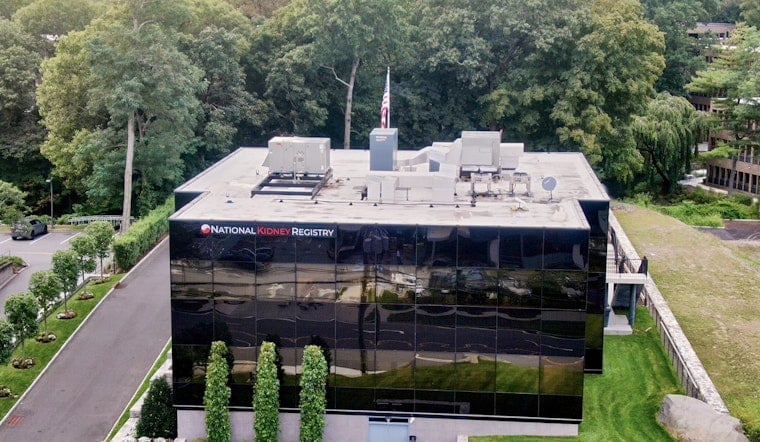
The National Kidney Registry, launched in 2008 to increase living-donor transplant quality, speed and volume while protecting living donors, works with 103 transplant centers nationwide, per the Courier-Journal's report. The registry typically takes about four months to find a donor. The donor who gave a kidney on Goldring's behalf remains anonymous.
According to the National Kidney Registry, it facilitated 1,744 transplants in 2024, a 21% year-over-year increase that represented 27% of all U.S. living kidney donor transplants.
Samantha Hil, the registry's vice president of marketing and a kidney transplant recipient herself, says living kidney donation is safe and leads to better patient outcomes. Living-donor kidneys can last upward of 15 years compared with about 8 to 12 years for a kidney from a deceased donor, according to the American Medical Association's figures cited in the report. The report discusses the potential longevity of Goldring's new kidney.
According to the Health Resources and Services Administration's OPTN/SRTR 2024 Annual Data Report, five-year graft survival among kidney recipients aged 18-34 years was 89.9% for living-donor transplants versus 82.5% for deceased-donor recipients.
Rebuilding A Life After Dialysis
Goldring's 11-year wait unfolded against a backdrop of staggering national need. About 90,000 people are actively waiting for a kidney in the United States, and kidney patients die at a rate of roughly 11 each day because a kidney does not become available in time, according to United Network for Organ Sharing figures cited by the Courier-Journal. Kidney disease remains a significant health concern in the United States.
People in the United States received 27,573 kidney transplants in 2025, including 21,052 from deceased donors and 6,521 from living donors, the paper reports. Through it all, Goldring earned a bachelor's degree from her dialysis chair, married the woman she met in 2011, and now looks ahead after transplant. Her care team works at the University of Kentucky Transplant Center.





