

























































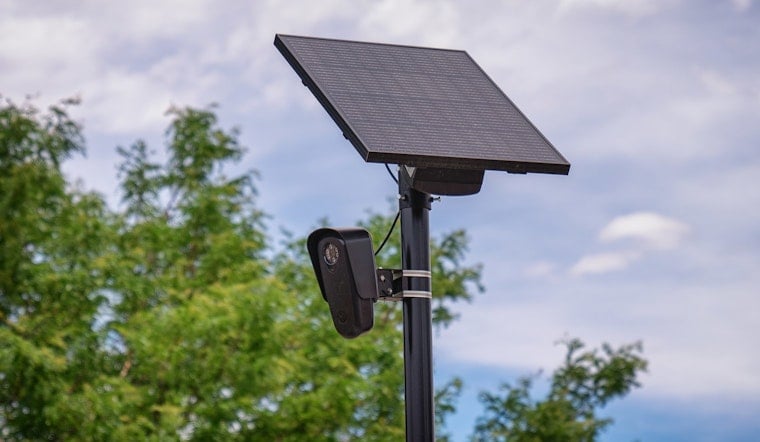
Bartlesville's license-plate camera network is staying on, but Monday's City Council decision put its existing vendor on notice: two Flock Safety units will be replaced with Axon cameras while the broader program continues. The vote preserves a surveillance tool police say helps find stolen vehicles and solve crimes, even as residents and council members keep pressing over who can access the data.
What Bartlesville Approved
The council approved an extension allowing automated license-plate readers to remain in use and separately authorized replacing two of Bartlesville's Flock cameras with Axon equipment, according to News On 6. Councilor Tim Sherrick voted against continuing the program.
The decision had been headed toward Monday's meeting since last month, when a proposal called for reducing the Flock network from 10 cameras to eight while adding two Axon units. Bartlesville Radio reported that the earlier discussion was postponed after the council meeting reached its time limit.
The city's official agenda for Monday's meeting listed possible action on contracts with Flock Safety and Axon Enterprises for Bartlesville Police Department license-plate recognition services, along with a July ALPR report. The agenda also identified the item as a presentation from police Captain Daniel Elkins, making the vote the result of a scheduled policy review rather than a surprise addition.
Bartlesville has 10 cameras positioned at the city's entrances and exits under restrictions adopted by the council, according to the City of Bartlesville. Police previously told the city that the system generated 1,244 inquiries in a year and helped with stolen-vehicle recoveries, hit-and-run and violent-crime investigations, missing-person cases and the capture of a homicide suspect.
The Privacy Fight Follows The Cameras
The concerns surrounding the system are not limited to Bartlesville. The Institute for Justice, a public-interest law firm that tracks ALPR misuse, says it has documented at least 28 reported cases in which officers allegedly used license-plate systems to track romantic partners, former partners or other personal targets; in Kansas, a police chief used Flock searches 228 times to follow an ex-girlfriend and her new boyfriend, according to The Wichita Eagle.
Bartlesville officials say the local program will operate with guardrails. News On 6 reports that city policies require monthly audits of database searches, limit access so not every officer can use the system and require removal of the cameras if state law demands it. Councilor Aaron Kirkpatrick said the city would not repeat problematic deployments seen in other communities, while Sherrick argued that Fourth Amendment protections should not be treated as optional.
For now, Bartlesville has chosen a hybrid path instead of a clean break: Flock remains part of the network, Axon will replace two units, and the city's audit rules will become an important test of whether the technology is used for targeted investigations or broad vehicle tracking. The council's vote keeps the cameras in place, but it does not end the argument over who gets to look inside the database.





.jpg)