

























































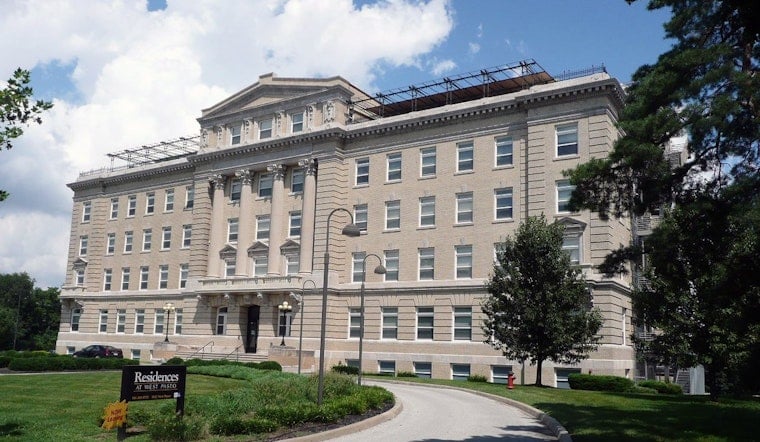
A century-old former hospital building in Kansas City's Beacon Hill neighborhood is headed for another transformation, this time into deeply affordable housing for seniors and veterans earning up to 30% of the area median income. Merak Development LLC has proposed a $13.3 million acquisition and renovation of the six-story building at 2625 W. Paseo Blvd., known today as The Grand on Beacon Hill, with construction estimated to begin September 30.
According to the Kansas City Star, the building has fallen out of an existing affordable housing program and now shows considerable deterioration. About half of the property remains occupied, developer David Allison said, which he noted allows crews to move forward with full-scale renovations while tenants stay in place elsewhere in the building. Allison said developers intend to relocate tenants only when absolutely necessary as work proceeds.
Every unit in the building will need to be inspected or renovated, Allison told the LCRA, and developers have told the Land Clearance for Redevelopment Authority that their plan preserves 47 affordable housing units once the work is complete. Those units will be rented to households earning up to 30% of the area median income, a threshold classified as extremely low-income under federal housing guidelines. The limits are based on HUD income limit data.
A Building With a Long History Behind Its Walls
The property carries a layered past that predates its current name by more than a century. Designed in 1915 by architect Henry F. Hoit, whose firm Hoit, Price & Barnes also designed Corinthian Hall and the Kansas City Power & Light Building, the structure opened in 1916 as Christian Church Hospital, according to Wikipedia. The building was leased to veterans in 1926 and later became known as Robinson Neurological Hospital, associated with Dr. G.W. Robinson Sr., per the Kansas City Public Library.
The building sat vacant for years before developer Cohen-Esrey converted it in 2005 into The Residences at West Paseo. It was officially added to the National Register of Historic Places on October 21, 2004.
Public Incentives Line Up Behind the Project
The Land Clearance for Redevelopment Authority has already approved the development plan. The Planned Industrial Expansion Authority is the agency offering up to 25-year property tax abatements and sales tax exemptions on construction materials for projects of this kind. Established through Missouri state law, the LCRA functions as Kansas City's urban renewal agency, according to The Beacon. The property also sits in the Beacon Hill area.
City leaders backed the project financially last month as well. In July, Kansas City authorized $24.5 million in housing investments citywide, including $16.4 million from the Housing Trust Fund distributed across 16 projects, according to a City of Kansas City news release. The Grand on Beacon Hill received $1 million of that funding as part of a package under which projects will create 907 housing units, 746 of them affordable.
Filling a Deep Gap in Affordable Units
The Housing Trust Fund itself has grown into a significant tool for the city. It supports affordable housing developments, according to KCUR. Even so, the region continues to need affordable housing.
The Grand on Beacon Hill project would add units at the deeply affordable end of the spectrum for households earning 30% of area median income. What happens to the roughly half of current residents while renovations proceed, and when private and state tax credit financing will fully close, remain details for the coming months as Merak Development moves toward its planned late-September construction start.





