

























































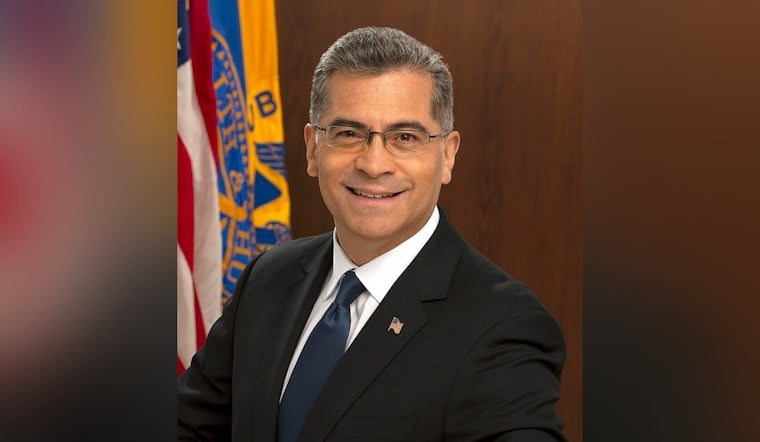
Xavier Becerra made his first appearance at the California State Capitol since winning June's primary on Wednesday, headlining a Sacramento press conference to back two bills tied to the Voting Rights Act. He left roughly 12 minutes after the event began and did not stop to answer questions from the reporters waiting on him, including queries about a possible debate with Republican rival Steve Hilton and his stance on a future statewide voter ID ballot measure.
As reported by KCRA, whose political director Ashley Zavala covered the appearance, Wednesday marked Becerra's first Capitol visit since the primary, and the last time he had taken questions from a group of journalists was in Los Angeles on June 9. The two measures he championed were Senate Bill 1164, which would bar state and local agencies from actions that could suppress voter turnout, and Senate Bill 1306, which would expand language access for voters with limited ability to read English.
Becerra's spokesman, Jonathan Underland, told the outlet that Wednesday's schedule was tight because the Democratic candidate for governor had to attend a health care-related event in the Fresno area that was closed to the press. Underland said Becerra plans to be in Sacramento frequently in the coming weeks, though it remains uncertain whether he will hold a reporter gaggle at Politico's summit next week, and added that Becerra intends to debate Hilton and would spend plenty of time with journalists if elected.
A Very Public Debate Dare
The debate question has become a flashpoint. On July 31, Hilton released a campaign video featuring a cardboard cutout of Becerra to mock him for not committing to six televised debate invitations, according to the Los Angeles Times. Underland responded that Becerra will debate him, dismissing the Republican as "Snowflake Steve," the paper reported.
Becerra's caution with the press comes despite a commanding lead in the polls. A July survey from NBC4 Los Angeles found Becerra ahead of Hilton 61% to 36% among likely voters in the general election matchup, a 25-point margin that may help explain why his campaign feels little urgency to field unscripted questions.
Money and Endorsements Consolidate Behind Becerra
Becerra advanced out of the June 2 primary with 28.1% of the vote to Hilton's 24.7%, setting up the November 3 runoff, according to Ballotpedia. Since then he has picked up the formal backing of outgoing Governor Gavin Newsom, who endorsed him and met privately over policy at Tommy's Mexican Restaurant in San Francisco, as Hoodline previously reported.
Major real estate figures have also shifted their checks to Becerra after their earlier primary pick, San Jose Mayor Matt Mahan, failed to advance. Donald Bren's Irvine Company and developer Rick Caruso each contributed the maximum $39,200 to his campaign, according to The Real Deal, a trend Hoodline first reported weeks earlier.
The scale of outside spending in the race has also set records. Independent expenditure committees poured a record $79.6 million into the contest ahead of the June primary, more than double the outside spending seen in the 2018 primary, per the Los Angeles Times.
Voting Rights Battles Follow Becerra Beyond the Capitol
Becerra's push for SB 1164 and SB 1306 lines up with his outside role as a voting rights advisor for the UCLA Voting Rights Project, which filed legal challenges over Riverside County Sheriff Chad Bianco's seizure of ballots during an election investigation ahead of the June primary, according to The Riverside Record.
Voter ID fights are unfolding on multiple fronts statewide. In January, the California Supreme Court declined to review an appellate ruling that found Huntington Beach's municipal voter ID law, known as Measure A, was preempted by state law, effectively blocking it, according to the California Attorney General's office.
Separately, backers of Proposition 39, a November ballot measure that would require government-issued ID for in-person voting and a PIN for mail ballots, sued Attorney General Rob Bonta in July over alleged bias in the measure's official ballot summary, according to a second Los Angeles Times report. It was against that backdrop that reporters at the Capitol pressed Becerra on whether he would oppose a future voter ID ballot measure — a question he left the room without answering.




