

























































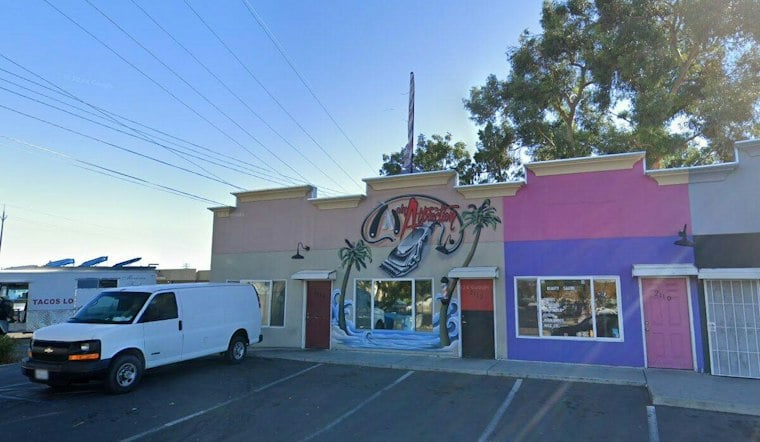
Sacramento County health inspectors shut down Tacos Los Tres Hermanos at 2114 El Camino Ave. after finding roughly 175 fresh rodent droppings scattered through the restaurant's back room, storage area and inside a cabinet. The Arden Arcade taco shop racked up five separate violations during the inspection and was still closed as of Thursday, with no sign it had passed a follow-up visit.
What Inspectors Found Behind the Counter
The inspection took place on Oct. 23, during a countywide inspection window running from Oct. 22 through Oct. 28, according to the Sacramento Bee. Beyond the droppings, inspectors caught staff cooking beans in the back room, including a large container simmering on a gas propane stove, even though the location's permit covers only storage to support a mobile food facility, not on-site food preparation. Inspectors reportedly discarded the cooked beans on the spot.
The same visit turned up a handwashing sink with no paper towels and several propane tanks stored inside the facility. The report does not indicate whether the owner has commented on the findings, and no reinspection had occurred as of Thursday, meaning the restaurant's health permit remained suspended under the county's red placard.
What a Red Placard Actually Means
A red placard signals an imminent danger to public health and safety and suspends an establishment's permit until violations are fixed, the same report notes. A yellow placard, by contrast, points to two or more major violations that are typically corrected during the inspection itself, while a green placard simply means a restaurant passed. Under California Health and Safety Code section 114259, food facilities are required to be built, equipped and operated in a way that keeps rodents, insects and other vermin from entering or nesting on the premises.
This is not the first time Tacos Los Tres Hermanos has drawn scrutiny. A March inspection cited the restaurant for no soap at the restroom handwashing sink, Mexican rice that was improperly cooling, an unavailable food manager's certificate and heavy ice condensation inside a one-door upright freezer, per the same account.
How Common Are Closures Like This?
Sacramento County performs roughly 14,000 food-facility inspections every year, and about 97% of establishments pass, county spokesman Ken Casparis has said, according to sacbee.com. Only around 1% of inspections end in a closure, making the red placard at Tacos Los Tres Hermanos an outlier rather than the norm. The county has posted color-coded placards for food-facility results since Jan. 1, 2007, according to the Sacramento County Environmental Management Department, making it the first county in California to do so.
Rodent infestations have shown up elsewhere in the county's recent inspection logs. During a late-May inspection sweep, officials closed three eateries, including a Rancho Cordova warehouse where they found about 68 rodent droppings tucked into a bag of rice and boxes of lentils and grains, per sacbee.com's reporting. Not every closure in that batch stuck — Dubplate Kitchen & Jamaican Cuisine, which was initially shut down after inspectors found roughly 14 German cockroaches throughout the facility, was reinspected and reopened with a green placard once the problems were addressed.
Under guidance from the Sacramento County Environmental Management Department, a red placard is reserved for conditions inspectors consider an imminent danger to public health and safety, such as surfacing sewage, no hot water, rodent or insect infestation, or severe unsanitary conditions. California's Department of Public Health notes that local health departments are responsible for the initial investigation of consumer complaints about food served or sold at retail food facilities, and residents can report suspected violations at restaurants, food trucks or cafés directly to those departments.





