

























































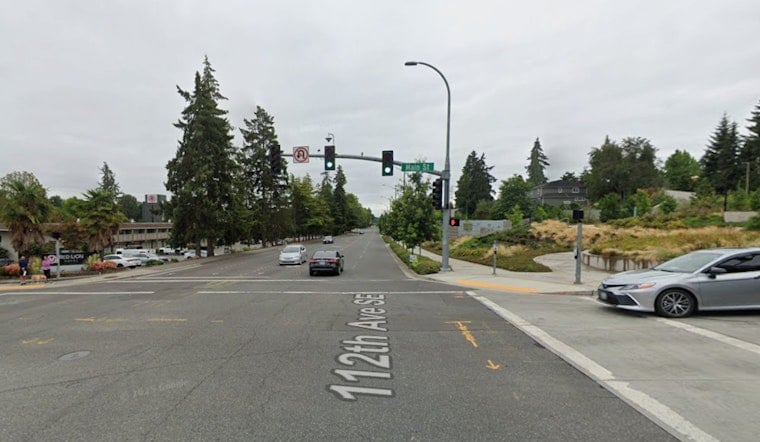
Bellevue's City Council voted last month to name a new downtown green space Isan Park, choosing a Japanese word meaning heritage or legacy to honor the Japanese American farm families who once worked the land beneath it before the United States government forced them into wartime incarceration camps. The 1.75-acre park sits at Main Street and 112th Avenue Southeast, right next to Sound Transit's East Main light rail station, on ground that was cleared of detached houses to build the park and handed over to the city as mitigation for park impacts elsewhere.
A Name Chosen From Hundreds Of Suggestions
The city's parks department board considered nine possible names before recommending Isan as, in the board's words, a unique and meaningful choice, according to The Seattle Times. Bellevue ran an online survey to gather input, and residents responded with more than 150 responses and roughly 260 separate name suggestions before the City Council settled on Isan Park on July 28. The park itself is modest by design: walking paths, grass lawns and plant beds, with no playground, built atop the light rail tunnel portal that Sound Transit constructed as part of the 2 Line project.
The station next door, East Main, opened in 2024 as part of that same construction effort, and the full 2 Line began carrying riders across Lake Washington via the I-90 floating bridge this past March, linking Bellevue's Eastside directly to downtown Seattle. That transit expansion is what created the open space above the tunnel portal in the first place — land that Sound Transit transferred to the city in late 2024 for the parks department to shape into what is now Isan Park.
A Farming Community Erased By Law And War
A century ago, Bellevue was a farming town powered in large part by Japanese immigrants, who grew strawberries, lettuce and other produce despite being barred from buying property outright under Washington's discriminatory land laws. The 1921 Alien Land Law barred noncitizens ineligible for citizenship from purchasing or leasing land, and lawmakers tightened the restriction further in 1923 to stop Japanese immigrants from buying property even in the names of their U.S.-born children, as detailed by the citizenship-eligibility statutes documented on Densho's Encyclopedia and reported by outlets including Edible Seattle. White landowners instead granted the immigrants long-term leases, and those farmers turned the leased properties into viable operations, shipping produce across Lake Washington on mosquito-fleet ferries and selling it at Pike Place Market. Bellevue even hosted an annual strawberry festival in the 1920s and 1930s celebrating the harvest.
By the 1920s and 1930s, Japanese American families made up roughly 15 percent of Bellevue's population while producing about 90 percent of its agricultural output, according to background research on the community compiled by Densho. That prosperity drew local political opposition: Bellevue publisher Miller Freeman founded the Anti-Japanese League of Washington in 1916 and spent decades pushing for land restrictions and eventual wartime removal, clearing the way for commercial development. Freeman's family later built Bellevue Square on some of that vacated farmland, according to Densho's research.
Incarceration And A Community That Never Fully Returned
A 1942 presidential order led to the incarceration of roughly 120,000 people of Japanese descent nationwide during World War II, the vast majority of them U.S. citizens. About 60 Bellevue Japanese American families were among those forced into camps, and only 11 returned to live in Bellevue afterward, their land and property stolen, vandalized or lost to local hostility. Doug Ito, president of the advocacy group Isan Bellevue, said his own father and grandfather farmed in Bellevue before the war and were incarcerated at the Tule Lake camp in California.
Ito told the Seattle Times that the park should help people understand past events and why they should not happen again, and he said the new commemoration effort aims to bring the Japanese American community's story into greater prominence. Isan Bellevue formed before the COVID-19 pandemic and has worked to build what it calls a Japanese American legacy project, including plans now underway to enhance Isan Park itself. Ito called the park the biggest thing Bellevue has done to recognize Japanese Americans.
What's Planned For The Park Itself
Isan Bellevue's commemoration project for the site includes a ground-engraved map of Bellevue's historic Japanese American farms, storytelling pillars or panels, and a shaded gathering space, and the group is raising money to fund the additions. City officials say the park is meant to honor both Bellevue's Japanese American past and present, connecting the wartime incarceration experience to the city's modern, increasingly diverse population, and celebrating the community's contributions rather than only its losses. Bellevue's naming policy allows parks to receive names carrying historical or cultural significance, which cleared the way for Isan.
The park naming follows a string of recent efforts around Bellevue to preserve this history in permanent form. An augmented-reality installation called Emerging Radiance, created by Michelle Kumata and Tani Ikeda, has been on display at the Bellevue library since January 2025, featuring a mural-painted farm shed with recorded oral histories from former farm families. Isan Bellevue also helped curate artworks highlighting the community's history for a King County Eastrail pedestrian bridge that opened in 2024, and the Bellevue Arts Museum exhibited art depicting the same story in 2022.
A College Mural's Rocky Road To Permanence
The path to public recognition has not always been smooth. In 2020, a Bellevue College vice president altered the artist statement accompanying Erin Shigaki's Never Again Is Now mural to remove references to Miller Freeman's anti-Japanese campaign, a decision that triggered public backlash and led both the vice president and the college's president to resign. This past June, Bellevue College permanently rededicated the restored mural, formally reversing the earlier censorship.
Japanese immigrants first arrived on the Eastside in the late 1800s and early 1900s, laying the groundwork for a farming community that would come to define the region for decades before the war upended it. Bellevue is now home to immigrants from all over the world, and Isan Park's backers say the site is meant to hold that fuller arc — from the farms that once cleared swaths of Bellevue land for cultivation to the diverse city that exists there today.





