

























































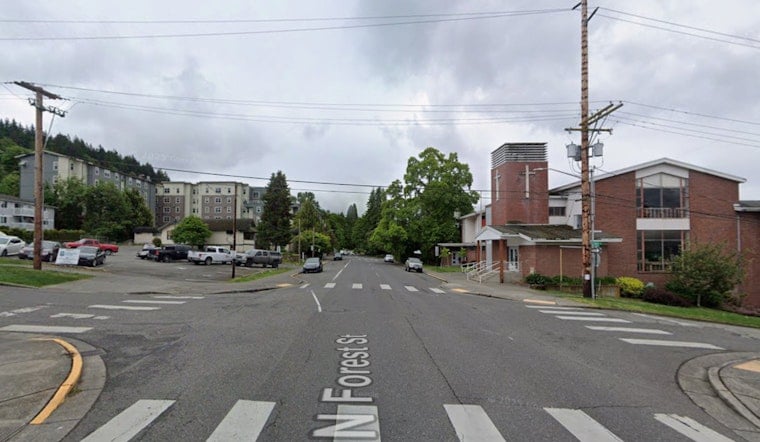
A 75-year-old Bellingham man has died weeks after a homemade motorized bicycle he was riding down North Forest Street appeared to suffer a mechanical failure, throwing him over the handlebars and onto the pavement. Robert Bowers was riding at about 30 mph when the bike abruptly stopped, according to witnesses who saw no collision with cars, curbs, potholes or any other object before he went down.
Bowers was initially taken to St. Joseph Medical Center in Bellingham following the crash on the 1000 block of North Forest Street on August 1, according to The Bellingham Herald. He was later transferred to a hospital in Seattle, where he was pronounced dead. The King County Medical Examiner's Office identified him and determined his cause of death was acute respiratory failure along with blunt-force injuries to the head, neck and torso, ruling the death an accident.
North Forest Street sits along a primary arterial corridor connecting downtown Bellingham to Western Washington University, carrying a steady mix of vehicle, transit and bicycle traffic, according to the Port of Bellingham. Bellingham police traffic units have targeted high-volume downtown corridors, including that stretch, for speed and collision-reduction enforcement in recent years, per the Bellingham Police Department.
A Bike That Wasn't Quite a Bike
Bellingham Police Department Lieutenant Claudia Murphy said the motorized bicycle appeared to have experienced a mechanical failure. The bike carried a self-made motor attachment that was not factory installed, and investigators initially believed the vehicle was a motorcycle before determining it was in fact a bicycle with a motor attached, the Herald's report notes.
That classification question matters under Washington law. Under state statutes RCW 46.04.304 and RCW 46.61.710, a motorized bicycle or moped is legally capped at a motor under 50cc, no more than 2 gross brake horsepower, and a top speed of 30 mph on level ground — anything faster or built without pedals falls into motorcycle or motor-driven cycle territory requiring specialized licensing, according to the Washington State Legislature. Bowers was reportedly riding right at that 30 mph threshold when the failure occurred.
The ambiguity Bellingham officers faced isn't unique to this case. A new state law that took effect in June drew clearer statutory lines between electric-assisted bicycles and electric motorcycles specifically to help police regulate high-powered or modified motorized cycles on public roads, as reported by FOX 13 Seattle. Lawmakers acted after a surge in high-speed e-bikes and altered motorized cycles showed up on streets statewide.
Homemade Mods Under National Scrutiny
Bowers' self-made motor attachment fits a pattern federal safety regulators have flagged repeatedly. An updated hazard report from the Consumer Product Safety Commission, published in April, cited component failures and homemade or DIY motor and battery modifications among the leading hazard patterns behind e-bike and motorized cycle fatalities.
Older riders face disproportionate risk in these crashes. A CPSC report released in September 2024 found adults 65 and older accounted for 62 micromobility deaths between 2017 and 2023, with 79 percent — 49 deaths — involving electric or motorized bicycles. Separately, a study published in PubMed in August 2025 found e-bike and motorized bicycle emergency room visits climbing by nearly 8,000 cases annually from 2019 to 2023, with head injuries the most common diagnosis, according to the National Institutes of Health.
A Statewide Surge in Vulnerable Road User Deaths
Bowers' death also lands amid a broader spike in Washington traffic fatalities among people walking and cycling. Combined pedestrian and bicyclist deaths statewide jumped 17.8 percent in 2023 to 172 — the highest single-year total in a decade — with active transportation fatalities up 43.3 percent between 2019 and 2023, per the Washington State Department of Transportation. The same 2023 Gray Notebook tracking showed 86 active transportation users aged 65 or older killed or seriously injured statewide that year, part of the agency's Target Zero campaign aimed at eliminating traffic deaths among older adults.
Bowers' path through the region's trauma system mirrors what has become routine for severe injuries out of Whatcom County. Critical trauma patients who need care beyond what St. Joseph Medical Center can provide are typically transferred roughly 90 miles south to Harborview Medical Center in Seattle, the region's Level I adult trauma center, as Hoodline has previously reported. It's the same protocol that explains why Bowers ultimately died in Seattle rather than Bellingham, weeks after the initial crash.



