

























































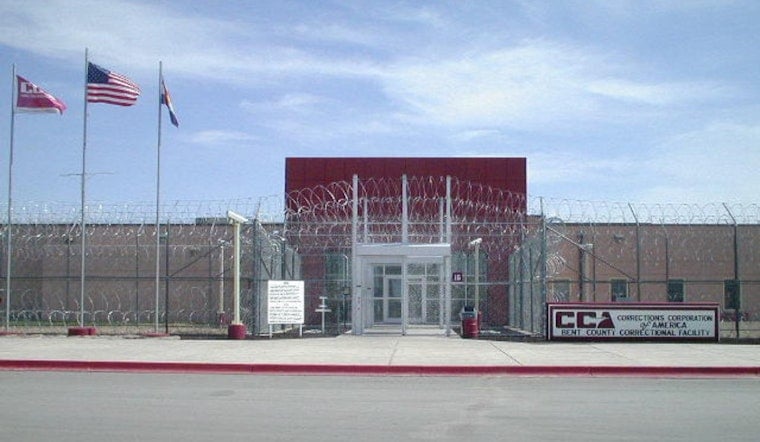
Paul Knuth says he told Bent County Correctional Facility employees about debilitating pain in his right foot on June 23, 2025, and that a prison nurse assured him his lab results were normal even though his symptoms pointed to a spreading infection. Four days later, he was finally sent to a hospital, where doctors diagnosed him with MRSA and ultimately amputated his leg to save his life. Now Knuth has filed a negligence and constitutional-rights lawsuit against CoreCivic and Bent County officials, alleging that medical staff at the Las Animas prison ignored a life-threatening infection until it was too late to save his limb.
According to The Denver Post, Knuth declared a medical emergency three times over three separate days before he was transported for treatment. The lawsuit claims medical staff failed to order antibiotics or rapid-screening tests for MRSA, a bacterial infection that can become life-threatening or fatal when left untreated, and alleges that CoreCivic policies and practices were deliberately indifferent to inmates' serious medical needs. Knuth eventually underwent additional surgeries and several weeks of rehabilitation before returning to prison with a permanent disability, the lawsuit states.
The complaint paints a picture of dismissive treatment inside the facility. One prison nurse reportedly accused Knuth of faking an illness just to get off work, while the same account describes a nurse threatening to write up a separate patient for seeking medical care after a neck cut, telling that patient, “We are short-staffed as it is!” The lawsuit names CoreCivic, the Bent County Board of Commissioners, a prison physician assistant, and a Bent County Correctional Facility nurse as defendants, alleging both negligence and violations of Knuth's Eighth Amendment rights.
A County That Knew and Didn't Act, Suit Claims
The lawsuit alleges Bent County was aware of the prison's chronic understaffing yet failed to act or terminate its contract with CoreCivic, the private operator that has run the facility since the county's board of commissioners chose to subcontract with the company. Court filings cited by the Post indicate the county was assessed damages of more than $340,000 in 2025 in an initial assessment, with more than $162,000 of that tied specifically to CoreCivic staffing deficiencies. The Bent County Board of Commissioners did not respond to requests for comment on the lawsuit.
CoreCivic, for its part, said the health, safety, and well-being of people entrusted to its care is a top priority, and that its facilities operate pursuant to contractual requirements, applicable laws and regulations, correctional standards, and government-partner oversight. Company spokesperson Ryan Gustin said CoreCivic does not comment on specific allegations in pending litigation, per the statement relayed to the Post. The lawsuit itself alleges the opposite of the company's stated priorities, claiming CoreCivic understaffs its detention facilities and often fails to respond quickly to medical emergencies or monitor inmates' ongoing illnesses.
Echoes of a 2018 Death at the Same Prison
Knuth's case is not the first time Bent County Correctional Facility has faced litigation over delayed medical care tied to an untreated infection. In 2018, the estate of prisoner Dennis Choquette reached a $171,000 settlement with the Colorado Department of Corrections, alongside confidential settlements with CoreCivic, after Choquette died from sepsis and an untreated foot infection when facility staff repeatedly delayed necessary care and amputation, according to Prison Legal News. Choquette had been held at the facility for nearly two years with a deteriorating condition before he died in November 2016.
The lawsuit arrives just months after a double homicide inside the same facility drew statewide attention to conditions at Bent County. Charles Gates and Michael Fisher were killed inside the prison on June 6, and Gates's mother has described her son's death as a profound failure by CoreCivic. Hoodline previously reported that the attack halted visits statewide, and an autopsy report released in August revealed Gates suffered 25 facial puncture wounds and had his right eye removed before being stuffed inside a blood-soaked plastic storage crate, as reported by the Longmont Times-Call.
Delayed Emergency Response Draws Scrutiny
Fisher, 59, was actively seeking a new trial to overturn his 1997 murder conviction based on alleged evidence tampering by former Colorado Bureau of Investigation analyst Yvonne “Missy” Woods at the time of his death, according to The Colorado Sun. He had served over 25 years of a life sentence before his attorney filed posthumous dismissal motions following his killing. Emergency dispatch logs from the June attack showed that after staff discovered the victims during a 1:30 a.m. headcount, prison officials notified the county coroner immediately but delayed calling an ambulance for a surviving, severely injured prisoner for more than two hours, with transport not occurring until after 3:37 a.m., according to 9NEWS.
That delay prompted state scrutiny. Colorado State Senator Kyle Mullica questioned state corrections administrators during a legislative committee hearing, raising formal concerns over whether CDOC enforces identical safety and operational standards at private CoreCivic facilities as it does at state-run prisons. CDOC officials confirmed during the hearing that private facilities are subject to state standards but declined to provide an investigation timeline, according to 9NEWS.
Understaffing Allegations Extend Beyond One Case
A former Bent County prisoner reported that during his incarceration from 2015 to 2023, the CoreCivic-operated prison routinely maintained a staffing ratio of less than one correctional officer for every 100 prisoners, resulting in response times exceeding nine minutes during emergency drills, according to Yellow Scene Magazine. Colorado law requires the Department of Corrections to submit annual public reports comparing correctional officer staffing levels at state-operated and private contract prisons under Colorado Revised Statutes Section 17-1-115.8.
Opened in 1993 and operated by CoreCivic since October 1996, the 1,466-bed Bent County Correctional Facility in Las Animas was Colorado's first privately managed prison. State inmates housed in private contract prisons like Bent County cost Colorado taxpayers $66.52 per day per offender, according to Colorado General Assembly fiscal notes from 2024. Bent County remains economically tied to the facility's operations, with property tax revenues generated by the prison accounting for approximately 25% of the county's total property tax base as of 2025, according to Denver Westword reporting cited in county filings.





