

























































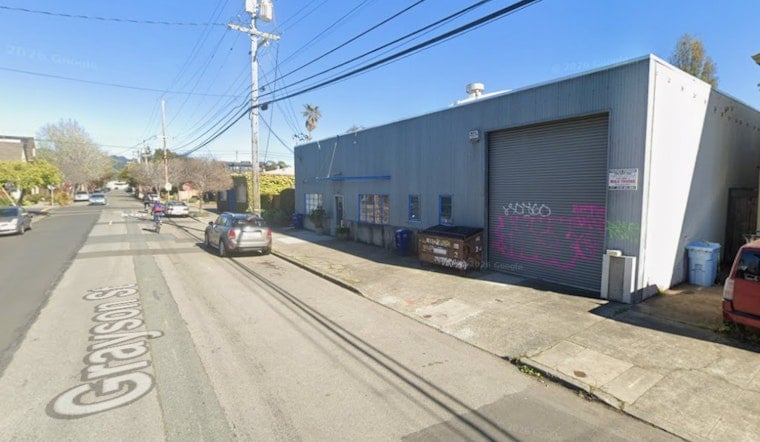
Collectors, movie buffs, and former employees lined up outside a Berkeley warehouse this weekend for a chance to buy a piece of visual effects history, as Phil Tippett's studio closes its doors after almost a 40-year run. Inside the 914 Grayson Street facility, physical models, stop-motion cameras, machine shop equipment, and production notes from decades of filmmaking are being sold off to the public.
The Oscar-winning animator and visual effects pioneer confirmed the liquidation is part of the studio's Chapter 11 bankruptcy proceedings, according to CBS News. Tippett Studio, Inc. filed for Chapter 11 protection on May 1, 2024, in the U.S. Bankruptcy Court for the Northern District of California, reporting estimated assets and liabilities each between $1 million and $10 million, per PacerMonitor. U.S. Bankruptcy Judge William J. Lafferty confirmed the studio's reorganization plan on April 1, 2025, setting the timeline that led to this weekend's public liquidation of studio inventory.
Among those hunting for a keepsake was Kevin K., who worked at Tippett's studio around 1989 and helped build props for Jurassic Park. He told the station he hoped to buy one of the Jurassic Park Jeeps he may have helped construct decades earlier. Berkeley resident Michael Wong was also on hand, looking for vintage movie posters from the studio's decades of work.
An Abrupt Ownership Change Preceded the Collapse
The closure caps a whiplash few years for the storied studio. Indian visual effects company PhantomFX acquired an 80% majority stake in Tippett Studio in March 2024 at a valuation of $3.75 million, an attempt to expand international operations, according to Cartoon Brew. Just weeks later, the studio filed for bankruptcy. It remains an open question whether PhantomFX or Tippett's Canadian affiliate will retain any active intellectual property or brand operations going forward.
Tippett and his wife, Jules Roman, co-founded the studio in Berkeley in 1984, originally as a specialized stop-motion animation workshop, per Cartoon Brew. Over the following decades, it grew into one of the industry's most respected effects houses, building physical props during the pre-CGI era of filmmaking for productions including Starship Troopers, RoboCop, and Star Wars. The Berkeley warehouse still holds props and memorabilia from all three franchises, now being offered to collectors and movie buffs.
From Go-Motion to Jurassic Park's Digital Puppets
Tippett's technical fingerprints are all over modern visual effects history. Early in his career, he invented go-motion, a technique that added computerized motion blur to stop-motion puppets, using it to animate the AT-AT walkers in 1980's The Empire Strikes Back and the dragon in 1981's Dragonslayer, according to Film Stories. During the production of 1993's Jurassic Park, his studio helped usher in the CGI era by inventing the Digital Input Device, a sensor-equipped puppet system that translated physical movements into digital animation, a breakthrough that won a Scientific and Technical Academy Award, per Wikipedia.
For Paul Verhoeven's 1997 film Starship Troopers, Tippett Studio doubled its workforce to deliver more than 500 visual effects shots, earning an Academy Award nomination for creature animation. Tippett later spent roughly 30 years creating his stop-motion dark fantasy feature Mad God, beginning work on it in 1990 before financing its completion through Kickstarter and releasing it on Shudder in 2022, Film Stories reports.
Tippett Cites California's Shrinking Effects Industry
Speaking about the broader forces behind the studio's financial collapse, Tippett pointed to Hollywood studio consolidation and aggressive state and municipal tax incentives that pull visual effects production away from California, according to Berkeleyside. That migration of effects work to other states and countries has squeezed Bay Area studios for years, and Tippett's closure adds his name to that list.
Tippett said the studio had a good run, and he described his two Oscars, won for Jurassic Park and Star Wars: Episode VI – Return of the Jedi, as the most significant moments in his journey. He is keeping both statues rather than selling them, though he told CBS News he does not like having his work stuff in the house. He also said he has mixed feelings about parting with some of the items now on sale.
Despite the closure of the Berkeley facility, Tippett is not ready to retire and plans to continue working, though how he intends to do so without his longtime local workspace remains unclear. The liquidation, managed by Clarity Estate Liquidation, continues Saturday and Sunday from 10 a.m. to 3 p.m. at 914 Grayson Street in Berkeley.





