

























































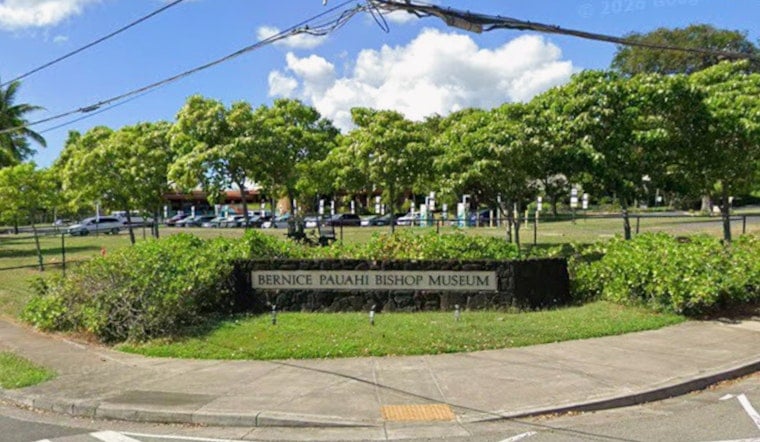
Fifty years after nine activists paddled ashore on Kahoʻolawe to confront the U.S. military over its control of Hawaiian national lands, Bishop Museum in Honolulu is preparing a season of programming to mark the anniversary. The museum has announced a series of events honoring Protect Kahoʻolawe ʻOhana's 50th anniversary, including talk-story sessions, a new installation in Hawaiian Hall, and a culminating festival on the museum's Great Lawn.
The commemorations trace back to January 4, 1976, when George Helm, Emmett Aluli, Kimo Aluli, Kawaipuna Prejean, Walter Ritte, Ian Lind, Ellen Miles, Steve Morse, and Karla Villalba made landfall on Kahoʻolawe. As reported by Maui Now, the nine activists were protesting U.S. military control and destruction of Hawaiian national lands, seeking to draw national attention to the United States' role in the overthrow of the Kingdom of Hawaiʻi. Their courage, the museum says, became the catalyst for the formation of Protect Kahoʻolawe ʻOhana and the modern Aloha ʻĀina movement.
That 1976 landing happened the same year as the maiden voyages of Hōkūleʻa, and Protect Kahoʻolawe ʻOhana participated in those voyages as well, according to the same account. In the decades since, the organization has accomplished what once seemed unthinkable: stopping all military use of Kahoʻolawe, revitalizing the Makahiki and other ceremonies honoring Hawaiian deities, and refocusing residents' lives around kuleana, or responsibility, to Aloha ʻĀina.
A New Case in Hawaiian Hall
Bishop Museum will feature a new treasure case installation on the third floor of Hawaiian Hall, titled Kanaloa Ka Laʻa O Kohemālamalama: Unconquerable Is the Divinity of Kohemālamalama. The installation commemorates 50 years of Protect Kahoʻolawe ʻOhana ceremony on the island, per the museum's announcement described in the Maui Now report. Kahoʻolawe is described in that announcement as a living treasure and a place of healing, education, transformation, restoration, and ancestral connection.
The museum has also reaffirmed its partnership with Protect Kahoʻolawe ʻOhana as part of the anniversary programming, per the same account. That renewed partnership underscores how deeply the fight over the island reshaped perceptions of what it means to be Native Hawaiian, an effect the organization has been credited with over the past half-century.
Talk-Story Sessions Lead to a Festival
Bishop Museum will host three talk-story sessions about Kahoʻolawe and people's relationships to ʻāina, or land, leading up to the culminating festival on the Great Lawn. That festival will recommit attendees to the value and ethic of Aloha ʻĀina, according to the museum's plans. Protect Kahoʻolawe ʻOhana has invited everyone who has ever set foot on Kahoʻolawe to join the festivities.
The gathering is meant to do more than look backward. The organization plans to use the anniversary to galvanize the next generation of Aloha ʻĀina movements, carrying forward a fight that began with nine people willing to risk arrest, or worse, to reach the island's shores.
An Album Carries the Message Forward
Music will also play a central role in the commemorations. A newly released album titled 50 Years of Aloha ʻĀina features Keahi Piʻiʻōhiʻa, Pōkiʻi Seto, Kiliona Young, Kaʻikena Scanlan, Kimié Miner, Ikaakamai, Kekuhi Kanahele, and Kaumakaiwa Kanakaʻole, according to the Maui Now account. The album is intended to champion the message of Aloha ʻĀina for future generations, extending the reach of the anniversary beyond the museum's walls.
The Kuloloio ʻohana contributed traditional proverbs and wise sayings, including “laʻa, maʻa, paʻa,” to the broader anniversary storytelling, the same report notes. Bishop Museum has said it will provide additional event details and ticket information on its website as the talk-story sessions and festival approach.
A Half-Century of Struggle Behind the Celebration
The 1976 landing did not immediately end military use of Kahoʻolawe. The U.S. Navy had used the island as a bombing range for decades, including during 1965's Operation Sailor Hat, when it detonated three 500-ton conventional TNT charges on the shoreline to simulate nuclear blast effects on warships, damaging the island's freshwater table, according to the National WWII Museum. A federal civil suit, Aluli v. Brown, led to a 1980 consent decree that designated Protect Kahoʻolawe ʻOhana as the island's steward, or kahuʻāina, as reported by Ka Wai Ola.
The movement's history carries a somber chapter as well. On March 7, 1977, Protect Kahoʻolawe ʻOhana president George Helm Jr. and activist James Kimo Mitchell disappeared at sea off Molokini while searching for fellow protesters on Kahoʻolawe, according to the Maui News. Neither man was ever found, and their disappearance solidified their legacy as martyrs of the modern Native Hawaiian movement.
It took until October 1990 for President George H.W. Bush to issue a presidential memorandum directing the Secretary of Defense to discontinue the military's use of Kahoʻolawe as a weapons range, a directive that came after 14 years of sustained civil disobedience, litigation, and political activism, as Hoodline previously reported. Congress followed in November 1993 with Title X of the Department of Defense Appropriations Act, authorizing the island's conveyance to the State of Hawaiʻi and creating a trust fund of up to $400 million for unexploded ordnance clearance.
Even after a decade-long Navy cleanup concluded in 2004, roughly 75 percent of the island's surface had been cleared of unexploded ordnance, but only 10 percent was cleared to a depth of four feet, leaving a quarter of Kahoʻolawe completely uncleared, according to the Maui News. Under Hawaiʻi Revised Statutes Chapter 6K, the island and surrounding waters remain held in trust for a future Native Hawaiian sovereign entity, restricting access to cultural, educational, and restoration purposes only.
The Bishop Museum programming joins other statewide commemorations this year, including a Kamaʻāina Sunday event at ʻIolani Palace that Hoodline covered in a piece on the 50-year fight for Kanaloa, which also featured Kimié Miner alongside Protect Kahoʻolawe ʻOhana. Together, the events across Oʻahu and Maui reflect how ceremony, music, and youth engagement continue to drive the long-term work of healing land that ancient Hawaiians once knew as Kohemālamalama O Kanaloa, a sacred sanctuary and Polynesian voyaging center.





