

























































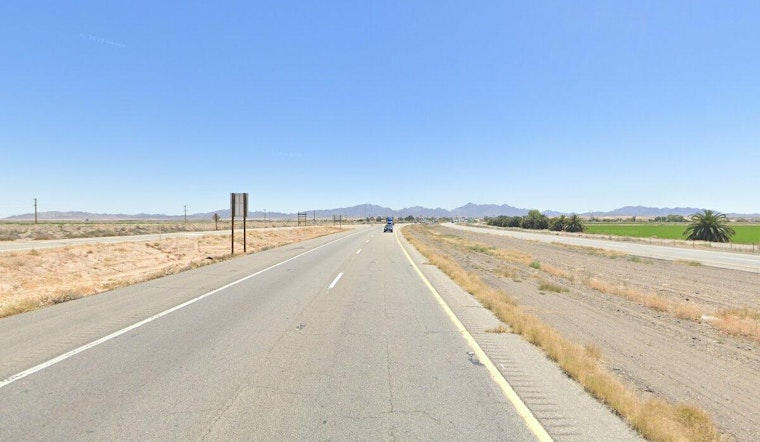
For 34 years, she was known only as a Jane Doe found along Highway 95 north of Blythe, California, her skeletonized remains discovered on August 30, 1992, roughly a month after investigators believe she died. Now she has a name: Lydia Jane Wade McWhorter, a woman in her 20s or 30s who disappeared from Texas in the 1990s and became the final unidentified victim of serial killer Keith Hunter Jesperson, the so-called Happy Face Killer.
The Riverside County District Attorney's Office announced the identification this week, closing what investigators called the last case tied to Jesperson's confirmed murders. According to KTLA, McWhorter's sisters spent decades not knowing what happened to her before a DNA sample confirmed the connection earlier this week. Billy Hester, supervising investigator of the Riverside County Regional Cold Case Homicide Team, said public tips can make a real difference in cracking cases like this one.
McWhorter's body was found wearing a t-shirt printed with a motorcycle and bore a tattoo of two small dots on the left side of her right thumb, details investigators used in earlier public appeals. As Patch reports, she had been known to the cold case unit only by the pseudonym Claudia, the name Jesperson used when he pleaded guilty to her murder in 2010.
How Investigators Traced the Final Victim
Jesperson confessed to Riverside County Sheriff's Office deputies on January 8, 2010, admitting to killing McWhorter and seven other women, per the district attorney's office. He told cold case investigators during a late-2023 prison interview that he met McWhorter at an Interstate 15 brake check area near Victorville in August 1992 while working as a long-haul truck driver, per the district attorney. She had asked him to take her to the Los Angeles area, and he instead drove her through Cabazon and toward the Indio/Coachella Burns Brothers rest stop, according to the same account.
Jesperson claimed he killed McWhorter in his truck after an argument about money, then drove his purple semi-trailer from Coachella to Blythe, where he dumped her body. The case sat unsolved for decades until Riverside County cold case investigators appealed for information in 2024, releasing updated forensic facial renderings alongside DNA ancestry profiles pointing toward Texas, coverage Hoodline first reported at the time.
Investigators established a preliminary genetic lead in 2024 through McWhorter's deceased biological father in southeast Texas, but the case remained unresolved because they still needed a maternal connection to confirm her identity. That break came earlier this week, when a direct maternal relative's DNA sample confirmed the match, allowing the Riverside County Regional Cold Case Homicide Team to formally close the case.
A Killer Who Mailed Smiley Faces to Taunt Investigators
Jesperson earned his nickname after mailing taunting letters marked with smiley faces to journalists and law enforcement, boasting about murders that others had already been wrongly blamed for. That pattern had real victims beyond the women he killed: two innocent Oregon residents, Laverne Pavlinac and John Sosnovske, served four years in prison for Jesperson's first 1990 murder after Pavlinac gave a false confession to escape an abusive relationship, remaining incarcerated until Jesperson confessed in 1995, according to the Los Angeles Times.
Jesperson killed victims between 1990 and 1995 in Washington, Oregon, California, Florida, Nebraska and Wyoming. He is currently serving multiple life sentences in Oregon. Law enforcement has officially confirmed eight of his victims, though Jesperson has claimed he killed as many as 160 people.
Similar DNA Breakthroughs Across the Country
McWhorter's identification follows a similar case in Florida, where authorities and forensic firm Othram used genetic genealogy in October 2023 to identify another long-unidentified Jesperson victim, Suzanne Kjellenberg, who had been known only as Carla for nearly 30 years after her body was found in Okaloosa County, according to Othram. These cases sit within a much larger, grim pattern: the FBI created its Highway Serial Killings Initiative in 2004, eventually compiling data on more than 850 homicides nationwide linked to long-haul truck drivers who dump victims far from where they were abducted, according to the FBI.
The Riverside County Regional Cold Case Homicide Team uses modern forensic techniques to re-examine unsolved cases, per DNA Solves. The district attorney's office says it is now working with McWhorter's family as they process an identification that took more than three decades to reach them.





