

























































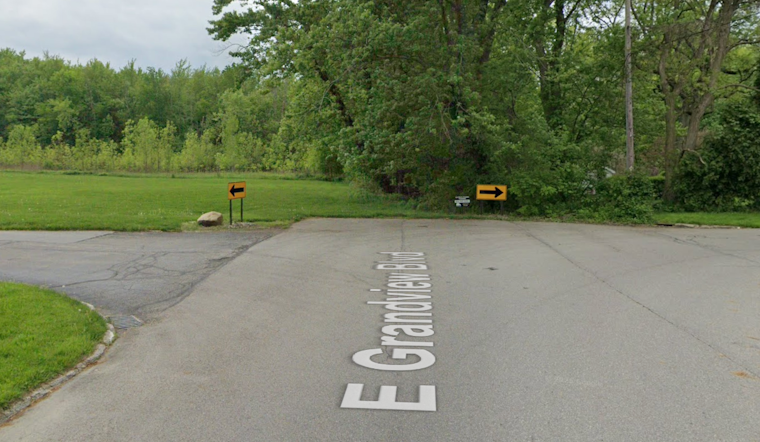
A person searching for deer antlers in a wooded patch near the 300 block of East Grandview Boulevard in Millcreek Township stumbled onto human remains this past March, kicking off a five-month mystery that has now ended with a name: Thomas Bean, 44, of Noxen, Pennsylvania — a rural Wyoming County community roughly 200 miles away, with no known ties to the Erie area.
Millcreek Police Capt. Don Kucenski confirmed the identification, which was made through DNA profiling and a check of national DNA databases, according to the Erie Times-News. Bean's bones showed no evidence of trauma, and Erie County Coroner Lyell Cook ultimately ruled his cause of death undetermined. Cook has said he believes Bean had already been dead for at least a year by the time the remains were discovered on March 20.
The find happened on Mercyhurst University's doorstep — the wooded corridor along East Grandview Boulevard runs directly adjacent to Mercyhurst Preparatory School and near the university's campus boundary, per Mercyhurst University. Pennsylvania State Police were initially called to the scene before it was handed over to Millcreek police, the station's report notes. Clothing, including a pair of boots, was found nearby, but no identification was recovered with the items.
Mercyhurst's Forensic Team Steps In
The recovery fell to Mercyhurst University's Department of Applied Forensic Sciences, which collected the remains from the scene the day after the discovery and carried out the skeletal analysis. Established in 2002, the department runs one of the country's premier forensic anthropology programs, assisting law enforcement with more than 100 outdoor crime scene recoveries and skeletal analyses each year, according to Mercyhurst University. It was also the first multidisciplinary undergraduate forensic science major of its kind in the country.
The department is chaired by Dr. Dennis Dirkmaat, a board-certified forensic anthropologist who has led nearly 1,000 forensic cases across Pennsylvania, New York, and Ohio, including serving as chief forensic anthropologist at the Flight 93 crash site on September 11, 2001. Dirkmaat received the T. Dale Stewart Award for Lifetime Achievement from the American Academy of Forensic Sciences in 2021, according to HD Forensics.
Millcreek isn't unfamiliar territory for this kind of case. Coroner Cook and local police previously turned to Mercyhurst's forensic team after skeletal remains turned up in Erie's Frontier Park in April 2019 — those remains were identified via DNA in 2020 as Matthew Cecelich, 44, a local man missing for years, with his death also ruled undetermined due to a lack of bone trauma. And in October 2024, Millcreek police and Cook responded to another discovery of human skeletal remains along Walnut Creek behind a church off Millcreek Mall Boulevard.
Without Trauma, a Cause of Death Stays Unknown
Medical examiners typically rule a cause of death undetermined when skeletal remains show no evidence of antemortem or perimortem trauma and decomposition has erased any chance of toxicological testing, according to research published by Karger Publishers. Without fractures or preserved organs, forensic scientists have no way to determine whether a death resulted from exposure, natural causes, or an injury to soft tissue that left no mark on the bone. That is effectively what left Bean's case in limbo even after his identity was confirmed.
The DNA match that finally named him was made possible by Pennsylvania's statutory framework for unidentified remains. Under Chapter 23 of Title 44 of the Pennsylvania Consolidated Statutes, the Pennsylvania State Police manage the State DNA Database, which collects profiles from unidentified decedents and feeds them into the FBI's Combined DNA Index System and the National Missing and Unidentified Persons System, per the Pennsylvania General Assembly. NamUs alone tracks more than 24,000 active missing persons cases and tens of thousands of unidentified remains cases nationwide, according to research indexed on PMC, making centralized DNA databases the primary way remains found in one part of the country get connected to names reported missing somewhere else entirely.
A Life Far From Where He Was Found
Bean's home was about as far removed from Millcreek as the state allows. Noxen sits in Wyoming County in northeastern Pennsylvania, a small rural community near Pennsylvania Route 29 that had a census-designated-place population of just 643 in 2020, according to Wikipedia. The broader township recorded 919 residents in 2020 and a median individual income of $26,782 as of 2024, per U.S. Census Bureau data compiled by Data Commons, spread across 28.7 sparsely populated square miles.
Once investigators identified Bean, they located and notified his family of his death. His relatives told authorities they had not seen him in years, and he had no known family in the Erie area. What brought him more than 200 miles from Wyoming County to a wooded stretch of Millcreek Township, and how long he may have been there before he died, remain unanswered questions that his identification alone could not resolve.



