

























































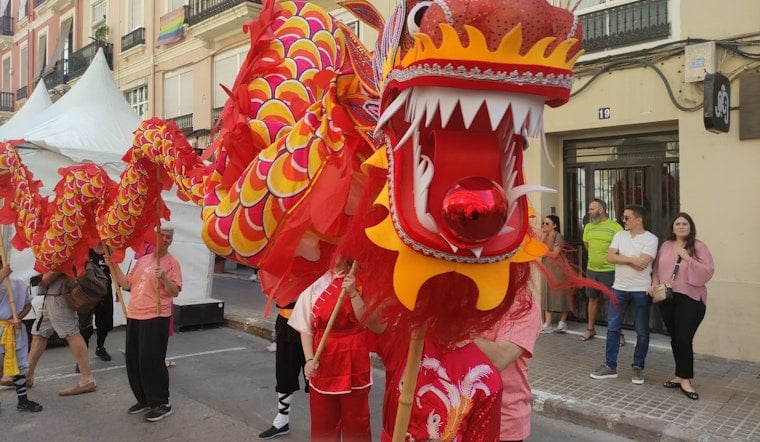
Lion dancers, opera singers and sword-wielding performers took over Boston Chinatown on Sunday as the neighborhood marked the 55th annual August Moon Festival, drawing crowds who packed the streets from 10 a.m. to 5 p.m. for a full day of food, performances and cultural tradition.
The event, also known as the harvest festival, is described by organizers as a time of thanks for the harvest and good crops, according to the Boston Herald. The Chinese Consolidated Benevolent Association of New England, which has organized the festival for decades, said the celebration is tied to autumn, good health and enjoyment, calling it one of the greatest Chinese festivals, second only to Chinese New Year.
Crowds gathered to watch stage performances of Asian folk dance, lion dance and Chinese opera throughout the afternoon. The Boston Chinese Dance Company waited to perform during the festival, and the Herald's report also noted that the Helen Gee Scholarship Foundation performed with swords, while Alexis Hoop demonstrated alongside the Way Lum Performance Team.
Kids Join Tai Chi and Sword Demonstrations
Cultural displays throughout the day included children in colorful costumes alongside tai chi demonstrations and sword performances, per the same account. Children reportedly joined tai chi demonstrators and performers wielding swords, adding a family-friendly element to a festival that also featured vendors selling food, gifts and souvenirs along the way.
The CCBA has served as the neighborhood's central civic organization since 1923, operating as an umbrella nonprofit for more than 30 regional family and community associations, according to MassDevelopment. Beyond organizing cultural events, the association also manages affordable housing developments in the neighborhood, including Tai Tung Village and Waterford Place.
A Landmark Home With Deep Neighborhood Roots
The CCBA's headquarters at 90 Tyler Street carries its own historical weight. Originally built in 1848 as the Josiah Quincy Elementary School — one of the first schools in the country with age-graded classrooms — the building served Chinatown's immigrant families for 135 years before being transferred to the CCBA in 1983, according to Sampan Newspaper. It was officially listed on the U.S. National Register of Historic Places during the 48th August Moon Festival in 2017.
No August Moon celebration is complete without mooncakes, the dense round pastries filled with lotus seed paste, sweet red bean or salted egg yolks that symbolize family unity, completeness and harmony under the full moon, according to Blind Girl Adventures. Local bakeries and restaurants in Chinatown prepare specialty versions of the treat specifically for the harvest holiday each year.
Festival's Roots Trace Back Decades
The modern version of Boston Chinatown's August Moon Festival was established more than four decades ago through community advocacy, led by local activists including Bill and Frank Chin working alongside city officials, per Sampan Newspaper. The event was created to foster commercial growth and preserve cultural heritage in a neighborhood that developed as an immigrant enclave in the late 19th century and has since grown into a multiethnic hub for people from Mainland China, Hong Kong, Taiwan and Southeast Asia, according to the City of Boston.
Along with the Lunar New Year parade held each winter, the August Moon Festival stands as one of only two major full-scale cultural street festivals hosted in Boston Chinatown annually, according to The Berkeley Beacon. Both events typically draw major crowds and city officials into the neighborhood, with Mayor Michelle Wu among the elected leaders who have regularly joined opening ceremonies for Chinatown street festivals to show support for local small businesses and cultural preservation.
Not the Only August Moon Celebration in Greater Boston
Chinatown's festival isn't the only one of its kind in the region. The South Shore hosts its own annual August Moon Festival in Quincy Center on Coddington Street, organized by Quincy Asian Resources, Inc., which draws roughly 15,000 visitors each year, according to Quincy Asian Resources. Quincy is home to one of the largest and fastest-growing Asian American populations in Massachusetts, underscoring how the harvest tradition has taken root across Greater Boston beyond Chinatown's borders.
Boston Chinatown's dense street layout makes vehicular driving difficult during major street fairs, which is why municipal agencies establish downtown traffic detours during the festival and recommend visitors arrive via the MBTA's Orange Line at Chinatown Station or the Green Line at Boylston Station. Hoodline previously covered last year's 54th festival, when Suffolk County Sheriff's Department staff joined the community celebration, continuing a tradition of local outreach that has accompanied the event for years.





