

























































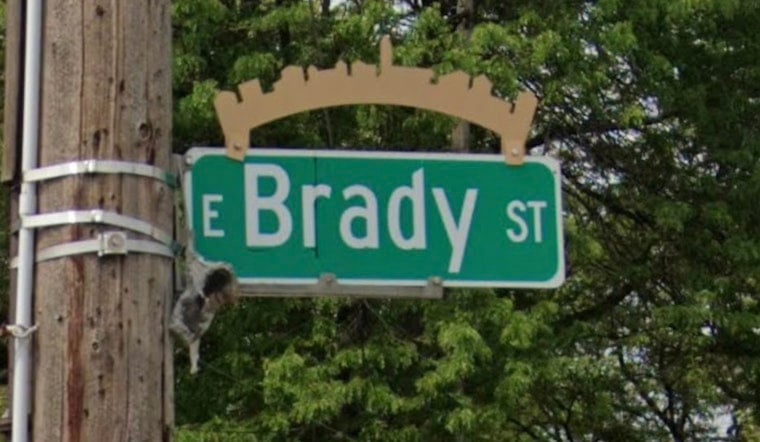
The Brady Street Business Improvement District Board voted in early August to extend its Summer Safety Pilot Program through Labor Day weekend, keeping a late-night parking ban, added police presence and rideshare drop-off points in place along Milwaukee's busy nightlife corridor a bit longer. The extension came with backing from Alderman Alex Brower, the Brady Street Area Association and the Milwaukee Police Department.
The pilot began as a six-week program on June 18 and folds in code-of-conduct signage spelling out what is and is not allowed, along with increased police and private security presence meant to address loitering, reckless driving, loud music and large crowds, according to the Milwaukee Journal Sentinel. Anna Antoine, executive director of the Brady Street Business Improvement District, told the paper more data is needed before officials can say for certain whether the program succeeded or should be expanded.
Antoine described the early feedback in upbeat terms even as she cautioned against declaring victory too soon. “Optimistic is a very great way to say it,” she said, per the same report. She added that Brady Street is unique and that people are passionate about it, a dynamic she said has shaped the intensity of both the support and the criticism the pilot has drawn.
Why the Pilot Started
The safety program was launched in late June immediately after two violent incidents struck the neighborhood within four days of each other. A June 23 shooting near Van Buren and Brady streets killed a 27-year-old man, and a June 20 shooting near Farwell Avenue critically wounded a 28-year-old man, according to Hoodline's earlier coverage of the fatal ambush that led to murder charges. District leaders had reportedly been developing the safety program before that violent weekend but accelerated its rollout in response.
Those shootings were not isolated. Overnight gunfire struck multiple homes and vehicles one street over in the 1000 block of East Person Street in June, with nearby residents reporting they could hear shots echo through their homes as crowd activity shifted off the main strip. A Milwaukee police officer was also injured near Brady Street and Warren Avenue in early July after being struck by illegal consumer fireworks set off in crowds spilling out of bars over Fourth of July weekend, an incident Hoodline reported on at the time.
Parking Ban and Citations
Central to the pilot is a no-parking restriction covering Brady Street from Humboldt to Farwell avenues between 10 p.m. and 4 a.m. on Thursdays, Fridays and Saturdays. The idea, according to the Journal Sentinel, was that keeping people from gathering near their parked cars would encourage them to go into businesses and spend money instead of lingering on the sidewalk, where crowds had at times resembled almost a street party.
Enforcing that ban has required Milwaukee police to issue more citations and invest additional manpower in the corridor, a strain on a department that is already short-staffed. The tradeoff has not been without friction: nearby residents have expressed frustration as displaced vehicles filled side-street parking spots instead, pushing the same crowding concerns onto quieter blocks.
Long History Behind the Push
Community pressure for structural safety changes on Brady Street predates this summer's shootings by years. The original push for pedestrian safety measures traces back to September 2022, when 32-year-old pedestrian Arne Bast was struck and killed in a hit-and-run crash in the 1200 block of East Brady Street, according to CBS 58. That death prompted neighborhood petitions and led the business improvement district to fund a broader safety study.
The resulting 2023 study, conducted by engineering firm GRAEF, found that 125 motor vehicle crashes occurred along Brady Street between Humboldt and Cambridge avenues from 2017 to 2021, resulting in one fatality and multiple injuries, as reported by The Daily Reporter. Of those crashes, 55 occurred directly at study intersections while 66 happened along mid-block stretches. The same study noted Brady Street carries roughly 10,200 vehicles a day between Farwell and Humboldt, with peak hourly volume reaching 880 vehicles, according to Wisconsin Department of Transportation data cited in the report.
That research, dubbed the “Prioritizing People on Brady” study, outlined four design concepts ranging from traffic-calming speed tables at side-street intersections to full pedestrianization banning general motor vehicle traffic, Milwaukee Record reported at the time. Full pedestrianization drew concerns from some stakeholders over emergency vehicle access and traffic rerouting, and no permanent redesign has moved forward; this summer's pilot represents a temporary, operational alternative while those bigger questions remain unresolved.
Testing the Pilot at a Major Festival
District leaders got an early stress test of the new protocols at the Brady Street Fest on July 25, when organizers added extra law enforcement, private security and mandatory wristbands at beer tents to prevent underage drinking among the thousands of attendees. Festival organizers prioritized crowd management after the string of early summer disturbances, a strategy that folded pilot-era safety measures into one of the neighborhood's largest annual events.
The pilot's extension also arrives against a backdrop of improving citywide numbers. Milwaukee Police Department data for the first quarter of 2026 showed non-fatal shootings citywide fell roughly 27% compared with the same period in 2025, dropping from 110 incidents to 80. City officials have said that overall decline coexists with the need for targeted enforcement in localized nightlife hotspots like Brady Street.
What Comes Next
Antoine said she is hopeful the pilot changes have positively affected Brady Street, but she reiterated that more data is needed before deciding whether the program should be expanded or made permanent. Milwaukee residents can complete a survey about the Brady Street safety changes as officials gather feedback ahead of further evaluation after Labor Day.
For now, the extension buys time for a corridor that has spent years toggling between celebrated nightlife destination and a source of anxiety for residents and business owners alike. Whether the current mix of parking bans, added patrols and rideshare zones becomes a lasting fixture — or gives way eventually to the more sweeping pedestrianization ideas first floated in 2023 — remains an open question district leaders say they are not yet ready to answer.





