

























































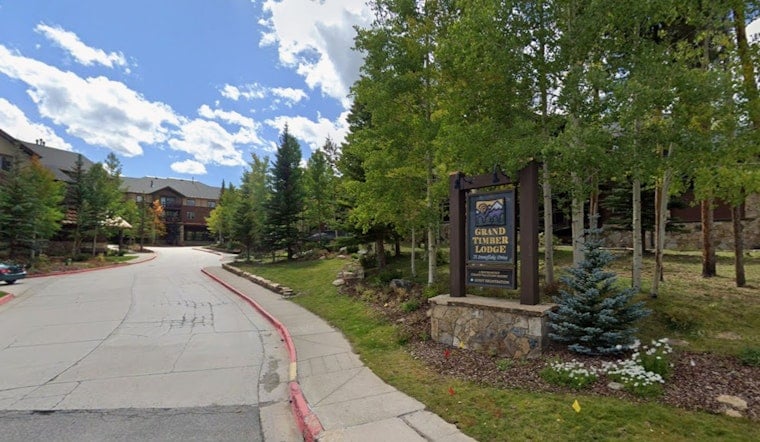
A bear wandered into the Grand Timber Lodge in Breckenridge, made its way through the building, and left with a stash of M&Ms before a police officer used the sound of a taser to chase it back outside. No people or the bear were injured during the encounter, according to the Breckenridge Police Department.
The break-in happened at the ski-in/ski-out resort at 75 Snowflake Drive, which sits between the base of Peaks 8 and 9 and includes 125 condominium units spread across eight buildings, according to Colorado.com. As the Denver Gazette reported, the bear remained inside the hotel for a stretch after entering before officers responded. The resort's location backs directly up to mountain terrain where wildlife sightings are common in that part of Breckenridge.
Rather than resorting to physical force, the responding officer relied on the recorded sound of a taser discharge to spook the bear and drive it out of the building. That approach lines up with guidance from Colorado Parks and Wildlife, which notes that officers and wildlife officials commonly use non-lethal hazing tools like taser audio, beanbag rounds, and air horns to startle bears without injuring them, reinforcing the animal's natural wariness of people.
Why Bears Are Pushing Into Buildings This Summer
The Grand Timber Lodge incident comes amid a sharp rise in bear activity across the region this year. Colorado Parks and Wildlife recorded a 68 percent jump in bear activity reports during the first seven months of 2026 compared with the same stretch last year, a surge tied to severe statewide drought that has depleted the berries and other natural food bears typically rely on, according to Ground News.
Late summer also puts bears into hyperphagia, a biological feeding phase in which they forage up to 20 hours a day and need roughly 20,000 calories daily to prepare for hibernation, per Colorado Parks and Wildlife. That calorie hunt makes candy and other dense, sugary food especially tempting when natural sources run short during a dry year, a dynamic outlined by Colorado Outdoors magazine.
Locked Doors, Secured Trash Remain the First Line of Defense
Wildlife managers in the region that covers Summit and Grand counties have repeatedly pointed to unlocked doors and windows, along with poor trash management, as the leading causes of human-bear conflicts at homes and lodges. Breckenridge's own municipal code requires residents and commercial property owners to store garbage inside secure structures or in bear-resistant containers, and it limits curbside placement to between 6 a.m. and 10 p.m. on collection days, according to the Town of Breckenridge.
Summit County has also tried to make compliance easier on residents' wallets. Its Bear Safe Summit rebate program, funded through Colorado Parks and Wildlife grants, offers property owners up to $400 toward bear-resistant trash bins and up to $3,000 for commercial dumpster enclosures. Statewide, unsecured trash accounted for 57 percent of all reported bear conflicts in 2025, when CPW logged 5,299 bear sightings and conflict reports, a total 15 percent above the previous six-year average.
What Happens to a Bear That Enters a Building
The stakes for a habituated bear can be severe. Under a CPW administrative policy in place since 1985, a bear captured after entering a human structure or causing a minor conflict is typically tagged and relocated on a first offense, but faces euthanization if it strikes again or is seen as an immediate threat to human safety, according to The Wildlife Society. Research cited by the organization found that roughly a quarter of bears relocated after a first strike go on to receive a second one.
That policy underscores why non-lethal hazing, like the taser-sound approach used at Grand Timber Lodge, matters in these encounters. Colorado's black bear population is estimated at between 17,000 and 20,000 animals, and overall human-bear encounters have trended upward over the past decade as mountain real estate development expands into historic habitat, according to KUNC. For now, wildlife officials continue to urge Colorado residents to keep doors and windows locked and trash cans secured to keep bears from finding their way inside in the first place.





