

























































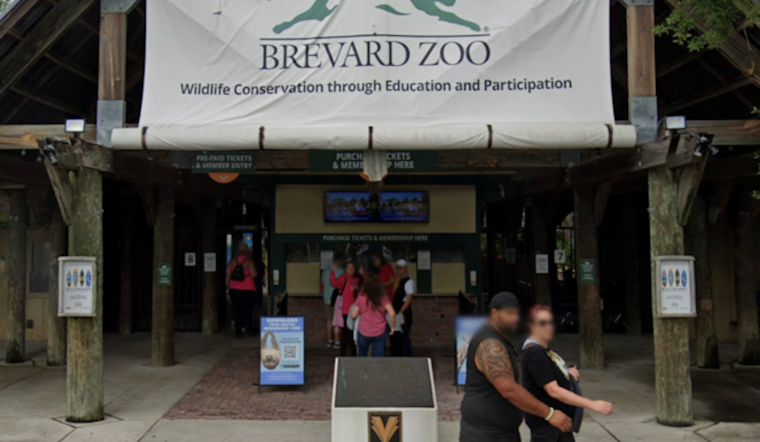
Dozens of baby sea turtles just got a second chance at the ocean. The East Coast Zoological Foundation completed its first hatchling boat ride of the nesting season, ferrying 56 sea turtles back to offshore sargassum weed lines after its Sea Turtle Rehabilitation Center welcomed a wave of hatchlings needing care.
Most of the animals arrived at the facility after their nests were disturbed at area beaches, according to a Brevard Zoo video posted to Facebook. The post's author noted predators likely disturbed some of the nests, and once hatchlings reached the rehabilitation center, veterinary staff gave each one a complete examination before determining next steps. Most needed nothing more than rest, wound care, and nutrition before they were healthy enough to travel.
The zoo's Sea Turtle Healing Center, opened by the East Coast Zoological Foundation in April 2014, was built for exactly this kind of triage. The facility houses 14 holding tanks ranging from six to 12 feet in diameter and treats roughly 100 marine turtle patients a year, including animals battling the contagious fibropapillomatosis tumors that afflict sea turtles.
How Rescuers Sort Hatchlings From Washbacks
Veterinary staff classify the tiny arrivals by size: anything under 5 centimeters long is a hatchling, while turtles 5 centimeters or longer are considered post-hatchlings. Healthy animals get floating enrichment and a diet of lettuce, fish, shrimp, crabs, and clams while they recover. Post-hatchlings often show up after rough ocean weather scatters the floating sargassum weed lines they depend on for shelter, a pattern documented by Brevard Zoo.
When storms or surges wash these so-called washbacks onto shore, volunteer rescue teams collect them for rehabilitation before boating them up to 20 miles offshore into floating sargassum mats, according to the Sea Turtle Preservation Society. Those seaweed rafts provide essential food and cover for juvenile turtles making their way in open water. Sea turtle care and conservation specialists supported the 56 hatchlings' return to that habitat during the recent release, per the zoo's video.
Why Brevard County Carries So Much Weight
Brevard County contains the majority of the 20.5-mile Archie Carr National Wildlife Refuge, established in 1991 between Melbourne Beach and Wabasso Beach to protect what the U.S. Fish and Wildlife Service calls the most significant loggerhead nesting habitat in the Western Hemisphere and the top green turtle nesting area in North America. The refuge generates an estimated 1.5 million to 2 million hatchlings annually. Official monitoring compiled by the Florida Fish and Wildlife Conservation Commission recorded 22,716 loggerhead nests, 30,431 green turtle nests, and 129 leatherback nests on Brevard County beaches during the 2025 season, with green turtle nests rebounding sharply from just 6,312 the year before.
The stakes for every hatchling are steep. Data compiled by the Sea Turtle Preservation Society indicates only an estimated 1 in 1,000 sea turtle hatchlings survives to reach reproductive maturity, a process that takes 20 to 25 years, as the animals face intense natural predation alongside artificial lights and ocean debris along the way.
What Beachgoers Are Asked to Do
Nesting season runs from May through October, and wildlife officials are urging beach visitors to make small changes that carry outsized consequences for hatchlings. Beach lighting should use opaque covers, low wattage, and long wavelengths such as red, amber, or orange light, since artificial lights can disorient both hatchlings and nesting females as they try to find the ocean, per the zoo's post. The Florida Fish and Wildlife Conservation Commission's Model Lighting Ordinance guides coastal communities toward those same low-wattage, shielded, long-wavelength fixtures during nesting season, because hatchlings instinctively crawl toward the bright horizon reflecting off open water.
Beachgoers are also asked to topple sandcastles, fill in holes, and remove trash and gear before leaving the sand, since those obstacles can trap or disorient emerging hatchlings overnight. Anyone who finds a hatchling that appears to be in distress should avoid touching it and instead consult an expert first. The Sea Turtle Preservation Society can be reached at 321-206-0646 for distressed hatchlings found in Brevard County.
Rescue guidelines from the Sea Turtle Preservation Society are explicit on one point: never put a stranded or exhausted hatchling back into the ocean surf. Depleted hatchlings often lack the energy to swim past the breakers to reach sargassum shelter and can drown before getting there, which is why professional intervention through the hotline matters. The remaining hatchlings still at the rehabilitation center will receive continued care before eventually joining others released into their native range, according to the zoo's video.
Legal Protections and What's Ahead
Interfering with sea turtles or their nests carries real legal weight in Florida. Under Florida Statute 379.2431, known as the Marine Turtle Protection Act, illegally taking, disturbing, possessing, or destroying any sea turtle, hatchling, nest, or egg is a third-degree felony punishable by up to five years in prison, and the law also imposes a mandatory $100 civil penalty for each illegally possessed marine turtle egg, according to the Florida Senate.
The rescue comes as the region's rehabilitation capacity is set to expand. The East Coast Zoological Foundation announced in April a December 2 groundbreaking date for its $140 million Bowen Aquarium and Conservation Center at Port Canaveral, a project Hoodline previously reported has already secured $74 million in funding and is projected to draw more than 525,000 visitors annually while boosting sea turtle and manatee rehab space on the Space Coast. Similar disorientation problems have surfaced elsewhere in Florida this month, with Volusia County deputies recently rescuing 75 disoriented hatchlings near Atlantic Avenue and hotel lighting sparking outrage in Fort Lauderdale, underscoring how widespread the lighting challenge remains across the state's nesting beaches.





