

























































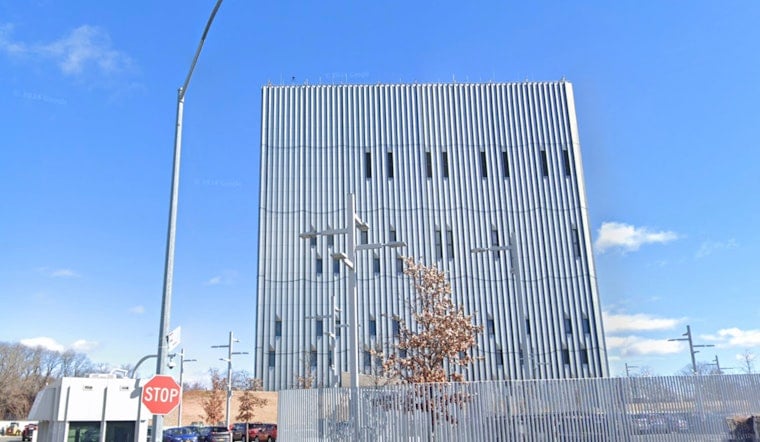
For about seven hours overnight, part of New York City's 911 system broke down in the Bronx, and hundreds of callers seeking help never got through to an emergency operator. The lapse began around 3 a.m. Tuesday, when Bronx police dispatchers suddenly heard dead air, and it was not resolved until roughly 10 a.m., leaving it unclear whether people experiencing emergencies were able to reach an ambulance during that stretch.
The breakdown struck Public Safety Answering Center 2, the Bronx call center that is one of New York City's two emergency dispatch hubs, according to The New York Times. City spokesman Jeremy Edwards said the Bronx center took in 5,659 incoming calls during the outage, and that nearly 1,700 of them failed to reach an emergency operator — about one-third of all calls made to the center during that window. Edwards said as many as 400 New Yorkers may have been entirely unable to connect with a 911 call taker, while callers and call takers who did get through often could not hear each other at all.
It remains unclear how many of the failed callers redialed and reached the backup center in Downtown Brooklyn instead, though that possibility exists given the city's dual-center design. City Hall has not identified what caused the glitch. Gloria Chin, a spokeswoman for the city's Office of Technology and Innovation, which oversees the 911 system's technology, said repairs were underway at the Bronx site and that by the time the fix was complete, New Yorkers calling 911 were experiencing normal service again. She added that 911 staffers conducted outreach to callers affected by the lapse, and Edwards said the city is investigating the breakdown with plans to determine what happened, follow up with affected callers, and prevent a recurrence.
A Facility Built to Prevent Exactly This
The irony of the outage is that PSAC II was designed specifically to guard against this kind of single-point failure. The $800 million, 450,000-square-foot Bronx facility, which opened in 2016, was designed by Skidmore, Owings & Merrill as a blast-resistant, fortress-like building meant to ensure redundant 911 communications after emergency command infrastructure was destroyed during the September 11 attacks, according to Fast Company. City technology officials have said that the Bronx center and its Brooklyn counterpart are each engineered to independently process more than 10 million emergency calls a year should the other go offline, as reported by City & State New York. New York City's 911 system overall receives roughly 10 million calls annually, per the seed reporting, making it the busiest municipal emergency dispatch operation in the country — a scale confirmed separately by StateScoop.
A History of Strained Infrastructure
This is not the first time physical or technical problems have disrupted operations at the Bronx site. In July 2019, FDNY 911 call takers were forced to temporarily evacuate PSAC II and relocate to MetroTech in Brooklyn after a third-party contractor accidentally severed a nearby Verizon fiber-optic line during excavation work, the Daily News reported at the time. The broader Emergency Communications Transformation Program that built the city's dual-center 911 infrastructure was itself plagued between 2004 and 2013 by management failures, software glitches, and contractor performance issues that pushed capital costs past $2 billion, according to a February 2015 report from the New York City Department of Investigation.
The Office of Technology and Innovation is currently in the middle of a $270 million transition to Next Generation 911, migrating the city's dispatch infrastructure to an internet protocol-based Emergency Services IP Network, a project detailed by StateScoop and CBS New York. The Federal Communications Commission has warned, in rules published in the Federal Register in September 2024, that maintaining legacy circuit-switched networks alongside newer IP-based systems during such upgrades significantly heightens the risk of emergency call outages nationwide. It is not known whether the NextGen 911 transition played any role in Tuesday's breakdown.
Stakes Underscored by a Past Tragedy
The uncertainty around ambulance access during Tuesday's lapse recalls a 2013 case that still looms over the city's 911 system: a 4-year-old girl was struck by a car and killed on an Upper West Side sidewalk while waiting for an ambulance. A Department of Investigation report later determined that the four-minute dispatch delay in that incident was caused by human error, after a dispatcher on break missed the incoming call, rather than a system-wide hardware crash, according to a Newsday report from December 2013. City lawmakers on the Council's Committee on Governmental Operations have continued to hold oversight hearings examining OTI's management of dispatch reliability and backup protocols, according to New York City Council records from April 2024.
For now, city officials say service has returned to normal, but the cause of Tuesday's dead air remains unresolved. Edwards said the city plans to determine what went wrong, reach out to the New Yorkers whose calls failed to connect, and take steps meant to keep it from happening again.




