

























































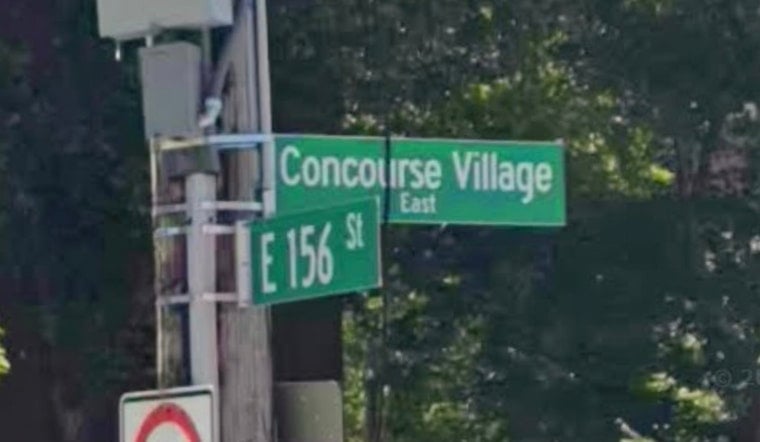
A stretch of sidewalk at East 156th Street and Concourse Village East that had frustrated wheelchair users, parents pushing strollers, and shoppers hauling carts for years finally got fixed this month — and it took a viral video to make it happen. Oscar Soto, who uses a wheelchair and lives near the intersection, had been forced to take longer routes or lean on other people for help just to get around the corner. Now, he says the area is smoother and easier to navigate, though he is not yet convinced the fix will last.
The repairs came together fast once Assemblymember Chantel Jackson posted a social media video showing the challenges wheelchair users face navigating the intersection, according to News 12 Bronx. Jackson had complained for a while about how the broken curb ramp created obstacles for people with mobility challenges and for families with strollers, and residents had reported years of concerns about accessibility and safety at the corner. Per Streetsblog New York City, Jackson had actually shown the same damaged location in person to Department of Transportation officials back in June without getting immediate repairs — it was only after her Instagram video went public that the city moved, fixing the curb ramps within two days.
A Corner Near Schools and a Senior Center
The intersection sits close to community anchors that make the accessibility gap especially painful. The PSS Andrew Jackson Senior Center, located nearby at 325 East 156th Street between Concourse Village East and Courtlandt Avenue, serves local older adults who depend on accessible sidewalks and curb ramps to reach the center's meals, social programs, and other services. Jackson has said residents need to use the pathway to travel to schools and grocery stores, and the surrounding corridor along Concourse Village West has long drawn complaints about heavy school traffic tied to nearby institutions including P.S. 359 and Cardinal Hayes High School, according to a Bronx Times report on a city traffic study.
Jackson said people with mobility challenges struggled to move between the sidewalk and street at the corner, and in some cases people navigating the intersection tripped or fell. The broken curb ramp had become difficult to navigate for anyone with limited mobility, and cars blocking the intersection's access area only made things worse. Soto said the repairs are good for now, but their durability is uncertain — a caution he says comes from watching similar fixes fail before.
More Work Planned, But Enforcement Remains a Question
Jackson said additional work is still needed and wants the intersection upgraded to meet Americans with Disabilities Act standards. She met with New York City Department of Transportation Commissioner Ydanis Rodriguez in June to push for improvements, and the agency has planned immediate enhancements at the location, including no standing anytime signs meant to improve visibility and accessibility, plus better access to the sidewalk overall. Jackson also wants barriers or planters installed to prevent vehicles from blocking access points going forward.
That last piece may be the hardest to solve. Enforcement of illegal parking violations at the intersection falls to the NYPD, and citywide data suggests that enforcement is a sore spot for many New Yorkers: a Streetsblog analysis of city survey data found that 97 percent of residents who filed non-emergency 311 complaints about blocked sidewalks were dissatisfied with the police response. Bronx residents watching this particular corner say they will be paying attention to whether the new signage and barriers actually keep cars from blocking access points again.
A Small Fix Inside a Massive Citywide Mandate
The East 156th Street repair is a tiny piece of a much larger legal obligation. Under a 2019 federal class-action settlement in CIDNY v. City of New York, the city is required to install and upgrade ADA-compliant curb ramps across an estimated 162,000 street corners citywide and maintain them under court monitoring, according to Disability Rights Advocates. New York City committed $1.55 billion under that settlement to survey, install, and repair ramps citywide and established a dedicated Pedestrian Ramp Unit within the Department of Transportation, per United Spinal Association. The agreement followed 25 years of disability advocacy and litigation dating back to 1994.
The scale of the problem the settlement was meant to fix was staggering: court documents from the underlying litigation showed roughly 79 percent of curb ramps inspected across sampled street corners were non-compliant with ADA standards before the court-ordered overhaul began, prompting a court-appointed Special Master to recommend strict monitoring and mandatory remediation schedules. In a July 2025 progress update, the Department of Transportation reported maintaining roughly 185,000 street corners across 12,760 miles of sidewalks and said it had installed or upgraded ADA-compliant ramps at 8,160 corners citywide over the preceding year. Upgraded ramps are required to include red or white dome-patterned detectable warning surfaces to alert blind and low-vision pedestrians before they step into traffic.
Jackson represents New York's 79th Assembly District, which covers Concourse Village, Melrose, Morrisania, Claremont, Belmont, and East Tremont, and chairs the New York State Legislative Women's Caucus. Her district office sits nearby at 780 Concourse Village West. For now, residents describe the East 156th Street fix as a welcome first step — but with Soto and others still cautious about whether it holds up, and enforcement against blocking vehicles still an open question, many say they'll be watching this one corner closely to see if the repairs stick.





