

























































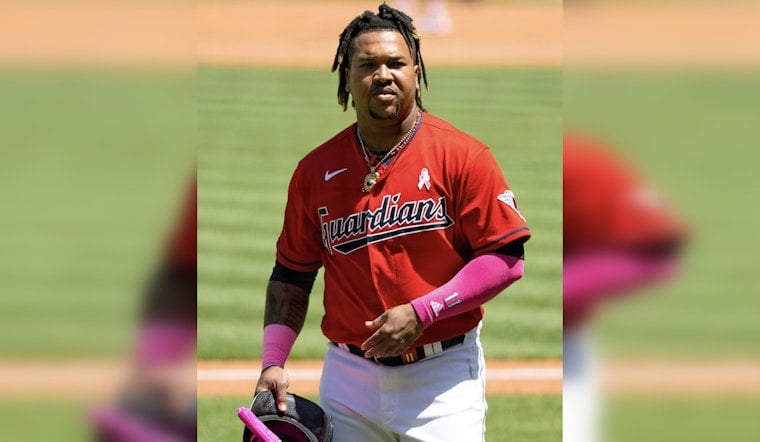
A Bronx nonprofit executive is suing the New York Yankees for $10 million, claiming a bat that slipped from Cleveland Guardians third baseman Jose Ramirez's hands during a swing struck her in the head while she sat in fourth-row seats directly behind home plate at Yankee Stadium. Stephanie Duluc, a 37-year-old chief of staff at Somos Community Care, says the June 2 incident knocked her from her seat and threw her to the ground, leaving her with lasting injuries she says have upended her life.
Duluc's lawsuit, filed in Manhattan federal court, claims Ramirez threw his bat into her section during the fifth inning after losing it on a swing, according to the New York Post. Somos Community Care, which is based in the Bronx, owns season tickets in the section behind home plate where Duluc was sitting that day. The suit alleges the protective netting in that area left an unprotected opening and was significantly lower than netting in adjacent sections.
Duluc claims the bat caused a traumatic brain injury, a concussion, severe light sensitivity, and permanent damage to her neck and hands. She says she remains unable to return to her professional duties. Her attorney, Jon L. Norinsberg, said she continues to suffer headaches, light sensitivity, balance issues and cognitive impairments.
A Legal Fight Over a Century-Old Rule
The case is expected to hinge on New York's so-called Baseball Rule, a doctrine dating back to the 1981 Court of Appeals decision in Akins v. Glens Falls City School District, which holds that stadium operators fulfill their legal duty of care simply by providing protective netting adequate for the number of fans expected to want protected seats, according to Segal McCambridge. Under that rule, teams and owners are typically exempt from liability for foul-ball, bat or similar injuries, and the Baseball Rule requires only that adequate netting exist in what courts have described as the zone of greatest danger behind home plate.
Duluc's case reportedly faces a steep legal battle because of that precedent, and her claim depends on whether she can prove the net itself was defective rather than simply an inherent risk of attending a game. That distinction traces back to a 1914 Missouri appellate ruling, Edling v. Kansas City Baseball & Exhibition Co., which the DePaul Journal of Sports Law notes held a ballpark owner liable after a foul ball passed through a hole in the netting behind home plate. That case established that the Baseball Rule does not protect venues when the netting provided is defective, damaged, or improperly maintained — precisely the theory Duluc's attorneys appear to be pursuing.
How Yankee Stadium's Netting Is Configured
According to official seating guidelines published by MLB.com, the protective netting behind home plate in Sections 018 to 021B at Yankee Stadium reaches 31 feet above the playing field wall but tapers down in height as it approaches the dugouts, with ticket notices warning that fans in adjacent sections remain exposed to flying objects including bats. The Yankees have expanded their netting before: the team extended protection past both dugouts in 2018 and again ahead of the 2020 season, following a string of 2017 incidents that included a toddler struck in the head by a 105 mph foul ball, according to Fox Sports. That 2020 expansion added knotless netting rising 9 feet above the dugouts and 5.5 feet above the outfield wall.
The Yankees have declined to comment on Duluc's lawsuit. The team's YES Network broadcaster Michael Kay addressed the incident on-air, saying simply that the bat went into the stands over the screen, and that the bat goes one way while the ball goes another. Kay also noted that the woman who was hit was on her feet at the time.
Attorney Pushes Back on TV Appearance Scrutiny
Duluc appeared on PIX11's Monica Makes It Happen in late July, where she discussed an event sponsored by Somos Community Care at Fordham University. Norinsberg said the brief television appearance does not establish that Duluc has recovered or that she can perform her job duties sustainably, adding that the appearance did not contradict her injury claims.
A Pattern of Fan Injuries Across MLB
Duluc's case follows years of scrutiny over projectile injuries at ballparks nationwide. An October 2019 investigation by NBC Sports found at least 808 reported fan injuries from baseballs at MLB stadiums between 2012 and 2019, including concussions, skull fractures, and permanent vision loss. The danger of flying bats specifically drew national attention after spectator Tonya Carpenter suffered life-threatening head trauma when a broken maple bat flew into the stands at Fenway Park in June 2015, an incident that, per the Los Angeles Times, helped spur class-action lawsuits demanding pole-to-pole netting across MLB.
MLB has responded with regulatory changes over the years, including stricter wood bat manufacturing standards implemented in December 2008 after a joint study with the USDA Forest Service cataloged 2,232 broken bats over three months and found maple bats three times more likely than ash to shatter into multiple flying pieces. More recently, MLB mandated in December 2022 that all 120 Minor League affiliate ballparks install standardized netting from foul pole to foul pole by Opening Day 2025, with non-compliant clubs facing organizational discipline and fines, according to Sportsfield Specialties.
Courts elsewhere have shown some willingness to revisit the Baseball Rule's protections. A California appellate court allowed a spectator injury suit to proceed in February 2020 in a case involving a 12-year-old girl who lost sight in one eye from a foul ball, ruling that modern netting expansions across professional baseball could justify narrowing the traditional defense, the Los Angeles Times reported. Whether a Manhattan federal court will take a similar view of Duluc's claims remains to be seen.
The lawsuit lands during a busy stretch for the Yankees on the field. Top prospect George Lombard Jr. homered in his first game for the team Tuesday, offering a bright spot for a franchise now facing the added scrutiny of a high-dollar injury claim tied to one of its most storied sections of seats.





_(cropped).jpg)