

























































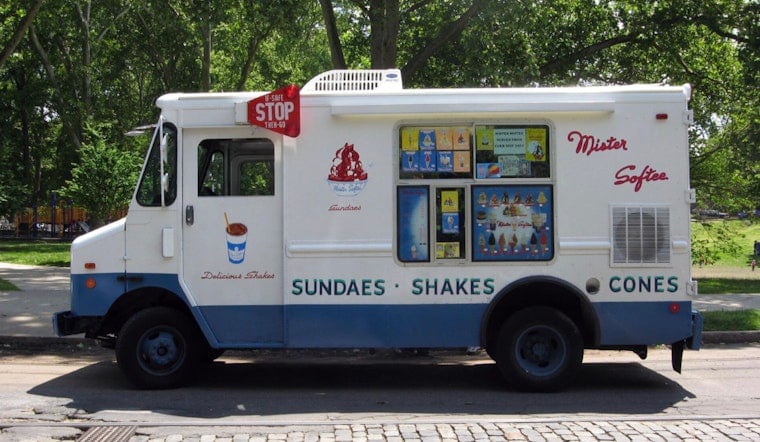
Eight-year-old Equilla Lynn Hodrick took off running toward a parked Mr. Softee truck at Briggs Avenue and East 194th Street in the Kingsbridge Heights section of the Bronx on the evening of August 12, 1985, and she never came back. Her mother, eight months pregnant at the time, watched from their stoop, unable to chase after her on foot. Equilla was never seen again.
Now, more than four decades later, her family says they have not given up hope of finding her, according to News12 New York. Equilla would have turned 50 this year, and the outlet reports the family remains hopeful of answers about the daughter who has now been missing for more than 40 years. The National Center for Missing and Exploited Children continues to support the family's search, per the same report.
A Trail That Went Cold at the Train Tracks
In the days after Equilla disappeared, police brought in bloodhounds that tracked her scent roughly a mile from her home to Webster Avenue near the Metro-North train tracks, where the trail abruptly vanished, according to Crime Solvers Central. Metro-North train traffic was temporarily disrupted during the search effort, the site notes. A family member later reported seeing Equilla playing video games at a neighborhood corner arcade later that same evening, according to the Unsolved Mysteries Wiki, a potential sighting that would place her timeline after her initial run toward the ice cream truck. Investigators reportedly re-interviewed local witnesses in an effort to verify that timeline.
Police records from the time describe Equilla as 4 feet 11 inches tall and about 80 pounds, wearing eyeglasses, with brown hair and hazel eyes. She had pierced ears, a gap between her top front teeth, and distinct scars near her right eye and right cheek, per Crime Solvers Central's case file. Those identifying details remain part of her record in national missing persons registries decades later.
National Attention, Then Decades of Silence
Equilla's case drew national attention when it was featured on NBC's Missing... Have You Seen This Person? special in January 1986 and was later profiled on America's Most Wanted, according to the Unsolved Mysteries Wiki. Television recreations like those were the primary tools available to investigators seeking public tips before the rise of digital tip networks and social media.
The New York City Police Department's Cold Case Squad has since reopened Equilla's file to apply newer forensic methods, though law enforcement has never publicly named a suspect, Crime Solvers Central reports. Missing person cases in New York City remain open indefinitely until they are solved. Under New York State and NYPD procedures governing missing youth, officers are barred from imposing any waiting period before starting a search and must immediately enter a missing child's information into the FBI's National Crime Information Center database, according to the New York State Office of Children and Family Services. Those protocols did not exist in their current form back in 1985, when Equilla's case relied largely on local canvassing and periodic national media appeals.
Why So Many Cases Like Hers Endure
Nationwide, the scale of missing children cases remains significant even with modern coordination. The National Center for Missing and Exploited Children says it assisted with 32,167 missing child cases in 2025, resolving 90 percent of them, while 3,154 cases remained active cold cases, according to MissingKids.org. The organization's forensic artists produced 187 age-progression images in 2025 alone to help the public picture what long-missing children might look like as adults, the group reports.
Advocates have also pointed to a broader pattern that may have shaped Equilla's case in its earliest days. Research and advocacy organizations note that Black missing youth have historically experienced significant underreporting and lower news media coverage compared with white children, a disparity that advocates say limited public awareness and, in turn, the volume of tips law enforcement received in urban missing child cases from the 1980s, according to a relay from the Black and Missing Foundation and NCMEC.
For Equilla's family, none of that history changes what they are still waiting for. Four decades after she ran toward a Mr. Softee truck and disappeared into a Bronx summer evening, they say they remain hopeful that someone, somewhere, still has the answer.





