

























































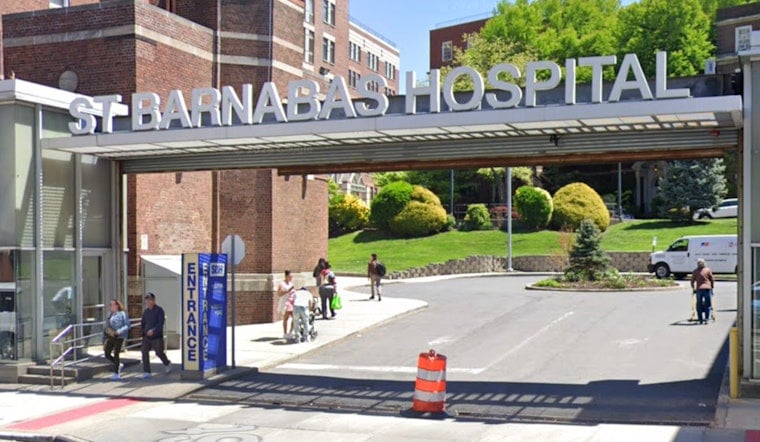
Patients at St. Barnabas Hospital in Belmont can now tell doctors upfront that they want no blood or blood products during treatment, and the hospital will build their entire care plan around that choice. SBH Health System has launched the Bronx's first Bloodless Medicine and Surgery Program, coordinating care for patients who opt out of transfusions for medical, religious, or personal reasons.
The program makes SBH one of only a few facilities in the tri-state region offering bloodless medicine and surgery, according to Bronx Times. Patients can communicate their blood treatment preferences the moment they arrive at the hospital and throughout their entire stay, and the program team then develops individualized treatment plans that honor those decisions about blood and blood products. The Bronx Times reports the team includes doctors, nurses, hospital staff, patient representatives, and clergy when a patient requests one.
Dr. Robert Karpinos, who leads the program, said SBH has practiced patient blood management for many years and described bloodless medicine and surgery as a natural extension of that work, per the same account. Patient blood management focuses on reducing blood loss, limiting the need for transfusions, and supporting patients' blood health before, during, and after procedures. Jehovah's Witnesses generally refuse blood transfusions based on their interpretation of biblical teachings, though individual members may still choose whether to accept minor blood fractions such as albumin or clotting factors, according to ResearchGate.
How Doctors Operate Without Donor Blood
Rather than relying on a single fix, bloodless surgery combines a mix of advanced tools and preparation. Surgical teams often use intraoperative cell salvage devices, known as Cell Saver systems, which collect blood lost during an operation, filter it, and continuously reinfuse it back into the same patient, according to NYU Langone Health. Before scheduled surgeries, physicians frequently administer synthetic erythropoietin and high-dose intravenous iron to stimulate the bone marrow and raise a patient's red blood cell count ahead of time, per StatPearls.
In severe cases of acute blood-loss anemia where transfusions are refused, physicians can turn to hyperbaric oxygen therapy, which saturates blood plasma with oxygen under pressure to maintain tissue oxygenation while the body regenerates its own red blood cells, the same StatPearls research notes. At SBH, doctors use evidence-based treatments to minimize blood loss and support natural blood-cell production, according to the Bronx Times. New York law and standard medical ethics guidelines give competent adult patients the legal right to refuse transfusions through binding advance directives such as a Directive for Non-Blood Medical Management or a Health Care Proxy, per the American College of Surgeons.
Why the Approach May Benefit More Than One Group
Bloodless programs first developed to serve Jehovah's Witnesses, but patient blood management is increasingly viewed by major medical institutions as a stronger standard of care for all patients. Clinical studies show patients undergoing transfusion-free procedures experience lower rates of healthcare-associated infections, shorter hospital stays, and fewer post-operative complications compared with those who receive donor blood transfusions, according to Johns Hopkins Medicine. A 2025 study evaluating an eight-year patient blood management program at an urban New York City community teaching hospital found a 39% drop in unnecessary red blood cell transfusions and $2.2 million in cumulative cost savings, according to research published on PMC.
Englewood Health in New Jersey pioneered the tri-state area's first comprehensive Institute for Patient Blood Management and Bloodless Medicine and Surgery, which has served as a regional model for transfusion-free surgical techniques since the 1990s, according to Englewood Health. Dr. Daniel Lombardi said direct patient involvement in care plans and healing leads to better short-term and long-term outcomes, and he added that the Bronx program grew out of conversations about the treatment options already available to patients, per the Bronx Times.
A Diverse Borough Gets a Tailored Option
Dr. David Perlstein said the program respects cultural and personal values and reflects the diversity of the community SBH serves, and he described bloodless medicine as reflecting the health system's broader mission and systemwide work, the outlet reports. SBH Health System operates St. Barnabas Hospital and other health care facilities across the Bronx and has served the borough for more than 160 years. St. Barnabas is a 422-bed non-profit teaching hospital and Level 2 Trauma Center in Belmont that logs more than 400,000 outpatient visits annually, according to the American Hospital Association.
The bloodless medicine launch arrives as SBH pushes ahead with a much larger overhaul of its facilities. The health system filed city paperwork in May for a $132M ER and psych expansion aimed at modernizing its emergency department and expanding inpatient psychiatric capacity to 72 beds. St. Barnabas handles between 75,000 and 80,000 emergency visits a year, and it has repeatedly served as the receiving hospital for trauma cases from Belmont-area shootings, underscoring how central the ER remains to daily operations even as SBH rolls out specialized programs like bloodless medicine.





