

























































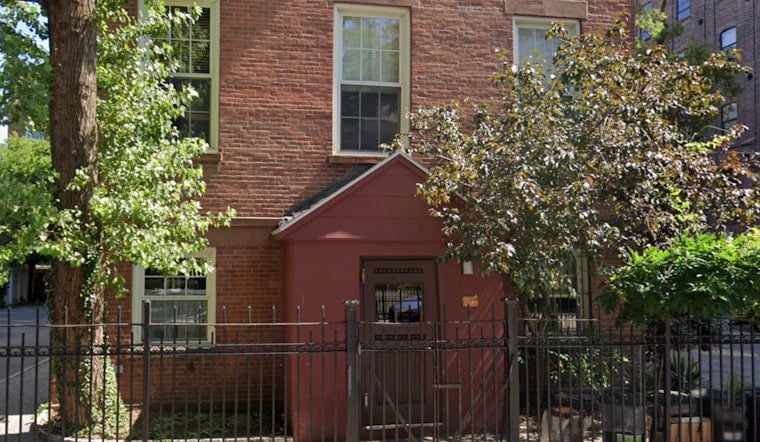
A Con Edison transformer caught fire under Middagh Street near Henry Street in Brooklyn Heights on Saturday just before 8 p.m., popping a large square manhole cover and sending a dangerous buildup of carbon monoxide into two nearby residential buildings. Firefighters evacuated 20 Henry St. and swept 65 Middagh St. room by room, forcibly entering 72 Middagh St. to check gas levels, while an irritating smell from burning rubber and insulation in the utility cables spread through the area.
The FDNY received a call about a transformer fire affecting occupancies with smoke, carbon monoxide and power issues, according to an FDNY spokesperson, as reported by Brooklyn Eagle. The response, per FDNY, included 79 fire and EMS personnel across 21 units. Engine 205 and Ladder 118 responded immediately, and their firehouse sits just steps from the transformer — a detail with resonance in the neighborhood, since the same company lost six firefighters on 9/11 after racing across the Brooklyn Bridge, an event memorialized in a mural on the station's garage doors, according to Forgotten New York. Engine 205 and Ladder 118 have shared the Middagh Street firehouse since 1929.
Firefighters detected potentially deadly carbon monoxide levels in the two residential buildings and requested that Con Edison shut off power to 65 Middagh St. as a precaution. Con Edison crews remained on site working to make repairs, and the incident affected one customer, per the same account. The Centers for Disease Control describes carbon monoxide as odorless, colorless, tasteless, nonirritating and potentially deadly — meaning the smell reported near the fire was not the gas itself but the byproduct of burning cable insulation, the article notes.
Woken From Sleep and Sent to Shake Shack
Darrian Robinson, who lives at 20 Henry St. with her 8-month-old twins, told the outlet that firefighters knocked on doors and woke residents to get them out safely. Her family waited out the evacuation at a Shake Shack in Dumbo while crews worked the scene. Ariel Taub, another resident quoted in the report, described the incident more simply as a smoking manhole.
Con Edison had restored power to most units at 65 Middagh St. by Sunday, according to a Con Ed worker cited in the report, though an electrician still needed to replace burned electric meters in a couple of the co-op's apartments before power could be fully restored there.
Underground Fires Aren't New to Brooklyn Heights
This is not the first time an underground utility failure has disrupted the historic neighborhood. Hoodline reported on Thanksgiving evacuations in November 2024, when a similar manhole fire knocked out power and forced residents from their homes. Underground cable fires like these burn in low-oxygen vaults, and research published by Fire Engineering explains that the oxygen-deprived combustion of rubber cable jacketing produces concentrated carbon monoxide, which can migrate through subterranean conduits and ductwork directly into adjacent basements. Standard FDNY protocols call for mandatory room-by-room sweeps and mechanical building ventilation whenever smoke migration or elevated indoor carbon monoxide accompanies a transformer fire.
The frequency of these incidents has been climbing sharply across the city. Con Edison dispatch data cited in a separate Hoodline report on a Chelsea substation explosion showed manhole fire incidents citywide surging from roughly 1,300 in 2023 to about 4,400 in 2025, as extreme weather and aging grid infrastructure strain a system with more than 89,000 miles of subterranean cable. Firehouse Magazine has noted that subterranean cable fires tend to spike during extreme weather and winter thaws, when corrosive road salt and moisture seep into vaults and degrade wire insulation. Hoodline's January coverage of a Gravesend carbon monoxide leak, which hospitalized eight people after indoor levels reached 300 parts per million, offers a stark benchmark for how dangerous these gas buildups can become; medical guidance holds that CO levels above 150 to 200 parts per million require immediate evacuation.
A Candy Factory and a Former Schoolhouse Caught in the Middle
The two evacuated buildings carry their own layered histories. 20 Henry St., also known as the Peaks Mason Mints building or the Candy Factory, was built in 1885 and originally produced Mason Mints, Mason Peaks and Dots before the company's brands were later acquired by Tootsie Roll. The building later became a Mitchell-Lama residence for artists before new investors, including a company connected to Magic Johnson, completed its conversion into condominiums. Actor Adam Driver listed a combined loft unit there for $4,999,999 in June before purchasing a larger home elsewhere in Brooklyn Heights, as Hoodline reported at the time.
65 Middagh St. has an even older past. Built in 1846 by the Board of Education when Brooklyn was still a stand-alone city, the building became known as Public School 8 before a larger P.S. 8 building was constructed at 37 Hicks St. The property was later sold to the Catholic Church of the Assumption in 1961, then sold again to Joseph Maggio in 1975, who renovated it into loft-style apartments, according to StreetEasy. It now operates as an eight-unit pre-war residential cooperative, where a gut-renovated three-bedroom loft was listed for $2.65 million in July, per Serhant.
It remains unclear whether Con Edison plans specific electrical infrastructure upgrades for the Middagh Street corridor, how long full power restoration and meter replacement will take for the remaining affected co-op units, or whether the utility will inspect nearby building conduits to guard against future gas migration. For now, residents like Robinson and Taub are left waiting for repairs while Con Edison crews continue work at the site.




