

























































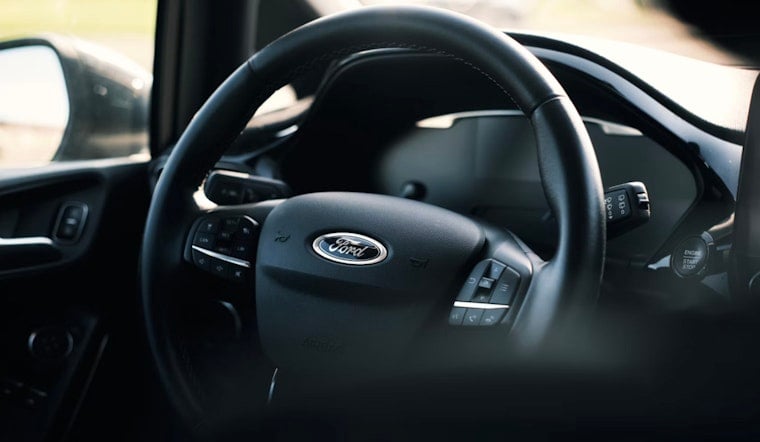
Car shoppers in Buffalo looking for a 2026 Ford Escape are out of luck. The gas-powered SUV cannot be purchased or registered in New York because it fails to meet the state's emissions standards, and buying one out of state would still leave it unable to pass a New York emissions inspection.
The Escape's disappearance from New York lots is a direct result of the state's Advanced Clean Cars II rule, which set a goal of 35% of new vehicle sales being zero-emission by 2026 and 100% by 2035, according to Spectrum News 1. New York adopted the rule under an exception federal law grants to California, letting states impose their own tougher emissions standards, a legal window that has since become the center of a sprawling multi-state court fight. Ford has also discontinued the Escape model altogether, adding another layer to why the vehicle simply isn't an option for New York buyers right now.
One unnamed New York dealership told Spectrum News 1 it estimates losing around 100 sales just from being unable to offer the Escape. Paul Stasiak, president of the Niagara Frontier Auto Dealers, described the broader climate to the outlet by saying the auto industry is experiencing another wave of technological change, and that the public does not yet want the clean-car narrative forced on it.
A Regulatory Pause Meets a Federal Lawsuit
The rules themselves were issued in 2022, but real-world adoption has lagged far behind the targets. Fewer than 10% of new vehicle sales in New York were zero-emission in 2024, meaning the state would have needed roughly a 300% year-over-year jump in EV adoption just to hit its 35% quota for Model Year 2026, according to a New York State Senate memo tied to Senate Bill S8099. The state also missed its own statutory milestone of 850,000 light-duty zero-emission vehicles on the road by 2025, with only 323,673 EVs registered statewide as of this past February, per Environmental Advocates NY.
Facing that gap, the New York State Department of Environmental Conservation said enforcement of ACC II sales-deficit penalties would be delayed for two years, through 2027, citing manufacturer hardships. Ford, Honda, Nissan, Mazda, and Hyundai all wrote letters to the state detailing their investments in zero-emission vehicles, reporting that current market conditions make the ACC II zero-emission mandates unachievable, per those manufacturer letters. Even with that penalty pause, inventory restrictions on non-compliant gas-powered models like the Escape have remained in place.
The bigger wrinkle is federal. In June 2025, the Trump administration signed Congressional Review Act resolutions attempting to revoke California's Clean Air Act waivers, the legal mechanism underlying New York's rules. New York and ten other states responded by filing suit in federal court, a case that Kim Diana Connolly, a professor of law and director of the Environmental Law Program at the University at Buffalo, described to Spectrum News 1 as leaving the legal and political situation surrounding New York's emissions rules jumbled. New York currently lacks the authority to fully implement ACC II because of that pending litigation, and the dispute could ultimately reach the Supreme Court.
Where Things Stand in Court
There's been at least one favorable sign for New York's position. A federal judge signaled during oral arguments this month that she is likely to block the EPA's attempt to use the Congressional Review Act to invalidate California's waivers, according to Courthouse News. Still, nothing is settled, and manufacturers continue to face raw-material, production-capacity, union, and supply-chain issues that complicate zero-emission vehicle output regardless of how the litigation resolves.
Lawmakers in Albany have tried more than once to intervene. Senate Bill S8099, introduced in May 2025 by Sen. Patricia Fahy, proposed statutorily delaying ACC II regulation and enforcement until January 1, 2028. Separately, a 2024 bill from Sen. Pete Harckham, S.7767, floated bypassing traditional franchised dealerships entirely in favor of direct-to-consumer EV sales if dealers failed to hit the 35% zero-emission sales threshold by 2026. Neither of those proposed rollbacks made it out of committee.
New York isn't alone in adjusting timelines to match reality on the ground. Massachusetts announced its own two-year pause on Advanced Clean Cars II sales-requirement enforcement for Model Years 2026 and 2027 last year, part of a regional pullback tied to charging gaps that also touched Vermont and Maryland.
What It Means for Buffalo-Area Buyers
For now, the practical effect in Western New York is straightforward: some popular gas-powered models simply aren't for sale, and a car bought across the border in Pennsylvania or Ohio, where dealers may have more capacity to sell consumer-friendly vehicles, still won't pass a New York emissions inspection once it's back home. The legal uncertainty over ACC II is shaping what dealers can stock going forward, even as manufacturers say they're working on a fix for the underlying supply and regulatory challenges. California continues to set the emissions standards that most manufacturers choose to meet nationwide, meaning whatever happens in the courts over the coming months will ripple well beyond New York's borders.





