

























































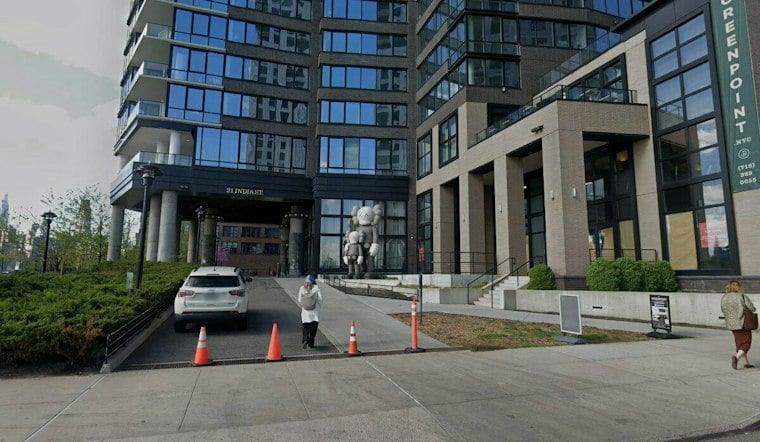
The Greenpoint, a 40-story luxury rental tower with 463 units on the Greenpoint, Brooklyn waterfront, lost its grid connection after an electrical fire on Sept. 6 and relied on generator power for more than a month. Rose Associates, the building’s manager, reconnected the electrical system and shut the generator off late on Oct. 7. During the outage, residents filed complaints, the city issued violations, and tenants pursued housing-court cases.
A Month of Noise, Outages and Unanswered Questions
According to Gothamist, FDNY firefighters extinguished the blaze just over an hour after an emergency call came in around 8 p.m. on Sept. 6, and an email reviewed by the outlet indicates the fire started in an eighth-floor electrical closet. Carola Fuchser, who lives on the 25th floor and pays $5,800 a month for a one-bedroom apartment, told the outlet the generator noise was disturbing, that smoke alarms did not activate during the fire, and that management did not tell residents what caused it until the following day.
Gothamist reported that residents had filed 272 complaints about frequent hot-water and power outages over the previous two years, including 191 since the Sept. 6 fire, and that the city’s Department of Housing Preservation and Development issued 38 violations against the building since the Sept. 6 fire. Rose Associates spokesperson Richard Shea said generator power maintained all building services and functionality throughout the outage. He attributed disruptions to an electrical malfunction in a building riser that affected some mechanical systems and said the company followed city rules to restore power.
What Generator Power Does—and Doesn’t—Tell Us
According to NYC Department of Buildings guidance, emergency and legally required standby systems serve specified life-safety or egress functions, while optional standby systems may support equipment selected by the building owner. That guidance does not establish which systems or loads The Greenpoint’s generator served, or whether particular fire-alarm functions remained available during the outage. Separately, DOB says dismissed DOB violations are marked with an asterisk in its BIS database; that status marker applies to DOB records, not the 38 HPD violations cited above. A count of violations issued alone does not establish how many DOB violations remain open, according to the agency’s violations guidance.
Tenants Organize and Head to Housing Court
Gothamist reported that Fuchser and 32-year-old neighbor Shannon McMahon helped form a tenant association, whose WhatsApp group now includes hundreds of residents sharing updates on building problems. More than 110 residents signed a list of demands and questions for management earlier this month, asking for a full inspection of life-safety systems and more detailed repair information. Rose Associates responded with an unsigned FAQ describing a scheduled electrical shutdown on Oct. 5 and Oct. 6 and saying reviews with fire and life-safety professionals were underway and identified corrective actions would be addressed.
McMahon filed an HP case in Brooklyn housing court on Oct. 7, hoping it would prompt city inspectors to conduct a building-wide review, Gothamist reported. Separately, a tenant sued The Greenpoint’s owner, 19 India Fee Owner LLC, in housing court the week before the story was published. Under New York’s Department of Housing Preservation and Development, an HP action lets tenants sue a landlord to force repairs or restore essential services when a building may be violating the city’s Housing Maintenance Code or the Multiple Dwelling Law. The New York City Department of Buildings identifies heat and hot water as services landlords must provide. Under New York State Senate law, Section 235-B, residential leases carry a warranty that apartments are fit for human habitation and free of conditions dangerous to tenants’ health or safety.
Paying Top Dollar for a Building With Basketball Courts and KAWS Sculptures
Gothamist reported that McMahon moved into a Greenpoint studio in April 2021 and pays about $3,000 a month; other units in the building rent for up to $12,000 a month, and some condos in the complex have been listed for nearly $3 million. The Greenpoint was built in 2018 through a partnership involving Mack Real Estate, Palin Enterprises and Urban Development Partners. Ohio State Teachers’ Retirement System purchased a 50% stake in the building’s rental operation in 2019, according to The Real Deal. The tower has a basketball court, a pool hall and Peloton bikes; two KAWS sculptures stand outside its riverside entrance, among the high-rises that now dominate that stretch of the Greenpoint waterfront.
The Greenpoint’s complaints sit within a broader pattern described in Gothamist’s analysis of nearly 1,600 residential buildings completed since 2016: almost 10% had at least one housing-code violation per apartment, compared with a citywide average of 0.8 violations per unit. That reporting also named other towers with chronic complaints, including One Blue Slip in Greenpoint — a roughly 30-story, Brookfield-backed building with about 350 to 360 units where residents have reported leaks, flooding and recurring service glitches — along with ONE38 in Mott Haven and 38 Sixth near Barclays Center. Real estate attorney Ingrid Manevitz, who handles construction defect litigation, said residents can feel “ripped off” when high rents come with these kinds of breakdowns.





