

























































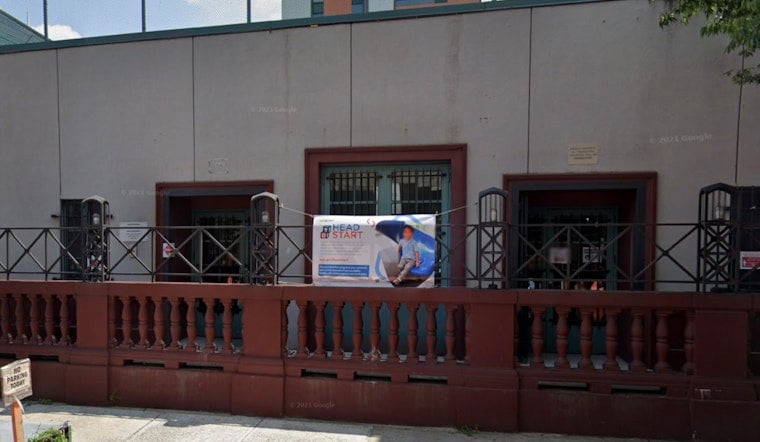
A Bushwick childcare center that has served immigrant and low-income families for more than 30 years has suspended operations after the New York City Department of Education fell behind on payments owed to it, leaving dozens of children — many with special needs — without classrooms, therapy sessions, or a reopening date. Teachers at ACE Integration Head Start reportedly went an entire month without paychecks before the doors closed, and parents are now demanding the city step in.
According to News12 New York, the delayed payments left ACE Integration unable to continue operating, forcing the center to suspend services amid what families describe as a funding crisis. Teacher Jahida Villafane told the outlet that staff kept showing up without pay because they knew a closure would devastate families who depend on the center for childcare. ACE Integration has offered a trusted environment for children and families in Bedford-Stuyvesant and Bushwick for more than three decades, and parents say it has long played an outsized role in the community.
The center is legally operated by the non-profit Hospital Clinic Home Center Instructional Corp. and serves roughly 130 children ages 3 to 5 across Bushwick, Bedford-Stuyvesant, and East New York, according to Idealist. About 40 percent of those enrolled preschoolers have diagnosed disabilities, and the center offers on-site physical, occupational, and speech therapy in students' native languages through a partnership with KIDS-Centric, per the same listing. ACE Integration was established in Bushwick in 1994 as part of the national Head Start initiative launched by President Lyndon B. Johnson in 1965, according to the center's own history.
Families Describe What's at Stake
Jennifer Kearney, whose 4-year-old daughter Kennedy has special needs, a speech impediment, and is on the autism spectrum, called on Mayor Zohran Mamdani and City Council members to keep the center open. Kennedy has made significant developmental progress since enrolling at ACE Integration, per the report from the same outlet. For Amanda Villafane, the stakes are generational — her daughter Julianna is the third generation of her family to attend the center.
One unnamed parent told the station that programs like ACE Integration should not be closing at all — they should be multiplying. Parents interviewed argued that centers offering this kind of specialized, bilingual, developmental support should be expanded rather than shuttered, especially given how few alternatives exist for families who rely on therapy services delivered in their native languages.
A Citywide Payment Backlog, Not an Isolated Case
ACE Integration's crisis fits a pattern documented well beyond Bushwick. In February 2025, city Department of Education officials acknowledged before the City Council that New York faced a severe backlog of unpaid invoices owed to early childhood providers, a problem driven in part by a July 2024 system migration to the PASSport procurement network, according to the Citizens' Committee for Children of New York. Providers across the city have reported waiting months for contract reimbursements as a result.
Community-based non-profits like ACE Integration aren't a minor piece of the city's childcare system — they house about 74 percent of New York's 3-K seats and 55 percent of its pre-K seats, according to reporting from The Chief. These centers often provide longer hours and summer coverage that traditional public schools don't offer, making their financial stability critical to working families across the five boroughs.
Leadership Turnover Adds Uncertainty
The city's ability to fix these payment delays has also been complicated by turnover at the top. Simone Hawkins, the deputy chancellor who led the Department of Education's efforts to address provider payment delays, announced her departure from the agency last month, according to Chalkbeat. Her exit coincided with the city's rollout of expanded free childcare programs, raising questions about who will now oversee the backlog affecting centers like ACE Integration.
Federal court oversight reports from mid-2025 into 2026 found that the Department of Education repeatedly failed to meet mandated deadlines for delivering special education services and processing provider reimbursements, according to Skyer Law. That pattern of missed deadlines placed the DOE under continued scrutiny even as centers like ACE Integration ran out of options.
City policy was supposed to guard against exactly this kind of shortfall. Under a 2022 agreement between New York City and early childhood providers, the city established a guaranteed 75 percent payment floor on contracted funding to protect community-based centers from sudden budget gaps, according to the New York City Council. That agreement followed intense advocacy from childcare providers and labor unions.
An Uncertain Road Back
Financial filings show just how thin the margins are for an operation this size. Form 990 records for Hospital Clinic Home Center Instructional Corporation indicate total annual revenues of roughly $2.65 million prior to the current funding crisis, according to Cause IQ — a budget that relies heavily on government contracts and subsidies. Restored funding would allow ACE Integration to resume serving local families, but no reopening date has been set.
For now, parents are left pressing city leaders to intervene. Nationally, Project Head Start serves nearly one million children and families through federally regulated programs designed to support early education, health, and family stability for low-income communities, according to the center's own history page — a scale that underscores just how many families depend on programs like the one currently sitting dark in Bushwick.



