

























































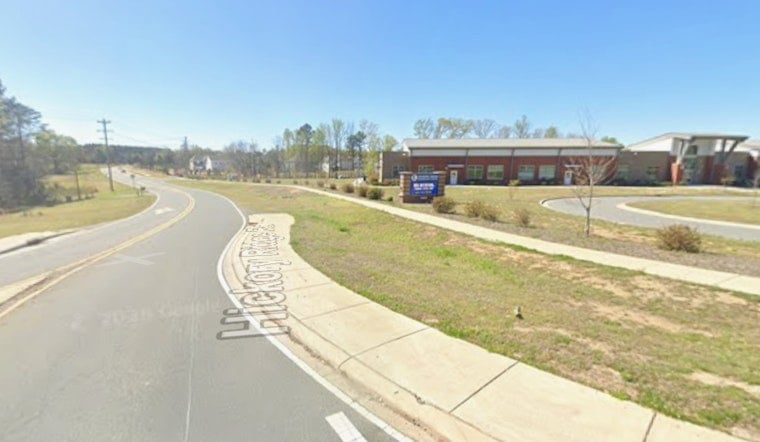
Days before Cabarrus County Schools opened for the year on August 12, parents across the district discovered their children's bus stops had vanished or moved — some by nearly half a mile — onto busier roads, with little to no warning. Families say they're now weighing longer walks, unsafe crossings, and mornings spent driving kids themselves after neighborhood stops were consolidated into single, centralized pickup points.
Leah Walker's neighborhood had three separate bus stops during the six years she lived there, according to reporting by The Charlotte Observer. This year, the district replaced all three with a single stop nearly four-tenths of a mile away, requiring her son to walk uphill, around corners and across a busy road to reach it. On his first attempt, he arrived about nine minutes early — and still watched the bus drive past him, the outlet reported.
Walker said she would not let her son make that walk alone, and she has been driving him to school for the rest of the week instead, per the same account. Rebecca Herrick, another parent affected by the changes, said her neighborhood's bus stop has also been centralized, pushing her children's pickup point to about a half-mile from their home.
No Warning, and a Fire Truck That Couldn't Get In
Herrick told the Observer that the district gave families no advance notice of the change, saying plainly, “the schools did not tell us and provided no advance notice.” She described the new centralized stop as a safety issue from the very first day of school, when she said cars and roughly 50 children crowded around the single pickup point in her neighborhood.
Herrick also said fire trucks could not enter her neighborhood during an emergency on that first day, and that the district has stopped entering her community altogether as part of the route changes. She told the outlet she believes the bus stop changes are connected to a shortage of bus drivers combined with budget pressures facing the district.
District Points to Safety Reviews, Not Budget Cuts
Cabarrus County Schools maintains that its annual budget decisions do not determine bus routes and stop assignments, telling the Observer in a district email that stop placements are based on the safest and most appropriate location for students. The district said bus stops routinely change every year as routes are adjusted, and that transportation staff review each bus stop investigation request individually when families push back.
According to the district, stop assignments and route decisions are based on student assignments, enrollment figures and overall transportation needs, with adjustments made whenever staff identify an opportunity to improve student safety. The district said routes and stop assignments more broadly reflect student needs, safety considerations and operational requirements. Cabarrus County Schools did not provide the Observer with figures on how many stops were moved, consolidated or eliminated this year, nor how many students were affected, nor how many bus stop investigation requests it has received since assignments went out.
Bus stop assignments were released through the Edulog system on August 3, giving many families little more than a week before the first day of school to notice and respond to changes. The district said it provided bus passes during school open houses for families who hadn't used Edulog to check their assignments. Parents who want a stop reconsidered can request it by contacting their child's school and completing a bus stop investigation request form, per the district.
A District Squeezed Between Growth and a Budget Fight
The stop consolidations land against a backdrop of a tight fiscal year for the district. Cabarrus County Schools requested an 8.43% increase in local funding to address enrollment growth and rising transportation and maintenance expenses, but the Cabarrus County Board of Commissioners approved a smaller increase instead. The commissioners' $560.9 million county budget, adopted in June, included just a 4.5% funding bump for the school system, leaving an estimated $4 million operating gap below what the district had sought, according to WSOC-TV.
That funding fight had already turned tense in April, when the Board of Commissioners voted 5-0 to cancel the district's scheduled annual budget presentation, saying the initial request was too high and cutting off a chance for public deliberation, WSOC-TV reported. The district has since identified millions of dollars in potential reductions as it works within the smaller allocation, and it continues an ongoing effort to recruit more school bus drivers.
Driver shortages have shaped Cabarrus County's bus routing for years, not just this one. WCNC reported in 2024 that the district had already consolidated neighborhood stops into centralized hubs for Program Choice magnet students because of ongoing driver shortages, forcing some parents to transport children farther themselves even then.
The district is also growing fast enough to strain its buildings, not just its bus routes. WCNC reported in April that five of the six elementary schools in northwest Cabarrus County were operating above 110% capacity, part of why Hoodline reported on a temporary enrollment cap at two Odell-area schools earlier this year, alongside $85,000 in new bus routes to manage rerouted students. Cabarrus County Schools enrolls more than 35,000 students across 43 schools altogether, according to county workforce data.
Limited Options Under State Law and County Finances
Under North Carolina law, local school boards are only required to route a bus within one mile of a student's home if that student lives at least 1.5 miles from school, according to the North Carolina School Bus Safety program. That leaves specific stop placements, and walking distances well under a mile, entirely up to local board discretion — meaning Cabarrus County's centralized stops, however inconvenient, remain within the bounds of state law.
The stakes of getting stop placement wrong are not abstract. The North Carolina Department of Transportation recorded 1,079 school bus-involved traffic crashes statewide in 2023, resulting in 683 injuries and six fatalities. The North Carolina Department of Public Safety has also found that motorists illegally pass stopped school buses roughly 3,000 times on an average school day statewide, underscoring why parents like Herrick and Walker are wary of sending children onto busier roads to meet the bus.
County officials, meanwhile, are looking to a November bond referendum — not the annual operating budget — to address long-term facility needs for Cabarrus County Schools, Kannapolis City Schools and Rowan-Cabarrus Community College. But state law prohibits bond proceeds from covering daily operating costs such as bus driver salaries, meaning that even if voters approve the measure, it won't resolve the staffing and routing pressures parents are feeling this month. County projections released in June show budget deficits growing from $10.8 million in fiscal year 2028 to $43.1 million by fiscal year 2031, driven largely by expanding education and municipal service demands — a trajectory that suggests the tension between growth, safety and funding in Cabarrus County schools is unlikely to ease soon.





