

























































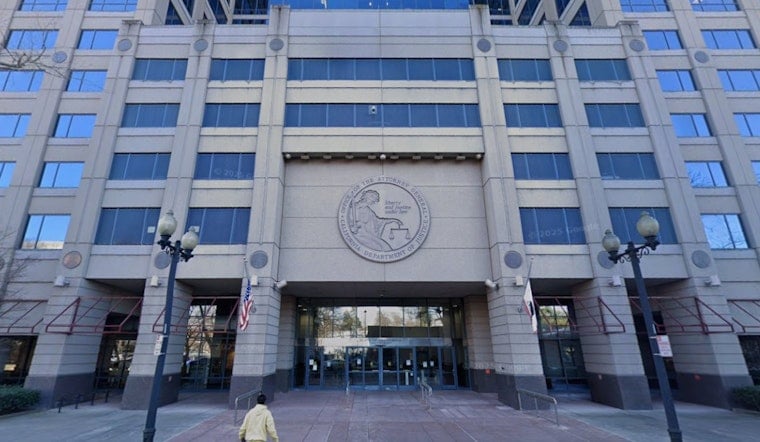
California Attorney General Rob Bonta joined a 10-state coalition today in suing the federal Office of the Comptroller of the Currency over a rule that would let national banks stop paying interest on homeowners' mortgage escrow accounts. The lawsuit, filed in the U.S. District Court for the District of Oregon, argues the rule illegally wipes out state laws designed to keep lenders from profiting off interest-free deposits collected from borrowers for property taxes and insurance.
Bonta framed the fight in blunt terms in a post on X, writing that “the Trump Administration is attempting to slash critical state consumer protection laws that protect homeowners, a decision that would take money away from Californians and put it right into the pockets of big banks.” According to the post from Bonta, the move would only deepen California's affordability crisis. The case, formally titled States of Oregon and New York et al. v. Office of the Comptroller of the Currency and Jonathan Gould, was co-led by Oregon and New York and filed in Portland, according to the Oregon Department of Justice.
Under California law, financial institutions must pay borrowers a minimum annual interest rate of 2% on money held in escrow for property taxes and homeowners insurance, according to the California Department of Justice. The rule was created specifically to stop lenders from collecting what amounts to an interest-free loan on borrowers' own money. The OCC's rule at the center of the lawsuit, finalized on May 15, concluded that federal law preempts state statutes requiring national banks and federal savings associations to pay that interest or restricting related escrow fees, according to the Federal Register.
The Trump Admin is attempting to slash critical state laws designed to protect consumers & prevent big bank lenders from profiting on interest-free deposits.
— Rob Bonta (@AGRobBonta) August 11, 2026
Alongside 10 AGs, we’re suing.
Not only is this blatantly illegal—it would only worsen the affordability crisis for… pic.twitter.com/f1ecyoLMDN
A Ten-State Coalition Pushes Back
The states suing alongside California are Connecticut, Maine, Maryland, Massachusetts, Minnesota, New York, Oregon, Rhode Island, and Vermont, according to Connecticut's official state government website. Those attorneys general contend the rule favors Wall Street banks at the expense of working families. Fourteen states and territories, including Utah, Wisconsin, Guam, and the U.S. Virgin Islands, enforce statutes requiring mortgage lenders to pay interest on borrower escrow deposits, per the Federal Register, and escrow balances frequently reach thousands of dollars per household.
Maryland's attorney general warned that the OCC rule creates a distorted dual-banking system, exempting national megabanks from state escrow laws while leaving smaller, state-chartered banks obligated to comply. That imbalance, according to the Maryland Office of the Attorney General, would saddle community institutions with compliance costs that national banks could simply bypass. Consumer advocacy group Americans for Financial Reform echoed that concern, stating that mortgage escrow accounts hold significant non-interest-bearing balances and warning that preemption grants national banks immunity from state protections while accelerating banking consolidation, according to a statement from Americans for Financial Reform.
A Legal Fight Rooted in a Recent Supreme Court Ruling
The dispute traces back to a unanimous 2024 U.S. Supreme Court decision in Cantero v. Bank of America, which held that under Dodd-Frank, the National Bank Act preempts state consumer financial laws only when they “prevent or significantly interfere with” a national bank's powers, according to Justia. That ruling rejected the kind of blanket preemption the OCC's new rule now attempts to apply, and instructed lower courts to weigh the comparative, practical impact of state laws rather than dismiss them outright.
Lower courts have since split on how to apply that standard. On May 5, the U.S. Court of Appeals for the Second Circuit ruled on remand in the same Cantero case that New York's 2% escrow interest statute is preempted, deepening a divide with the First and Ninth Circuits, which upheld similar state escrow interest laws, according to the Conference of State Bank Supervisors. A new petition asking the Supreme Court to resolve that circuit split was filed on May 22, setting up the possibility of another high court showdown over how far federal banking regulators can reach into state consumer protection law.
Part of a Broader Pattern of California Litigation
Tuesday's filing adds to a growing tally of legal challenges California has mounted against the Trump administration. As of early August, Bonta's office had filed more than 80 lawsuits against the administration, which it estimates has protected $207 billion in federal funding for California, according to the Los Angeles Times. State lawmakers have set aside dedicated funding for Bonta's office to pursue this kind of federal litigation, the paper reported.
For now, the fate of California's escrow interest requirement — and similar laws in nine other states — rests with the federal courts in Oregon, even as a parallel case awaits word on whether the Supreme Court will take it up. Homeowners in states with escrow interest laws stand to lose a modest but real annual return on money already sitting in lender-controlled accounts if the OCC's rule ultimately stands.





