

























































Capital One is asking a federal judge in Miami to throw out President Donald Trump’s trust lawsuit, while revealing that the bank’s decision to close more than 300 Trump-affiliated accounts followed a months-long anti-money-laundering review. The filing gives a new and consequential explanation for a 2021 breakup that Trump’s business entities say was political debanking.
According to CBS News Miami, Capital One filed a motion to dismiss the lawsuit with prejudice, arguing that the plaintiffs failed to state legally viable claims. The bank also says federal law limits what it can publicly reveal about certain internal compliance processes, while the court has not ruled on the merits.
Reuters reports that Capital One’s filing says documents and the plaintiffs’ own allegations show the accounts were closed for anti-money-laundering reasons. The bank said its compliance team identified transaction patterns that fall within the types of activity flagged by federal banking guidance, but the filing does not accuse Trump or his companies of committing money laundering.
What Capital One Says Triggered The Closures
The Trump Revocable Trust, Eric Trump and affiliated business entities filed the lawsuit in March 2025 after Capital One notified them in March 2021 that the accounts would be closed by June 7 of that year. AP News reported that the original complaint portrayed the account closures as an attack on free speech and free enterprise, alleging they were tied to Trump’s political views after the January 6, 2021, attack on the U.S. Capitol.
The case has already taken a few procedural turns. Bloomberg reported that Judge Roy Altman dismissed an earlier version of the complaint in March but allowed the plaintiffs an opportunity to refile, while Capital One now argues the latest version has the same basic defects and should be permanently dismissed.
Capital One’s compliance explanation is arriving under an awkward spotlight: The Financial Crimes Enforcement Network fined the bank $390 million in January 2021 for Bank Secrecy Act violations tied to its former Check Cashing Group. FinCEN said that conduct occurred from 2008 through 2014 and involved failures to file suspicious-activity and currency-transaction reports, not the Trump-affiliated accounts at issue here.
Why This Miami Case Has Become A National Fight
The lawsuit now sits inside a larger political battle over whether banks have used compliance policies, reputational concerns or political preferences to cut off customers. In August 2025, the White House issued an executive order directing federal regulators to combat what it called politicized or unlawful debanking, while preserving risk-based reviews tied to legitimate banking concerns.
Trump has also sued JPMorgan Chase for $5 billion over similar allegations, giving the issue a distinctly Miami flavor as multiple disputes move through Florida courts. Hoodline previously reported on JPMorgan’s effort to remove CEO Jamie Dimon from that separate lawsuit.
What The Judge Still Has To Decide
The immediate question is narrower than the political argument surrounding the case: whether the complaint plausibly alleges that Capital One violated the law by closing the accounts because of political bias. A dismissal with prejudice would end the current lawsuit, while a denial could open a more detailed fight over the bank’s account agreements, internal review and the transaction patterns it says prompted scrutiny.
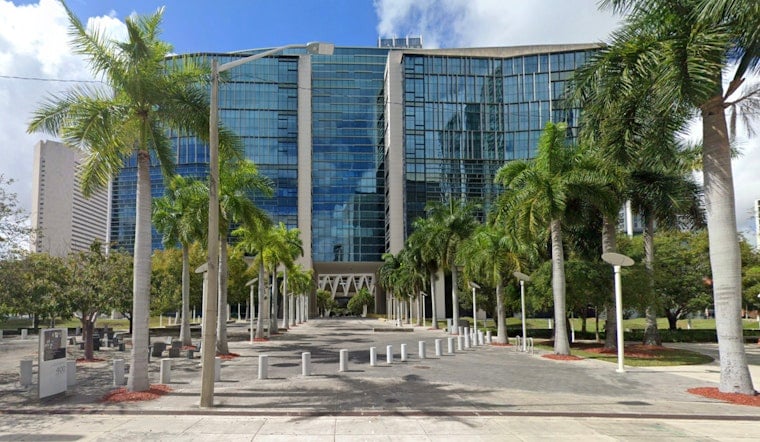
For now, both sides’ accounts remain disputed, and no ruling has determined whether Capital One’s explanation was legitimate or whether the closures amounted to unlawful debanking. The lawsuit remains pending in the U.S. District Court for the Southern District of Florida.



