

























































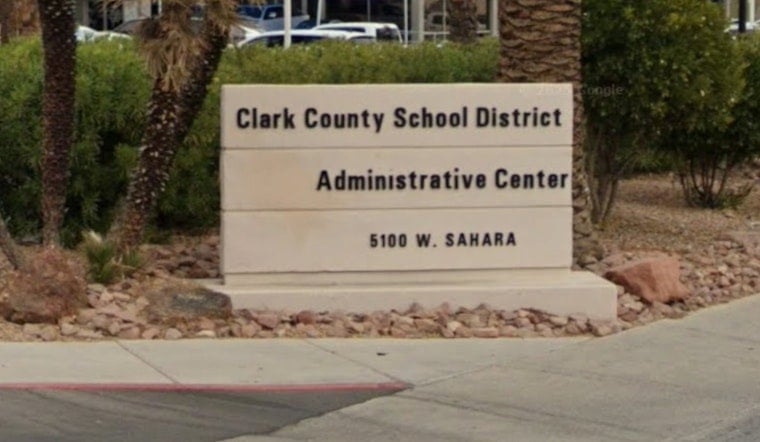
Jennifer Hiller spent more than three decades with Clark County School District, and this summer she lost 75 percent of her income in a single month over what amounted to a calendar mismatch. Hiller, 54, was hired by the district in 1994 and retired in 2024, only to return to the classroom at Arbor View High School under a state program that let retirees draw both a paycheck and a pension. That arrangement collapsed for her and roughly 160 other CCSD retirees when their July pension payments simply never arrived.
The culprit was a gap between two calendars that were never designed to line up. As reported by the Las Vegas Review-Journal, teaching contracts ran through July 31, while the district's Critical Labor Shortage designation for the affected positions expired on June 30. That left the retirees technically classified as active employees for the month of July, disqualifying them from monthly pension benefits under state law, according to Nevada Public Employees' Retirement System General Counsel Ian Carr.
The Critical Labor Shortage program had let CCSD rehire retired employees for positions with significant vacancies, allowing those workers to collect both a salary and a retirement pension at the same time. Elementary teachers, elementary counselors, and English teachers in grades 7-12 were placed on that shortage list in December 2025. But the Clark County School Board voted in May 2026 to remove those three categories from the list, effective July 1, after determining that declining enrollment had created a surplus of applicants rather than a shortage.
A Legal Trigger With No Off-Ramp
Under Nevada Revised Statutes 286.523, according to the Nevada Legislature, public employers seeking to re-employ retirees without suspending their pensions must formally declare a critical labor shortage in an open public meeting, and state law caps that designation at two years before new findings are required. The exemption itself dates back to 2001, when lawmakers created it specifically to help school districts rehire retired educators during severe labor shortages without forcing them to give up pension payouts, per Nevada Policy.
Once the designation lapsed, NVPERS had no discretion to keep paying retirees who were still legally active employees. Under the retirement system's own rules and NRS 286.520(6), per the Public Employees' Retirement System of Nevada, employers can only waive a retiree's re-employment pension disqualification for up to 30 days, and only if they certify in writing in advance that the retiree was recalled for an emergency with no qualified candidate available. Carr told the newspaper that affected employees have no way under the law to recover the July funds.
Thousands Lost, No Warning Given
George Arizmendez, 58, became an English teacher at Foothill High School through the critical labor shortage program and told the outlet his expected July pension payment was nearly $5,000, representing more than a quarter of his household's monthly income. He had intended to keep double-dipping until he turned 65. Jennifer Beskow, who worked 34 years for the district including four years as an English teacher at Legacy High School, did not receive more than $7,000 in expected July funds. Teachers said the district never informed them that their pension payments would be withheld.
Kathy Snyder, a critical labor shortage English teacher at South Academic Center with a 34-year public-sector career, said her pension was her main source of income. “There was, really, no compassion about it,” Snyder said. After applying to nine special education positions and landing one interview but zero offers, Snyder now works at a Las Vegas charter school. Hiller, reflecting on her decades with the district, said, “My whole adult life has been given to CCSD, and this is the way it's gonna play?” She added that she still believes she has more to offer the classroom, saying, “I know that I still have a lot to give to the classroom.”
Who's Responsible for the Notification Gap
CCSD tells employees it is their responsibility to notify the retirement system of any changes to their employment or retirement status, and the district does not communicate those status changes to NVPERS on employees' behalf. The district paid employees in July for work completed during the 2025-26 school year, and licensed educators continue to receive that summer pay regardless of the pension dispute, since CCSD uses a July 1 to June 30 fiscal calendar for the shortage designation itself.
The disruption hit a relatively narrow slice of the district's rehired retiree workforce. Before the May 2026 policy change, CCSD employed roughly 600 total Extended-Career Teachers under the Critical Labor Shortage program, with about 160 working in the three removed categories and roughly 440 remaining in unaffected specialty subjects such as special education, according to figures reported by Ryan Rose. Under CCSD board oversight policies, retirees collecting PERS benefits while filling critical labor shortage positions must also be the first employees involuntarily transferred or reduced whenever the district implements a surplus transfer, after voluntary resignations are accounted for.
A Surplus Driven by Falling Enrollment
The teacher surplus behind the policy change traces back to demographic projections presented to trustees earlier this year. As Hoodline previously reported, CCSD enrollment is forecast to drop by 27,000 to 33,000 students over five years, a decline that reduces per-pupil state revenue and has helped create surpluses in general education categories even as the district juggles roughly a $15 billion repair and modernization backlog against $3.6 billion in available bond funds. That same enrollment slide is what allowed the board to determine, for the first time in more than a decade, that it had more licensed applicants than open positions in elementary education, secondary English, and elementary counseling.
The stakes extend well beyond the retirees directly affected. CCSD is the single largest public employer in NVPERS, representing nearly one-third of all active PERS members statewide, according to The Nevada Independent. That scale means any friction between the district's contract calendar and state pension law has the potential to ripple across a significant share of Nevada's retired public workforce, even as CCSD and NVPERS continue to point to each other over who should have flagged the gap before July checks went out.





