

























































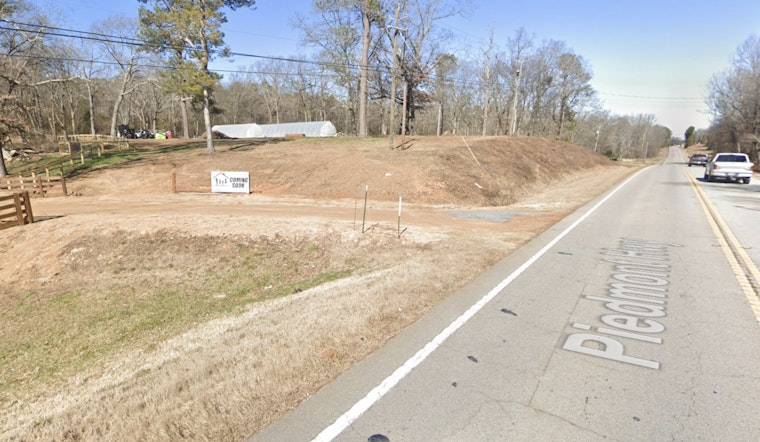
On a 45-acre stretch of land in Cedartown, a nonprofit is building a home for boys who otherwise have nowhere to go. Safe Haven Boys Ranch is developing 12 houses meant to eventually shelter up to 72 neglected and unhoused boys, offering a long-term alternative at a moment when unhoused children are becoming a growing problem across Georgia.
The ranch was founded by Jason and Ginger Slaughter under Community Share Ministries, according to Safe Haven Boys Ranch. The couple established the boys' ranch project in 2022 with the goal of providing long-term housing paired with Christian education, and as reported by CBS News Atlanta, the Cedartown property now provides a home to unhoused children who otherwise have no place to go.
Jason and Ginger Slaughter did not start out in youth ministry. The pair previously owned Cedar Valley Communications, a telecommunications business with five retail locations across Northwest Georgia, before transitioning into full-time youth and social ministry work in 2011, per the organization's account. Jason Slaughter also spent eight years as an elected Polk County Commissioner, a role he took on starting at age 21.
A National Network Behind the Local Build
Safe Haven Boys Ranch did not develop its model in isolation. The Cedartown project grew out of Planting Oaks, a national support network launched in 2018 by Alabama's Big Oak Ranch to help faith-based organizations across the Southeast build long-term residential facilities for abused and displaced youth, according to Big Oak Ranch. That network provides technical resources and best practices to independent child-care ministries navigating the complicated work of standing up a residential campus from scratch.
Cedartown itself is no stranger to this kind of work. The town has hosted the Murphy-Harpst Children's Center since 1924, a residential treatment facility founded by Ethel Harpst and Sarah Murphy that currently serves about 75 children and young adults, according to The Atlanta Journal-Constitution. Murphy-Harpst delivers 24-hour therapeutic care, specialized foster care, and equine therapy for severely traumatized youth, giving the small Polk County city a century-long identity as a regional hub for specialized child care.
Georgia's Foster System Faces an $85 Million Gap
The timing of Safe Haven's expansion lines up with real strain on Georgia's official foster care apparatus. In late 2025, the Georgia Division of Family and Children Services faced a projected budget deficit of more than $85 million tied to rising care costs, forcing the state to cut or suspend contracts with private providers and restrict new foster placements, according to WABE. State officials pointed to a nearly 50 percent increase in care costs over three years, compounded by delayed federal funding.
The scale of need behind that shortfall is significant. More than 11,000 children are currently in state foster care custody across Georgia, according to official demographic records from the Georgia Division of Family and Children Services. Private nonprofit facilities like Safe Haven are typically relied upon when relative placements or traditional foster homes aren't available, filling a gap the state system increasingly struggles to cover on its own.
What Happens When Kids Age Out
The stakes of that gap extend well beyond childhood. Research published by the College of Coastal Georgia found that roughly 20 percent of teens aging out of foster care become homeless immediately upon leaving the system, and up to half experience homelessness by age 26. Researchers describe the child welfare system as a major pipeline into young adult housing instability when kids lack permanent family ties to fall back on.
New pressures are adding to that pipeline. Department of Human Services data reported by The Atlanta Journal-Constitution showed that 83 immigrant children entered Georgia state custody between October 2025 and March 2026 following a parent's detention or deportation, an 80 percent increase over the prior year. Child welfare experts cited in that reporting note that displaced immigrant youth often require specialized trauma and legal assistance that adds further strain to an already stretched system.
The problem is not unique to Georgia. A national report from the National Conference of State Legislatures estimates that 4.2 million youth and young adults experience homelessness annually in the United States, including roughly 700,000 unaccompanied minors under 18, and researchers note the crisis hits rural, suburban, and urban communities at similar rates even though it often stays hidden through couch-surfing arrangements. Closer to Cedartown, Covenant House Georgia reports that more than 3,300 youth experience homelessness annually in metro Atlanta, with half of youth aging out of foster care becoming homeless within six months — and unhoused youth in the region facing severe risks, including rates of 49 percent experiencing sexual exploitation and 72 percent experiencing or witnessing violence.
Against that backdrop, Safe Haven's 12-home buildout represents one local attempt to catch kids before they fall through those cracks. Questions remain about how independent ministries like Safe Haven navigate state licensing and funding constraints amid the ongoing budget shortfall, how local schools will integrate ranch residents, and what transitional support will exist for young men aging out of the rural facility once they reach adulthood.





