

























































Centennial voters will decide this November whether to raise the city's sales tax rate for the first time since 2003, as officials warn that money set aside to patch a widening gap in road funding will run dry within two years. The Centennial City Council voted on August 11 to place a 1% sales and use tax increase on the November 3 ballot, a measure that would push the city's rate from 2.5% to 3.5% and direct the new revenue specifically toward transportation.
The vote follows months of fiscal strategy sessions, according to the City of Centennial, which says its Street Fund now faces an annual shortfall of roughly $20 million — the city spends about $35 million a year maintaining and operating its transportation infrastructure but collects only around $15 million in dedicated revenue to cover it. As Denver7 reports, Centennial Mayor Christine Sweetland said the city wants to avoid deferred maintenance, the kind of can-kicking that turns small repairs into expensive emergencies.
For years, the city has covered that gap by drawing down General Fund cash reserves rather than raising taxes, but city projections show those reserves will be fully depleted by 2028 if voters reject the measure. Denver7 notes that Centennial once spent a decade saving money just to repair the bridge over Arapahoe Road — a glimpse of how slowly the city's finances can move against the pace of infrastructure decay.
An Aging System Inherited at Incorporation
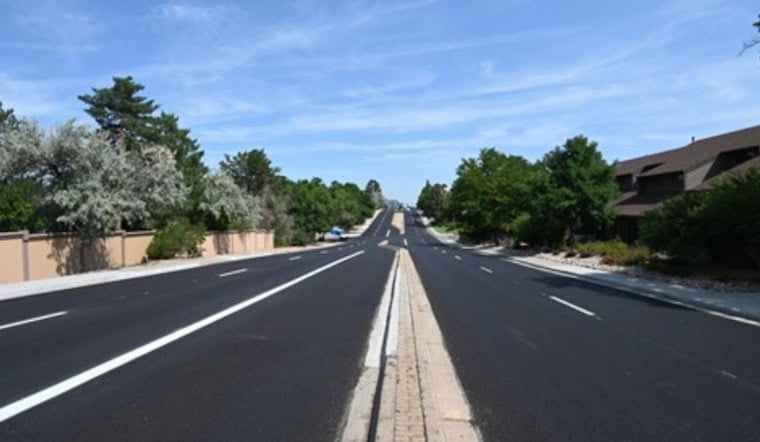
Centennial's public works system is large and largely inherited. The city maintains 1,150 lane miles of paved streets, 94 bridges, 92 traffic signals, and nearly 30 miles of bike lanes, much of it built 25 to 40 years ago and absorbed into city ownership when Centennial incorporated, per the City of Centennial. That incorporation, in February 2001, was at the time the largest city incorporation in U.S. history, and voters approved the city's last dedicated 1% sales tax increase just two years later, in 2003, setting the current 2.5% municipal rate that has held ever since.
Centennial's transportation master plan lists more than $100 million in projects, according to Denver7, and the city estimates the proposed tax hike would generate about $27 million annually for the Street Fund. Officials say that money would go toward snow removal, bridge repairs, paving, traffic signal upgrades, street sweeping, and future road projects, with the entire additional 1% earmarked for transportation rather than the General Fund.
Flattening Retail Revenue Behind the Deficit
Part of the fiscal pressure traces back to changes at The Streets at SouthGlenn, one of Centennial's primary sales tax generators. Sears closed there in 2018 and Macy's followed in 2022, according to Blue West Capital, prompting developers to pursue plans to expand residential units at the site from 1,125 to 1,675 — a redevelopment shift Hoodline covered in its report on a $28 million SouthGlenn land buy. Denver7 adds that Best Buy, Macy's and Sears have all left Centennial in recent years, contributing to what the city describes as flattening sales tax revenues.
Mayor Sweetland has suggested the city may eventually need to tax restaurant meals and furniture purchases more heavily, a comment she made in May, according to Denver7's reporting. The November ballot measure itself does not include such changes; it is limited to the citywide sales and use tax rate.
Groceries and Utilities Stay Exempt
City officials have emphasized that the measure preserves existing local exemptions for essential goods. The proposal explicitly maintains tax exemptions on groceries and residential utilities, according to the City of Centennial, a standard feature of Colorado local sales tax measures meant to soften the impact on lower-income households.
Even with the full 1% increase, Centennial's municipal rate would remain lower than several of its Arapahoe County neighbors. Englewood currently charges 3.8%, and Aurora charges 3.75%, according to Colorado Department of Revenue figures, meaning Centennial would still sit below both cities even at 3.5%. Denver7 reports that Karli Millspaugh, who supports the measure as both a citizen and a business owner running two locations outside Centennial, said a 1% increase would leave the city roughly in the middle of neighboring municipalities' rates.
Public Outreach Ahead of a Constitutional Requirement
Any local tax rate increase in Colorado must go before voters directly, under Article X, Section 20 of the state constitution — the Taxpayer's Bill of Rights, commonly known as TABOR — according to Ballotpedia. Centennial voters previously approved a separate TABOR revenue retention exemption in 2006, but the city still needs direct voter sign-off for any rate increase like the one on this November's ballot.
Ahead of the vote, the city launched an educational budget portal called yourcitybudget.co in May, featuring interactive budget breakdowns and community feedback surveys, according to the City of Centennial. An online poll on that site found that 48% of responding residents ranked road and traffic improvements as their top budget priority, compared with 27% for bike and pedestrian infrastructure and 25% for police — feedback the city says shaped its decision to restrict the new tax revenue specifically to transportation.
Centennial voters will make the final call on November 3, when the sales and use tax measure appears on the general election ballot alongside other local decisions for the south metro Denver suburb.





