

























































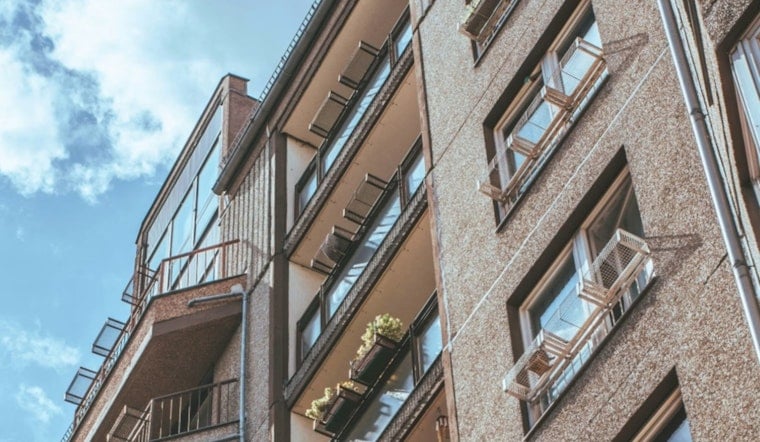
Charlotte renters are paying more money for less space. New apartments built in the Queen City now average 925 square feet, down 40 square feet from a decade ago, even as average rent climbed 16% when adjusted for inflation over the same 10-year stretch.
That combination of shrinking floor plans and rising costs runs counter to what's happening almost everywhere else in the country, according to Axios, whose analysis found that Charlotte bucked the national trend toward larger new apartments. The typical new apartment across the 100 cities surveyed by RentCafe grew by 13 square feet, or a little over 1%, between 2016 and 2025, with national average apartment sizes increasing since 2022. Charlotte moved in the opposite direction.
The gap becomes even starker when comparing Charlotte to other metro areas. Seattle's average new apartment measures 645 square feet, while Tallahassee, Florida, sits at the opposite extreme with new units averaging 1,156 square feet, per the Axios report. The nationwide average for a new apartment stands at 910 square feet, meaning Charlotte's shrinking new construction is now landing below the national norm despite being one of the fastest-growing rental markets in the country.
Rent Keeps Climbing Even As Units Get Smaller
Charlotte's average apartment rent now runs $1,756 per month, according to Zillow data cited in the Axios analysis, reflecting a $665 increase over the past decade. Charlotte renters are effectively paying more despite shrinking square footage, a dynamic that has intensified even though the metro area has seen historic volumes of new apartment construction hit the market in recent years.
That construction boom is well documented. RealPage reported that Charlotte reached peak annual apartment supply growth in the second quarter of 2025, with an 8.4% inventory expansion rate after delivering 17,914 units in the year ending that spring — ranking second nationally behind Austin before Charlotte took the national lead in inventory expansion by early 2026. A UNC Charlotte Urban Institute report released in November found that the metro added 19,754 apartment units from the third quarter of 2024 through the third quarter of 2025, the largest single-year increase in apartment supply ever recorded in the region.
Population Growth Keeps Absorbing New Supply
Despite that historic wave of construction, demand has kept pace. The Charlotte metro area grew by 78,255 residents from 2023 to 2024, a 2.79% annual growth rate and the region's highest single-year population expansion since 2014, per the same UNC Charlotte Urban Institute report. Real estate advisory firm Avison Young separately found that Charlotte metro apartment net absorption reached a record 22,106 units in mid-2025, nearly tripling the region's 10-year historical average.
That level of absorption has helped keep rents from falling even as landlords compete for tenants. A Matthews Real Estate Investment Services report from June found that more than half of Charlotte apartment properties were offering renter concessions — the highest level on record — while active construction stood at 18,000 units, giving Charlotte the third-largest active construction pipeline in the country behind Miami and Nashville.
Neighborhood Prices Vary Widely by Square Footage
RentCafe's August market analysis put the average rent across all Charlotte apartment types at $1,686 per month, ranging from $1,377 for studio units averaging 535 square feet up to $2,133 for three-bedroom units averaging 1,408 square feet. The neighborhood breakdown shows just how much location shapes that math: South End apartments average $2,161 per month for 871 square feet, while East Charlotte units average 987 square feet for $1,574 per month, according to RentCafe's neighborhood-level data.
City policy has actively encouraged smaller, denser housing. Charlotte's Unified Development Ordinance, which took effect in June 2023, eliminated single-family-only zoning districts and allows accessory dwelling units up to 1,000 square feet on residential lots citywide, a shift adopted under the city's Future 2040 Comprehensive Plan and detailed by Acreus.
Half of Renters Are Already Cost-Burdened
The squeeze on smaller, pricier units lands hardest on households already struggling to keep up. Mecklenburg County reported that half of all renter households in the county were housing cost-burdened, with nearly 108,600 renter households severely burdened, paying more than half of their gross income toward rent. That local strain mirrors a national pattern documented by Zillow Group, which found in August that 54.1% of U.S. renter households with children are cost-burdened, driven partly by a structural shortage in which only 24.4% of national rental listings offer three or more bedrooms.
Hoodline has previously reported on North Carolina's vanishing affordable rental stock and on a $100 million fund the city created to preserve affordable apartment complexes. Those efforts target the lower end of the market, but the shrinking-unit trend documented by Axios suggests the pressure on space and cost is spreading well beyond the households already flagged as most vulnerable.





